
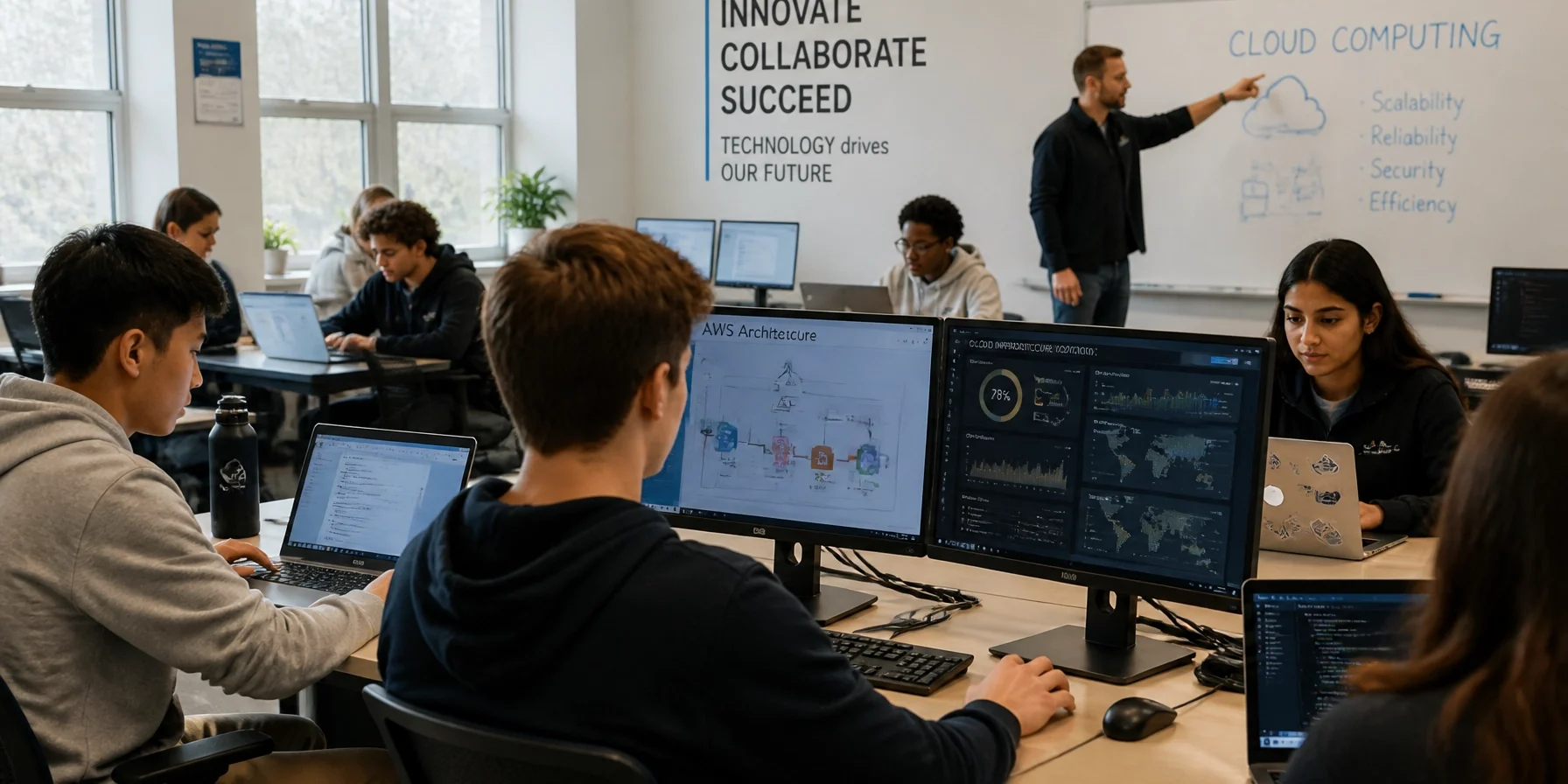
For decades, the standard blueprint for securing top-tier technical talent followed a rigid, predictable path: wait for a student to complete four years of university, scout them during their senior spring, and offer a competitive entry-level salary. This "college pipeline" was the bedrock of corporate recruiting. However, as we move through 2026, that bedrock is shifting.
The velocity of technological change has outpaced the traditional four-year curriculum. In an era where 39% of core job skills are projected to change by 2030, the time it takes to produce a degree-holding candidate is becoming a strategic liability. Today, forward-thinking organizations are no longer waiting for the graduation cap and gown. Instead, they are looking toward high schools to secure their next generation of Cloud, AI, and Data Analytics experts.
The 2026 Talent Crisis: A Structural Mismatch
The urgency of this shift is underscored by a growing global talent shortage. According to recent 2026 data from ManpowerGroup, approximately 72% of employers report significant difficulty in filling technical roles. The gap is most acute in the realms of Artificial Intelligence and Machine Learning, where global demand exceeds supply by a staggering 3.2 to 1.
By 2026, IDC estimates that over 90% of organizations worldwide will feel the tangible impact of the tech skills gap through delayed projects, lost revenue, and reduced competitiveness. The traditional pipeline is simply not moving fast enough to keep pace with the demand for 1.6 million open AI positions against a pool of only half a million qualified candidates.
This is not a temporary dip in the market; it is a structural mismatch. Educational institutions often require years to update curricula, while a new AI framework or cloud service can become an industry standard in a matter of months. To bridge this gap, businesses must engage with talent earlier, specifically at the high school level, where the "digital natives" of the next generation are already proving their mettle.
Why Your Next Cloud Expert is 17 Years Old
The idea of hiring a high school graduate for a role in cloud architecture or data analytics might have seemed radical a decade ago. Today, it is a calculated business decision. There are several objective reasons why high schoolers represent the most untapped "Next-Gen Talent Funnel" in the current economy.
1. The Digital Native Advantage
Recent high school graduates are the first generation to grow up in a fully cloud-integrated world. They do not merely "use" technology; they inhabit it. This innate comfort with digital systems translates into a shorter learning curve for complex software and environments. As research indicates, these young workers are exceptionally adept at learning new applications and streamlining outdated workflows: a critical trait for fast-changing DevOps and Cloud platforms.
2. The Rise of High School Certifications
The credentialing landscape has shifted. Professional certifications from providers like AWS, Microsoft, and CompTIA are now being integrated directly into high school vocational programs. A 17-year-old senior can graduate today with an AWS Certified Cloud Practitioner or Microsoft Azure Fundamentals (AZ-900) certification in hand.
These certifications are vendor-validated proof of skill. As organizations shift toward "skills-first" hiring, a candidate who can demonstrate competency in VPCs, subnets, and cloud security is often more valuable than a generalist with a four-year degree but no hands-on experience.

The Economic and Strategic Benefits of Early Recruitment
Beyond the technical aptitude, the economic case for building a high school-to-industry pipeline is compelling for any business development leader.
- Lower Opportunity Cost and Strong ROI: Employers can often hire high school graduates at a lower starting salary while investing in their specialized training. This creates a high return on investment (ROI) as the employee scales their skills specifically within the company’s tech stack.
- Reduced Churn and Increased Loyalty: When a company invests in a young person's development through apprenticeships or internships, it builds a level of institutional loyalty that is rare in the high-turnover world of tech.
- Malleability and Cultural Alignment: High school graduates lack the "bad habits" or rigid expectations that can sometimes accompany veteran hires. They can be trained specifically in your company’s internal processes, safety protocols, and cultural norms from day one.
Parallel Lessons from the DOD SkillBridge Model
At USA Entertainment Ventures LLC, we often look at successful recruitment frameworks to guide our business consulting practices. A prime example is the DOD SkillBridge program. This initiative allows transitioning service members to gain valuable civilian work experience through specific internships or apprenticeships during their last 180 days of service.
The brilliance of the SkillBridge model: much like the high school talent funnel: lies in its ability to bridge a major life transition with direct industry training. Whether it is a veteran transitioning to the civilian workforce or a high school senior transitioning to the professional world, the principle remains the same: capture talent at the transition point. By providing a clear pathway into Cloud or Data Analytics roles, companies can secure highly motivated individuals who are ready to prove themselves in a new arena.
Actionable Takeaways: How to Build Your Next-Gen Funnel
Transitioning to a high school talent model requires more than just posting a job opening. It requires a strategic, managed approach to workforce development.
- Partner with Local CTE Programs: Most modern high schools have Career and Technical Education (CTE) tracks. Reach out to local school boards to partner on curriculum development or to offer guest lectures on Cloud and AI.
- Establish Apprenticeships, Not Just Internships: An internship is often a short-term observation. An apprenticeship is a structured, long-term learning pathway. Use the guidelines found in our management services to structure these programs so they provide real value to both the student and the firm.
- Offer Certification Sponsorship: If you find a promising high school student, offer to pay for their CompTIA A+ or AWS Cloud Practitioner exam. It is a small investment that signals your commitment to their professional growth.
- Adopt a Skills-First Hiring Policy: Audit your current job descriptions. If you are requiring a Bachelor’s degree for an entry-level cloud support role, you may be filtering out the very talent you need. Replace degree requirements with specific certification or project-based requirements.

The Future of the Workforce
The "War for Talent" is no longer being fought in the career centers of Ivy League universities; it is being won in the computer labs of suburban and urban high schools. As AI continues to act as a net driver of job creation: with a projected +31% net hiring effect in 2026: the organizations that thrive will be those that recognize talent regardless of the age or the degree attached to it.
By embracing a more inclusive, proactive approach to recruitment, businesses can solve their talent shortages while providing a vital service to the community. This is not just a change in hiring policy; it is a shift toward a more sustainable, agile, and forward-looking economic model.
At USA Entertainment Ventures LLC, we specialize in managing these complex transitions: whether it is through our work in DOD SkillBridge recruitment or broader business development consulting. The future of cloud computing is young, energetic, and already certified. The only question is: will they be working for you, or your competitor?

Conclusion: A Strategic Imperative
The data is clear: the college pipeline is no longer sufficient to fuel the tech demands of 2026 and beyond. By looking toward high schools, businesses can find digital natives who are ready to be shaped into the cloud architects and AI specialists of tomorrow. This strategy offers a robust solution to the talent shortage, reduces recruitment costs, and builds a loyal, highly-skilled workforce.
It is time to look beyond the diploma and focus on the drive. Your next cloud expert is in high school today: it is your job to find them.






