
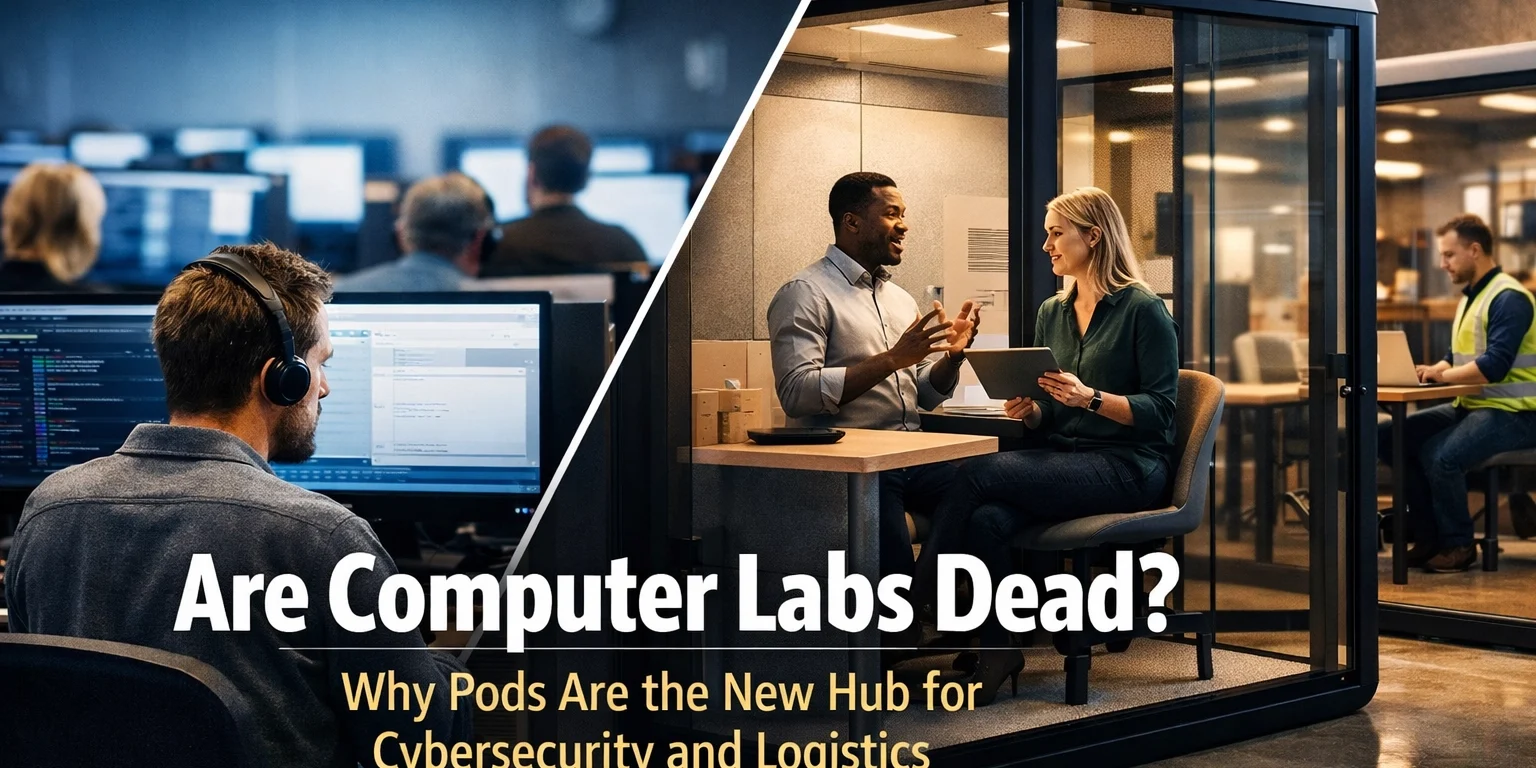
If you close your eyes and think of a "computer lab," what do you see? Probably a dimly lit room filled with rows of beige (or maybe sleek grey) towers, monitors that hum slightly, and a tangled mess of cables that look like a spaghetti factory exploded. For decades, this was the sanctuary of tech education. But let’s be real: those rows of bolted-down PCs are starting to look less like a hub of innovation and more like a digital museum.
At USA Entertainment Ventures LLC, we spend a lot of time looking at how infrastructure meets opportunity. And right now, the wind is blowing away from the "lab" and toward the "Pod."
The traditional computer lab is dying. It’s too rigid, too expensive, and frankly, too boring for the high-stakes worlds of cybersecurity, logistics, and content creation. If we want to prepare a workforce for 2027 and beyond, we need to talk about why modular Pods are the new gold standard for career development.
The Problem with Being "Bolted Down"
The fundamental flaw of the classic computer lab is its lack of imagination. Traditional labs are built for general-purpose computing: browsing the web, writing documents, and maybe a little entry-level coding. But try to run a high-intensity penetration test or simulate a global supply chain disruption in a room where the hardware is "hard-wired, bolted down, and rigid," and you’ll hit a wall faster than a bad WiFi signal.
Research shows that pods are quickly becoming the preferred training model because they mirror workplace realities. Unlike a lab, which is a fixed space, a Pod is a modular, purpose-built environment. You can think of it as the "Swiss Army Knife" of infrastructure. If you need to pivot from training a group of cybersecurity analysts to a team of logistics managers, you don’t need a construction crew and a six-month budget. You just need to swap the software and the peripheral hardware.

Cybersecurity: From Textbooks to War Rooms
In the world of cybersecurity, the "Pod" model isn't just a suggestion; it’s a necessity. You can’t learn how to defend a network while sitting in a row of thirty people all doing the same static exercise. Modern cyber threats are collaborative and chaotic.
Cybersecurity pods create isolated network environments: digital playgrounds where students can safely deploy simulated malware, conduct penetration tests, and engage in "Red Team vs. Blue Team" exercises. One Pod acts as the attacker, the other as the defender. This physical arrangement forces communication. It creates a "War Room" atmosphere that mirrors a real-world Security Operations Center (SOC).
According to industry data, this collaborative setup is where the real learning happens. Employers in 2026 aren't just looking for certifications; they want to see portfolio evidence of incident response. Being able to say, "I defended a simulated critical infrastructure Pod against a coordinated DDoS attack," carries much more weight than "I passed a multiple-choice quiz in a computer lab."
Logistics: Not Just Forklifts and Clipboards
When people hear "logistics," they often think of warehouses and trucks. But modern logistics is a data game. It’s about RFID readers, barcode scanners, and Enterprise Resource Planning (ERP) systems all talking to each other in real-time.
Logistics pods bridge the gap between the digital and the physical. A high-end logistics pod combines the software terminals needed for inventory management with the actual hardware used in the field. This hybrid approach allows workers to experience the cognitive load of real-time decision-making.
Imagine a scenario where a supply chain is disrupted by a hurricane. In a traditional lab, you’d read a case study. In a Pod, you’re looking at a live dashboard, rerouting virtual shipments, and handling inventory discrepancies as they pop up on your scanner. This is the kind of training that scales. As we look toward the national workforce infrastructure rollout, the ability to deploy these specialized pods quickly across the country is what will separate the winners from the "also-rans" in the Fortune 100.

The Content Creation Explosion
We can’t talk about modern infrastructure without mentioning the creator economy. Every brand is now a media company, and every logistics or tech firm needs a way to communicate its value through video and digital storytelling.
Traditional labs are notoriously bad for content creation. They lack the acoustics for voiceovers, the lighting for video, and the processing power for 8K rendering. A "Creator Pod," however, is a localized hub designed for high-end output. By concentrating specialized equipment into a Pod: think high-fidelity microphones, green screens, and dedicated GPU clusters: organizations can offer professional-grade tools without having to overhaul an entire building.
The Economics: Why the CFO is Smiling
If the pedagogical benefits don't convince you, the math will. Organizations implementing pod-based models report savings between 50 and 75 percent compared to maintaining traditional computer labs.
Why the massive gap? It comes down to two things: maintenance and utility.
- Utility: A traditional lab has 30 identical machines. If only 10 students are learning cybersecurity, 20 machines sit idle, depreciating and consuming power. In a Pod model, you only build what you need, when you need it.
- Upgrades: When the hardware requirements for cybersecurity software increase, you don’t have to replace 30 desktops. You just upgrade the specific Pod.
At USA Entertainment Ventures LLC, we focus on business consulting that actually makes sense for the bottom line. Reducing infrastructure overhead while increasing the quality of specialized training is a "no-brainer."
Bridging the Gap to 2027
As we approach the end of the decade, the demand for specialized technical skills is only going to accelerate. The "generalist" computer lab is a relic of an era where just knowing how to use a mouse was a skill. Today, we need specialists. We need people who can jump into a cybersecurity breach or a logistics nightmare and know exactly which buttons to press.
The Pod model offers a hybrid future. It allows for individual skill development (the "lab" part) but prioritizes collaborative, realistic application (the "Pod" part). This is how we build a workforce that isn't just "certified," but actually "capable."
Whether you’re a Fortune 100 executive looking at your next infrastructure spend or an educator trying to figure out how to engage students, the message is clear: stop bolting things to the floor. The future is modular, it’s collaborative, and it’s happening inside a Pod.

Practical Takeaways for 2026
If you’re looking to modernize your own training or business infrastructure, here are a few actionable steps:
- Audit your "Idle Time": Look at your current computer labs. How many machines are actually being used for specialized tasks versus just checking email?
- Identify Your "High-Value" Zones: Do you need more cybersecurity experts or more logistics coordinators? Build Pods specifically for those pathways rather than a general-purpose lab.
- Focus on the "Physical-Digital" Blend: Ensure your training environments include the hardware (scanners, specialized controllers) that workers will use in the real world.
- Think Modularly: When designing spaces, use furniture and network layouts that can be reconfigured in a weekend, not a month.
The era of the "one size fits all" computer lab is over. We’re moving into an era of precision training. It’s time to trade the rows of beige boxes for the dynamic, high-performance world of Pods.
For more insights on how we’re shaping the future of workforce infrastructure, feel free to check out our about us page or dive into our sitemap for more resources. The future is coming fast( don't get left behind in the lab.)





