
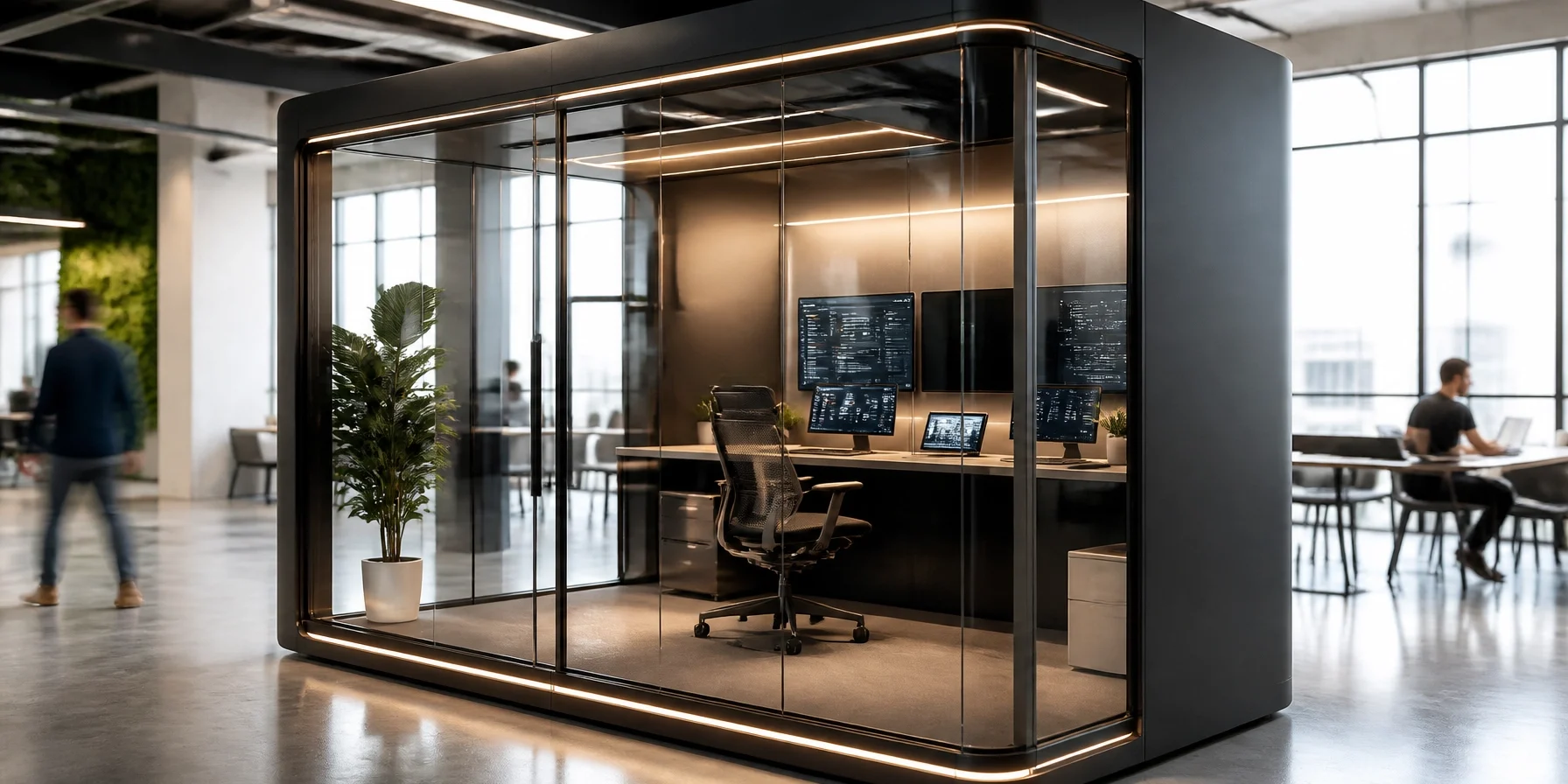
For decades, the "computer lab" was a staple of educational and corporate infrastructure. It was typically a sterile room filled with rows of identical beige towers, flickering fluorescent lights, and the faint hum of centralized air conditioning struggling to keep up with the heat of thirty CRT monitors. While these spaces served their purpose during the dawn of the digital age, the rapid evolution of industry-specific technology has rendered the traditional, general-purpose lab increasingly obsolete.
Today, the landscape of technical training and workforce development is shifting toward a more agile, specialized, and scalable solution: the modular pod. As industries like cybersecurity, logistics, and digital content creation demand more than just basic "digital literacy," the physical environment in which these skills are acquired must adapt. Modular pods are not merely a change in furniture; they represent a fundamental shift in how we prepare the next generation of professionals for high-stakes, high-growth careers.
The Obsolescence of the Traditional Lab
The traditional computer lab was designed for a "one-size-fits-all" approach. Whether a student was learning word processing or basic programming, the hardware and environment remained the same. However, in the modern economy, technical roles are highly specialized. A cybersecurity analyst requires a different environmental and network configuration than a logistics manager or a video editor.
Furthermore, traditional labs are notoriously rigid. Renovating a fixed lab to meet new technological standards is a costly and time-consuming endeavor, often involving significant electrical and structural work. According to industry analysis from USA Entertainment Ventures LLC, the static nature of these labs often leads to a "tech debt" where the infrastructure cannot keep pace with the software and hardware requirements of the modern workforce.
Modular pods solve this by providing "plug-and-play" environments that are purpose-built for specific career pathways. These units are scalable, repeatable, and: most importantly: aligned with real-world workflows.

(Image prompt: A high-contrast, professional photo of the interior of a cybersecurity modular pod. It looks like a miniature Security Operations Center (SOC) with multiple large monitors displaying data maps and code. The lighting is cool-toned with blue accents, and the furniture is ergonomic and modern. High-end tech feel.)
The Cybersecurity Gateway: Immersive Defense
One of the most critical applications for modular pods is in the field of cybersecurity. A traditional lab environment is often ill-equipped for the "live-fire" exercises required to train effective Security Operations Center (SOC) analysts. Modular cyber pods, however, are designed as self-contained mini-SOCs.
These pods can be configured with segmented networks, allowing learners to conduct offensive and defensive exercises without risking the integrity of a larger institutional network. In these environments, students engage in realistic scenarios: responding to simulated ransomware attacks, analyzing suspicious traffic, and managing incident response runbooks.
The physical design of a cyber pod also mirrors the professional environment. By mimicking the layout and atmosphere of a real SOC, these pods help bridge the gap between classroom theory and the high-pressure reality of a cybersecurity career. As demand for these roles continues to surge, particularly within the Department of Defense (DOD) and private security firms, the ability to rapidly deploy these training environments via modular units is becoming a significant competitive advantage.
Logistics and Terminal Operations: The Physical-Digital Interface
While cybersecurity is a digital-first field, the logistics and transportation industries represent a complex intersection of physical infrastructure and digital management. Modern terminal operations rely on sophisticated technology for inventory tracking, yard management, and real-time operations monitoring.
Modular pods designed for logistics careers provide a simulated "control center" environment. These pods can be equipped with specialized hardware: such as RFID systems, terminal operating system (TOS) consoles, and transportation management software: that is rarely found in a standard computer lab.
For professionals transitioning into logistics, these pods offer a tangible way to understand the flow of data that drives global trade. This is particularly relevant for the divisions of USA Entertainment Ventures LLC that focus on business development and management within the transportation sector. By using modular pods to simulate terminal operations, organizations can train field IT engineers and platform managers in a controlled setting that precisely replicates the complexity of a busy port or distribution hub.

(Image prompt: A crisp, modern photograph of a modular logistics pod. The interior features large displays showing terminal operations maps, inventory data, and shipping routes. The aesthetic is industrial yet clean, with high-contrast lighting and a focus on high-tech logistics management tools.)
Empowering the Next Generation of Content Creators
The rise of the "creator economy" has transformed content creation from a hobby into a professional career path. However, producing high-quality digital media requires more than just a laptop; it requires controlled acoustics, professional lighting, and high-performance editing hardware.
Traditional computer labs are often loud, open-plan spaces with poor lighting: environments that are fundamentally at odds with professional media production. Modular "creator pods" address this by providing sound-treated, light-controlled environments that function as miniature production studios.
These pods allow learners to master the technical aspects of video production, podcasting, and digital storytelling. This is especially vital for the intersection of tech and media, such as the emerging role of the "Cybersecurity Content Creator": professionals who can translate complex technical concepts into engaging social and educational content. By providing a dedicated space for this work, modular pods legitimize and professionalize the content creation pathway within the broader tech industry.
The DOD Skill Bridge and Workforce Integration
A significant driver in the adoption of modular pods is the need for efficient workforce transition programs, such as the DOD Skill Bridge recruitment initiatives. For veterans transitioning into civilian tech roles, the "row-and-file" classroom can feel disconnected from the mission-oriented environments they are accustomed to.
Modular pods provide a focused, professional atmosphere that aligns with the specialized training models used in the military. These units can be deployed directly to military installations or community workforce centers, bringing high-tech training to the people who need it most.
The ability to rapidly scale these programs is essential. As noted by industry experts, the modular nature of these pods allows for "granular scaling": organizations can add a single "Cyber Pod" or "Logistics Pod" to an existing facility without a total overhaul of their physical footprint. This efficiency is a hallmark of the managing services provided by companies like USA Entertainment Ventures LLC, ensuring that both business development and recruitment goals are met with minimal overhead and maximum impact.

(Image prompt: Professional, high-contrast photography of a mentorship session in a modern office. A business consultant is speaking with a veteran in a business-casual setting. They are looking at a tablet together, with a modular pod visible in the background. Natural lighting, optimistic and professional mood.)
A Scalable Future for Professional Development
As we look toward the future, it is clear that the "dusty computer lab" is a relic of a previous era. The future of tech careers lies in specialization, agility, and the ability to simulate real-world environments with precision.
Modular pods offer a path forward that is both economically and educationally sound. They provide:
- Enhanced Authenticity: Training that feels like the job itself.
- Economic Scalability: The ability to grow programs one unit at a time.
- Career Specificity: Dedicated spaces for the high-growth fields of cybersecurity, logistics, and content creation.
For organizations looking to innovate in their training and recruitment strategies: whether through DOD Skill Bridge or private sector business development: embracing modular infrastructure is no longer an option; it is a necessity. The pods are here, and they are paving the way for a more specialized, more efficient, and more successful workforce.
To learn more about how USA Entertainment Ventures LLC is managing these transitions and driving innovation in business development and DOD recruitment, visit usaentertainmentventures.com.





