
The year 2026 has arrived with a clear mandate for the corporate world: the digital skills gap is no longer a "future" problem. It is a present-day crisis. As organizations across the globe pivot toward total AI integration, the competition for specialized talent in Cloud, Artificial Intelligence, and Data Analytics has reached a fever pitch.
For decades, the standard operating procedure for talent acquisition was simple: wait for students to graduate from a four-year university, compete for the top 10% of the class, and offer a competitive starting salary. However, in the current landscape, this model is increasingly viewed as "too little, too late." By the time a student reaches their senior year of college, they are often already locked into internships or specialized tracks that may not align with your specific technical stack.
Today, forward-thinking organizations are realizing that the race for the next generation of innovators actually begins in the high school classroom.
The Magnitude of the Talent Gap
To understand why a shift in recruiting strategy is necessary, one must look at the empirical data defining the current market. According to recent industry analyses, nearly 93% of organizations now consider Artificial Intelligence a strategic priority. Yet, over 51% of those same organizations report a significant lack of internal AI skills.
The deficit is not just a minor inconvenience; it is a structural barrier to growth. IDC projects that by late 2026, more than 90% of global enterprises will face "critical" skills shortages in areas such as AI and data science. This shortage is reflected in the job market, where AI-related job postings have surged by nearly 300% over the last decade. Demand is simply outstripping supply at a rate that traditional education cannot match.
Furthermore, the World Economic Forum estimates that 44% of workers' core skills will be disrupted by automation and AI by 2027. Despite this, only about 30% of the workforce has received formal training to adapt. This leaves a massive void that can only be filled by a new, more agile pipeline of talent.

Why High School is the New Frontier
Engaging with students at the high school level (ages 16-18) allows companies to foster "foundational data literacy" before these individuals enter the more rigid paths of higher education. This early engagement serves several critical purposes:
- Skill Alignment: By partnering with secondary schools, businesses can influence curricula to include the specific cloud platforms (AWS, Azure, Google Cloud) and analytics tools they actually use. This ensures that the next generation is "job-ready" the moment they enter the professional sphere.
- Identifying High-Potential Talent: Paid summer internships for high school seniors allow companies to identify "high-potential" individuals early. These students can take on entry-level tasks like data cleaning or basic dashboard updates, freeing up senior engineers for high-value architectural work.
- Building Brand Loyalty: When a student is introduced to a company's culture and technology in their formative years, they develop a sense of loyalty that is difficult to replicate through traditional university recruiting.
At USA Entertainment Ventures LLC, we focus on managing the complexities of these transitions. We understand that whether you are looking at business development or navigating the complexities of DOD Skill Bridge recruitment, the goal is the same: creating a reliable, sustainable pipeline of skilled professionals.
The ROI of Early-Career Pipelines
Investing in high school outreach is not just a philanthropic gesture; it is a calculated business move with high returns. A Deloitte-referenced analysis found that organizations with structured early-career programs can reduce recruitment costs by up to 40% over time.
These cost savings stem from several factors:
- Lower Turnover: Students who grow within a company from an early age have a higher retention rate than "job-hoppers" hired from the open market.
- Reduced Churn: Early exposure allows for a better "fit" between the individual and the organization’s specific tech stack.
- Streamlined Onboarding: By the time an early-pipeline hire joins full-time, they are already familiar with the internal workflows and systems.
The concept of the Next-Gen Talent Funnel is centered on this idea: building a steady stream of talent rather than reacting to vacancies as they appear.

Reimagining the Learning Environment
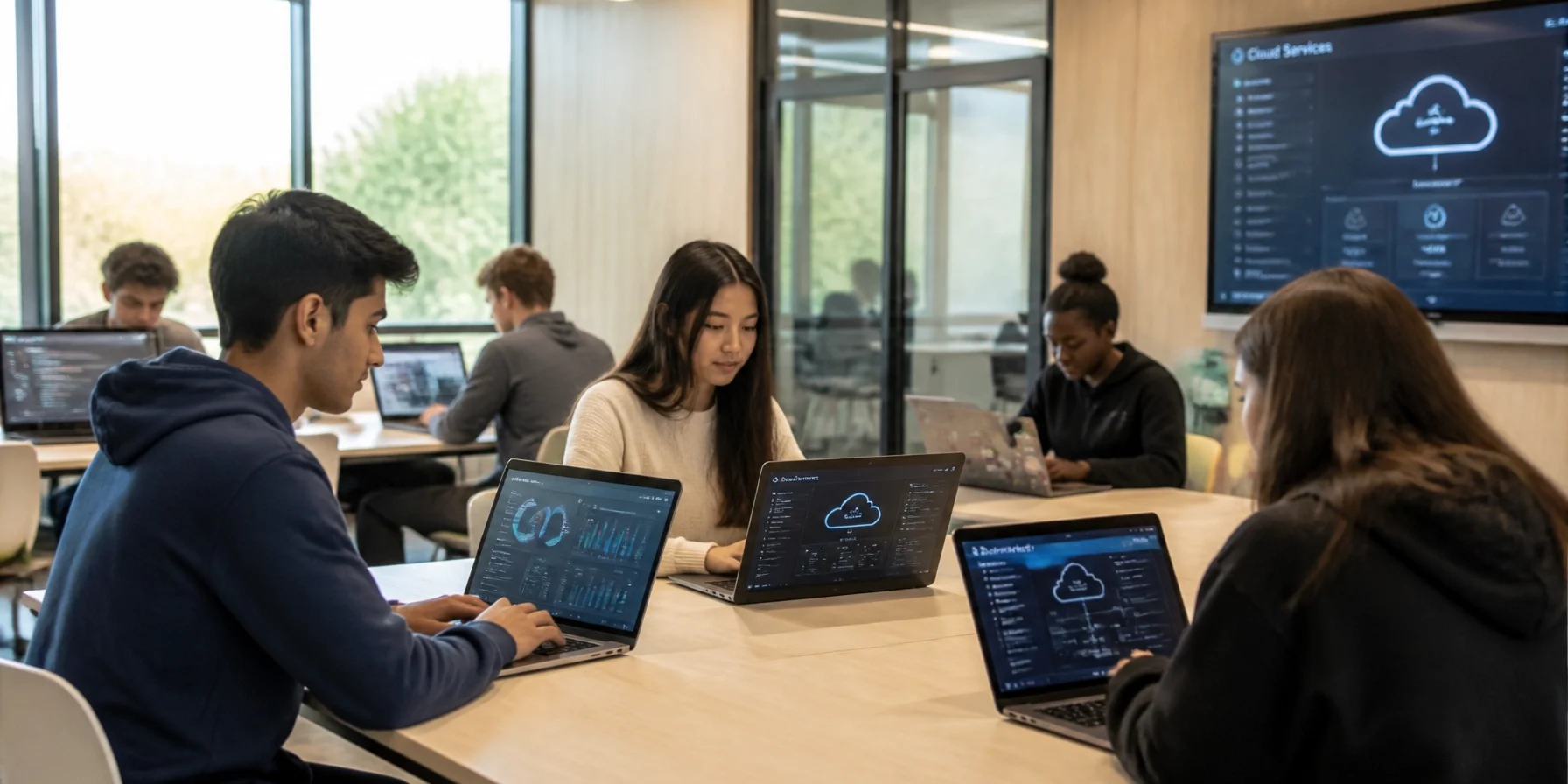
The physical space where this talent is nurtured is also changing. Traditional computer labs are often outdated and uninspiring. To attract the best minds in AI and cyber careers, companies and schools are moving toward modular learning pods.
These pods provide a high-tech, focused environment that mirrors the modern workplace. They are equipped with the hardware and software necessary to run complex simulations, data analytics, and AI training models. By providing students with access to this caliber of technology, organizations signal that they are serious about innovation and professional development.
Actionable Steps for Your Organization
If your organization is currently struggling to find AI and Cloud talent, consider the following practical shifts:
- Develop a "High School to Work" Partnership: Work with local vocational programs or Career and Technical Education (CTE) departments to create a pathway for students to earn industry-recognized credentials while in school.
- Implement "Modular" Internships: Create short-term, project-based internships for seniors that focus on specific tasks like cloud operations or data entry.
- Utilize Existing Government Programs: For those in specialized sectors, looking into DOD Skill Bridge recruitment can provide access to transitioning service members who already possess the discipline and foundational skills required for high-tech roles.
- Focus on Diversity: Reaching into high schools allows you to attract students from diverse backgrounds who might not have considered a career in tech, thereby expanding your talent pool and bringing in fresh perspectives.

Moving Forward with Optimism
The shift toward early-career recruitment is a sign of a maturing tech industry. We are moving away from the "panic-hiring" of the early 2020s toward a more reasoned, structured approach to human capital management.
By investing in high school students today, you are not just filling a seat; you are securing the future of your organization. The talent is out there, they are simply waiting for an invitation to join the race. Whether you are scaling a business development department or looking for the next great AI architect, the time to start is now.
For more insights on how to optimize your talent acquisition and business management strategies, contact our team at USA Entertainment Ventures LLC.
Want more insights like this? Subscribe at usaentertainmentventures.com.
Questions or partnerships? Call our AI Receptionist at +1 (970) 703-0102.
Dan Kost, CEO
If this helped you, please comment, subscribe, and share.





