
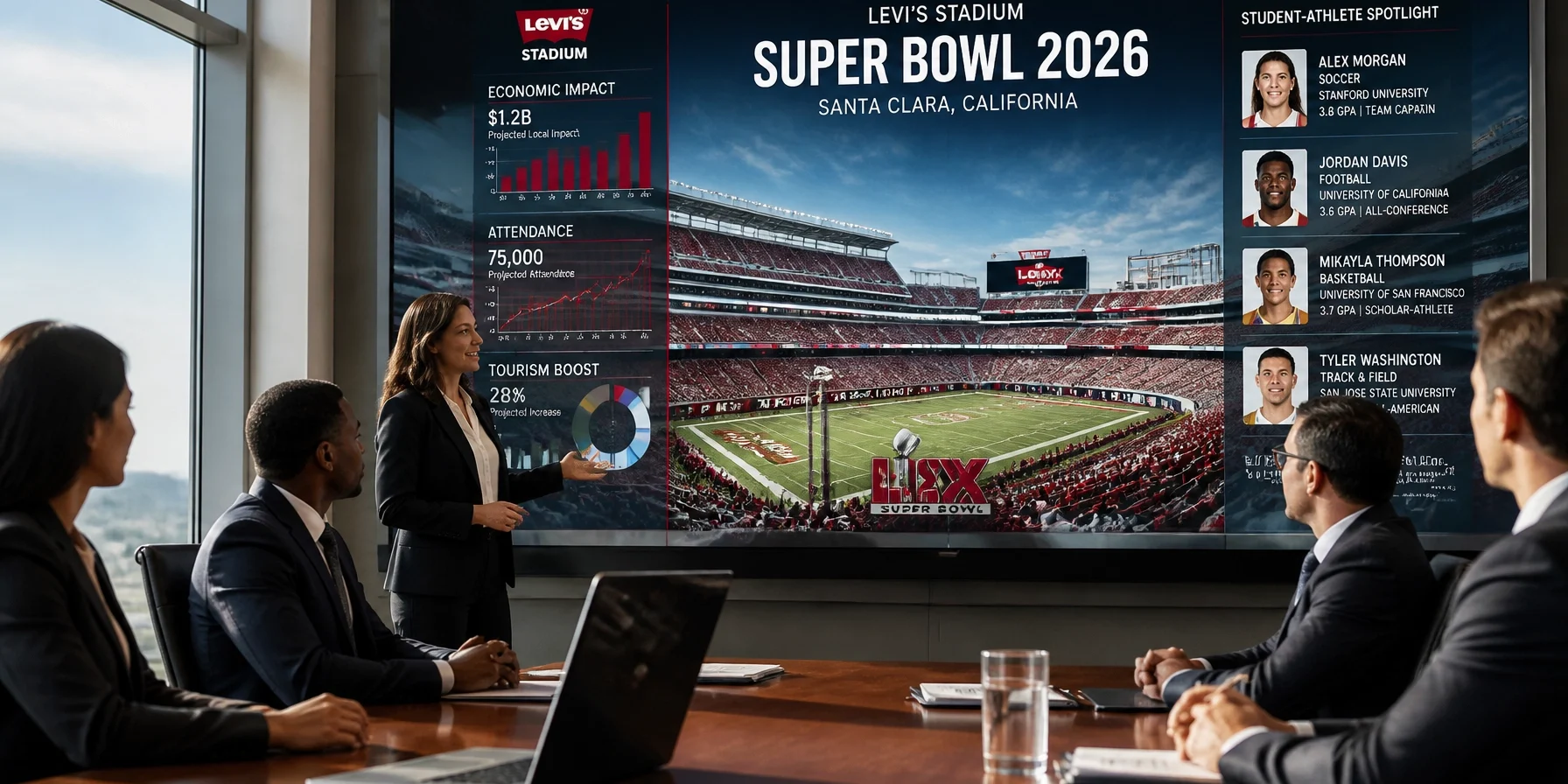
As the marketing landscape pivots toward Super Bowl 2026, a structural shift is occurring in how Fortune 100 brands approach the world’s most-watched television event. The traditional model: relying solely on a 30-second broadcast spot featuring a Hollywood A-lister: is rapidly evolving. Today, the most successful Chief Marketing Officers (CMOs) are looking toward the "NIL Revolution" to bridge the gap between national prestige and local, authentic engagement.
NIL (Name, Image, Likeness) has transitioned from an experimental collegiate trend into a multi-billion dollar strategic channel. For the 2026 season, the integration of NIL platforms is no longer a niche tactic but a central component of high-stakes sports marketing. By leveraging these platforms, brands can surround the live broadcast with an "always-on" creator network that drives storytelling before, during, and long after the final whistle.
According to industry data, the NIL ecosystem now encompasses over 100,000 athletes, providing a data-rich pool for brands to activate around major tentpole events. As noted by Dan Kost, CEO of USA Entertainment Ventures LLC, the goal is to "bridge the gap between your brand and the student-athletes who define culture for the next generation."
Here is the definitive five-step guide for CMOs to leverage NIL platforms and dominate Super Bowl 2026.
Step 1: Architect a Three-Phase Campaign Narrative
The most effective Super Bowl campaigns in 2026 are not single-moment events; they are structured three-phase narratives. Research into high-performing sports campaigns indicates that a "full-funnel" approach: incorporating pre-game, game-day, and post-game activations: significantly outperforms isolated TV spots.
- The Pre-Game Narrative: Use NIL platforms to launch campus-level storylines and "behind-the-scenes" teasers weeks before the game. This builds anticipation and establishes a connection with younger demographics who may not engage with traditional TV promos.
- Game-Day Content: On the day of the Super Bowl, activate your network of athletes for real-time reactions and second-screen content. This "rides" the live broadcast, capturing the attention of fans who are multitasking on social media platforms like TikTok, Meta, and YouTube.
- The Post-Game Sustain: After the trophy is raised, the campaign should continue. Use athlete-led "redemption" stories or localized remixes of the flagship creative to maintain momentum.
By treating the Super Bowl as a month-long dialogue rather than a one-day broadcast, brands can ensure their investment yields a much longer tail of engagement.

Step 2: Prioritize "Creator Value" Over Raw Reach
In 2026, the metrics of success have shifted. Fortune 100 CMOs are moving away from raw follower counts toward a metric known as "Creator Value." This encompasses a blend of authenticity, content quality, and deep-seated community connection.
While a celebrity might have millions of followers, a student-athlete often possesses a more loyal, localized audience that trusts their recommendations. Modern NIL platforms provide the data necessary to select athletes based on specific audience fit and brand-safety scores.
"We aren't just looking for a follower count," industry experts often remark when discussing 2026 strategies. The focus is on finding voices that naturally align with the brand’s positioning. This authenticity is the key to breaking through the noise of a crowded Super Bowl advertising environment. When an athlete shares a brand message, it feels less like a commercial and more like a recommendation from a trusted peer.
Step 3: Scale via Centralized NIL Platforms
Scaling a campaign to include hundreds or even thousands of individual influencers was once a logistical nightmare. Today, centralized NIL platforms: like those managed by Sports Media: allow brands to tap into networks of over 20,000 authentic voices through a single point of contact.
This scale enables a "programmable media" approach. CMOs can build "pods" of athletes categorized by region, sport, or persona. This allows for:
- A/B Testing: Running different creative variations across different athlete segments to see what resonates most.
- Localized Offers: Tailoring messages to specific fan bases (e.g., San Francisco fans vs. neutral viewers).
- Sequential Storytelling: Ensuring that a fan sees a consistent, unfolding story across multiple touchpoints in their social feed.
By using these platforms, a Fortune 100 brand can orchestrate a coordinated "wave" of social content that matches the scale of the Super Bowl itself.
Step 4: Bridge Digital and Physical Environments
A truly dominant Super Bowl strategy doesn't stop at the smartphone screen. It integrates digital influence with physical presence. This is where proprietary networks like Sporttron become invaluable.
CMOs should look to synchronize their NIL athlete content with "Out-Of-Home" (OOH) displays, ribbon boards, and jumbotrons inside and around the stadium. Imagine a fan seeing a student-athlete's TikTok content on their phone, then seeing that same athlete featured on a 360-degree ribbon board as they enter the stadium.
This "omni-channel" approach ensures that the brand owns the environment. From the high-touch concession platforms to the very floors fans walk on, the brand presence should be ubiquitous and consistent. By bridging the gap between the athlete's digital "creator" world and the physical "arena" world, brands create a tangible fan experience that is impossible to ignore.

Step 5: Leverage Predictive Modeling for ROI
The final step in a winning NIL strategy is moving from "best guess" marketing to data-driven certainty. For Super Bowl 2026, leading agencies are utilizing predictive modeling and fan sentiment analysis to prove Return on Investment (ROI).
NIL platforms provide granular analytics: impressions, engagement rates, and even conversion proxies: that allow CMOs to refine their creative decisions in-flight. Before the game even starts, data can predict which athlete-led segments are likely to drive the highest engagement.
"We prove your ROI by using predictive modeling and fan sentiment," explains the team at USA Entertainment Ventures. This scientific approach to influence ensures that marketing budgets are not just spent, but invested in ways that yield measurable business impact. By the time the Super Bowl ends, a brand should have a clear data map of how their NIL activations influenced consumer perception and purchasing intent.
Conclusion: The Future of the Arena
The Super Bowl remains the pinnacle of American marketing, but the tools required to "win" it have changed. The NIL revolution has provided Fortune 100 brands with a new, powerful way to connect with the next generation of consumers.
By architecting three-phase campaigns, prioritizing creator value, scaling through platforms, bridging the digital-physical divide, and leaning into predictive data, CMOs can do more than just advertise: they can dominate the arena.
As we look toward 2026 and beyond, the brands that embrace this evolution will be the ones that stay relevant in an increasingly fragmented media landscape. The opportunity to align your vision with the unmatched expertise of a premier sports marketing agency has never been more critical.






