
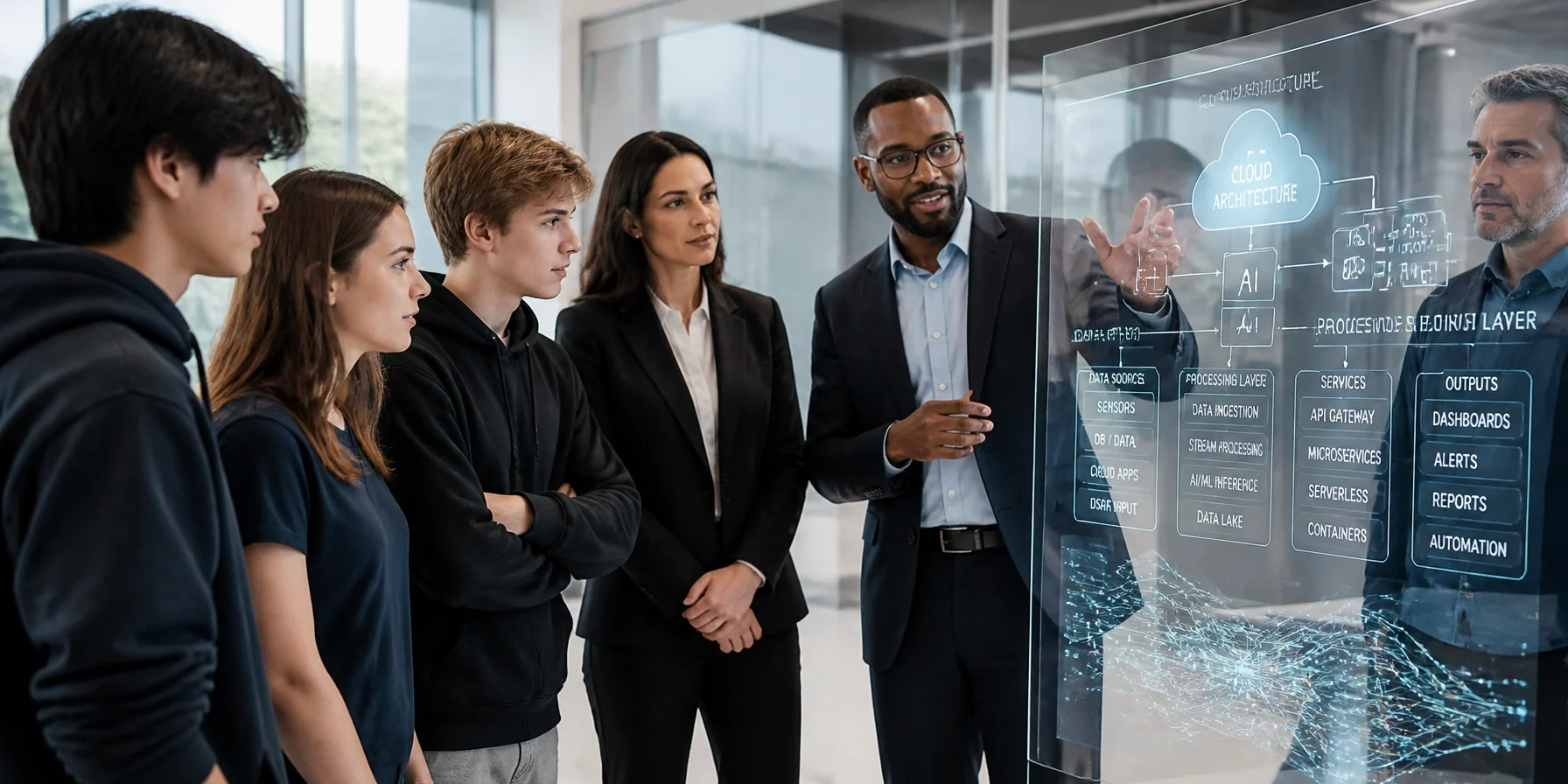
The global business landscape is currently navigating a period of unprecedented technological transformation. As organizations pivot toward more data-driven operations, the demand for proficiency in Cloud computing, Artificial Intelligence (AI), and Data Analytics has moved from the periphery of IT departments to the center of corporate strategy. However, this transition is meeting a significant obstacle: a widening talent gap that threatens to stall innovation and increase operational costs.
While traditional talent acquisition has focused on university graduates and experienced professionals, a new strategic front is emerging. High schools are becoming the critical battleground for securing the next generation of technical talent. By engaging with students earlier, companies can cultivate a pipeline that is not only technically proficient but also deeply aligned with organizational needs and professional standards.
The Impending Gap in Cloud, AI, and Data
To understand why a shift in strategy is necessary, one must look at the empirical data. Recent industry analyses indicate a staggering disconnect between technical demand and available supply. In the AI sector alone, there are approximately 1.6 million open positions globally, yet only about 518,000 qualified candidates are currently available to fill them. This shortage is most acute in the three pillars of the modern digital economy: Cloud infrastructure, AI implementation, and Data Analytics.
In the United States, AI-related skills now appear in approximately 2.5% of all job postings: a share that has grown by nearly 300% over the last decade. This suggests that technical literacy is no longer a niche requirement but a mainstream necessity across all sectors, from Medical to Government. Organizations that wait until a student reaches college to begin their recruitment efforts are finding themselves in a crowded, high-cost market where candidates are already being heavily recruited by competitors.
Why High School is the New Front Line
One of the most compelling reasons to target the secondary education level is to prevent what researchers call the "early exit" from the STEM (Science, Technology, Engineering, and Mathematics) pipeline. If a student does not develop a foundational interest or proficiency in data analytics or cloud infrastructure during their secondary school years, they are significantly less likely to pursue these fields in higher education or vocational training.

Statistics show that early exposure to AI and Cloud technologies in secondary school significantly improves a student's persistence and progression into technical pathways. According to recent white papers on the future workforce, every region with a heavy investment in AI requires a matching skills pipeline that begins with early AI literacy (ages 11–18). Without structured programs in place, companies face a long-term skills shortfall that cannot be resolved through lateral hiring alone.
Furthermore, students today are "AI-native." Research indicates that the share of high schoolers using generative AI for schoolwork has risen to over 84% in the last academic year. However, despite this high usage, nearly 48% of these students feel their schools are not adequately preparing them for a future shaped by these technologies. This gap between usage and preparation presents a prime opportunity for corporate intervention and partnership.
The Risks of the "Wait and See" Approach
For business leaders and HR professionals, the risks of a reactive talent strategy are manifold. Relying solely on the external hiring market for "ready-made" talent often leads to three critical failures:
- Increased Salary Inflation: When demand vastly exceeds supply, organizations are forced into bidding wars, driving up recruitment costs and compensation packages to unsustainable levels.
- Literacy Mismatches: Incoming workers may be frequent users of consumer AI, but they often lack the professional literacy required for enterprise-level data-driven decision-making or understanding complex cloud-based data flows.
- Slower Innovation Cycles: Without a steady stream of internal talent, digital transformation projects: such as migrating to the cloud or deploying predictive analytics: are frequently delayed or underperform.
By neglecting the high school demographic, companies are essentially allowing their future talent pool to shrink before it even reaches the workforce. This is a risk that USA Entertainment Ventures LLC recognizes as a central challenge in modern Business Consulting.
Integrating Project Management into the Funnel
While technical skills in AI and Cloud are essential, they do not exist in a vacuum. The ability to execute complex technical projects requires a mastery of Project Management. Introducing high school students to the principles of project management alongside their technical training ensures that the future workforce is not only capable of building AI models but also of delivering them on time and within budget.

"Preparing America’s future workforce for the age of AI is urgent, and it starts with teachers," notes the National Applied AI Consortium (NAAIC). By expanding resources for educators and providing industry-standard project management frameworks, companies can help students understand the full lifecycle of a technical product: from data gathering to deployment.
Actionable Strategies for Early Engagement
Transitioning to an early-engagement model does not require a complete overhaul of current Human Resources practices. Instead, it involves expanding the scope of existing talent strategies to include secondary education partnerships.
1. Curriculum and Platform Collaboration
Organizations can provide input on Cloud and Data Analytics coursework to ensure it aligns with real-world job roles. Providing schools with access to industry-standard software and platforms allows students to build "platform skills" that make them job-ready sooner. This is particularly effective when students can earn industry-recognized credentials before they even graduate.
2. Work-Based Learning and Internships
Models like P-TECH (Pathways in Technology Early College High School) have demonstrated that offering high school students paid internships and mentorships can create a direct pathway to employment. These students are significantly more likely to secure a full-time position shortly after graduation because they have already assimilated into the professional culture.
3. Mentorship and Role Models
Pairing technical staff with students for mentorship programs humanizes the industry. It allows students to see a clear career trajectory, which is essential for maintaining engagement in complex technical subjects. Just as the DOD Skill Bridge program facilitates transitions for military members, corporate mentorship acts as a bridge for students entering the technical workforce.

The ROI of Early Talent Pipelines
Engaging with high school students is no longer a peripheral Corporate Social Responsibility (CSR) initiative; it is a fundamental strategic requirement. The benefits of this approach include:
- Lower Training Costs: Students who enter the workforce through a dedicated pipeline require less remedial training and are productive much faster than external hires.
- Reduced Turnover: Building relationships with talent early creates a sense of loyalty that can significantly reduce turnover rates in the long term.
- Stabilized Supply: By proactively creating talent, companies are less vulnerable to the fluctuations of the external labor market.
Industry collaboration with K–12 is "key to America’s future workforce," because "the future of our economy depends on a strong and diverse talent pipeline, and K-12 education is the foundation upon which that talent will be built," as emphasized by workforce development experts at MindSpark.
Actionable Takeaways for Business Leaders
To begin building a next-generation talent funnel, business leaders should consider the following steps:
- Audit Future Skill Needs: Identify the specific Cloud, AI, and Analytics skills your organization will require in the next five to ten years.
- Establish Local Partnerships: Connect with local high schools or STEM coalitions to explore guest speaking, lab sponsorship, or advisory board opportunities.
- Pilot Mentorship Programs: Launch a small-scale program where employees spend a few hours a month mentoring students interested in tech and project management.
- Adopt "Bridge" Thinking: Create structured pathways for high schoolers to enter your organization via vocational or technical tracks, ensuring a seamless transition from the classroom to the boardroom.

Conclusion: Future-Proofing Through Early Action
The battle for Cloud, AI, and Data Analytics talent will not be won in the recruitment offices of top-tier universities alone. It will be won in the classrooms and labs of high schools, where the next generation of innovators is currently deciding whether to pursue a career in technology or exit the pipeline entirely.
By adopting a forward-looking strategy that emphasizes early engagement and project management proficiency, business leaders can ensure their organizations are not just consumers of talent, but creators of it. The benefits: reduced costs, increased innovation, and a stable workforce: are too significant to ignore. The time to connect with the high schools of today is now, to secure the leaders of tomorrow.
For more information on how to manage and scale your organization's talent strategy, visit our services page or contact us to learn more about our consulting and recruitment expertise.





