
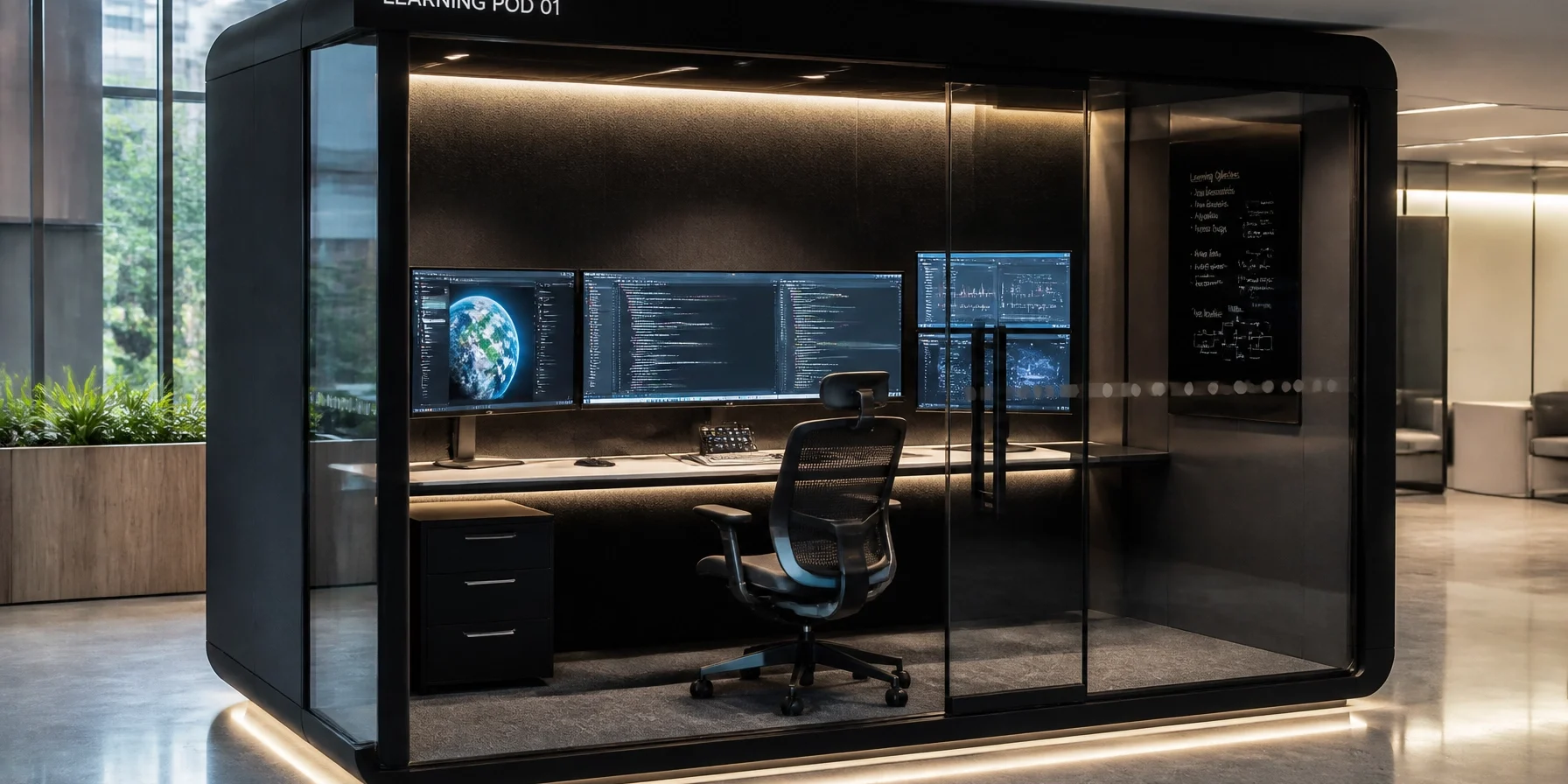
For decades, the "computer lab" was the cornerstone of technical education. It was a standardized room filled with rows of identical workstations, designed for general-purpose digital literacy. However, as the global economy shifts toward highly specialized technical roles in cybersecurity, logistics, and digital media, this monolithic model is becoming obsolete. The modern alternative: the high-tech learning pod: is not merely a furniture upgrade; it represents a fundamental shift in how physical infrastructure supports career development.
At USA Entertainment Ventures LLC, we recognize that the bridge between education and professional readiness is built on the quality of the environment in which training occurs. As we manage complex talent funnels and DOD Skill Bridge recruitment programs, the transition from general labs to specialized pods has emerged as a critical driver of success.
Defining the Pod: A Modular Evolution
Unlike the traditional computer lab, which often functions as a shared resource with limited adaptability, a "pod" is a self-contained, modular, and purpose-built environment. These units are designed to replicate the exact physical and digital conditions of modern high-stakes industries. While a computer lab provides a desk and a screen, a pod provides a localized ecosystem including dedicated power, high-performance edge computing, specific hardware interfaces, and acoustic isolation.
Research into modern workforce development suggests that institutions implementing pod-based infrastructure can see significant improvements in learner retention and skill acquisition. According to industry data, modular training environments can reduce facility renovation costs by up to 30%, while offering the flexibility to reconfigure spaces as technology evolves.

The Cybersecurity Case: The "Sandbox-in-a-Box"
One of the most compelling arguments for pods over labs is found in the cybersecurity sector. Traditional school or corporate networks are inherently restrictive to protect the integrity of the institution's data. This creates a "sterile" environment that is often disconnected from the realities of cyber warfare and threat mitigation.
Pods serve as a "sandbox-in-a-box." They allow for physical and digital isolation, enabling trainees to engage in live-fire simulations, ethical hacking, and red-team vs. blue-team exercises without risking the broader institutional network.
"Effective cybersecurity training requires high-fidelity environments that can be isolated from production networks," notes industry security professionals. By providing a dedicated Security Operations Center (SOC) experience within a small physical footprint, pods allow learners to master:
- Physical Infrastructure Security: Understanding how hardware, cooling, and physical access controls impact data integrity.
- Low-Latency Threat Analysis: Utilizing local high-performance servers for resource-intensive packet analysis.
- Collaborative Incident Response: Working in a focused, mission-control style environment that mimics real-world SOCs.

Logistics and the Modern Supply Chain
In the realm of logistics and operations, the shift to pod-based learning is equally transformative. Modern logistics is no longer about moving boxes; it is a data-driven science that relies on real-time visualization of global supply chains.
A logistics-focused pod can be outfitted with multi-monitor arrays that display live shipping data, inventory dashboards, and demand planning software. This allows trainees to manage simulated global networks using the same Enterprise Resource Planning (ERP) tools used by Fortune 500 companies. This level of immersion is difficult to achieve in a generic lab setting where the physical environment does not match the intensity of the operational task.
For those entering the workforce through specialized pathways, such as the DOD Skill Bridge program, these pods provide a structured environment to translate mission-planning expertise into civilian logistics operations.

Modernizing Content Creation and Media
The rise of the "creator economy" and the demand for high-quality corporate media have turned content creation into a high-tech discipline. Traditional labs often lack the acoustic treatments and specialized peripheral support required for high-end video editing, audio mixing, and live streaming.
Pod-based infrastructure addresses these needs by integrating professional-grade microphones, cameras, and audio interfaces into a single, sound-dampened unit. This allows institutions to scale their media programs by adding pods as needed, rather than building out expensive, permanent studio wings. This modular approach ensures that the physical infrastructure remains as agile as the technology it houses.

Strategic Benefits of Pod-Based Infrastructure
The transition from labs to pods offers several strategic advantages for both educational institutions and corporate training centers:
- Scalability: Institutions can add pods incrementally as program demand increases, avoiding the massive capital expenditure required for full-room renovations.
- Specialization: Different pods can be configured for different career pathways: one for AI development, another for logistics, and a third for cybersecurity: all within the same facility.
- Future-Proofing: As technology changes, individual pods can be upgraded or reconfigured without disrupting the entire training center's infrastructure.
- Operational Efficiency: Pods often integrate their own cooling and power management, reducing the strain on legacy building systems.
Conclusion: Investing in the Talent Funnel
The goal of modern physical infrastructure is to bridge the gap between "learning about" a career and "performing" a role. By replacing the outdated computer lab with specialized, modular pods, organizations can create a more direct and effective path to employment.
At USA Entertainment Ventures LLC, we believe that the future of workforce development lies in these high-density, high-performance environments. Whether you are a business looking to modernize your internal training or an institution preparing the next generation for roles in high-demand tech sectors, the evidence is clear: the physical space matters. Investing in pods is not just an infrastructure choice; it is an investment in the specialized talent that will drive the future economy.





