
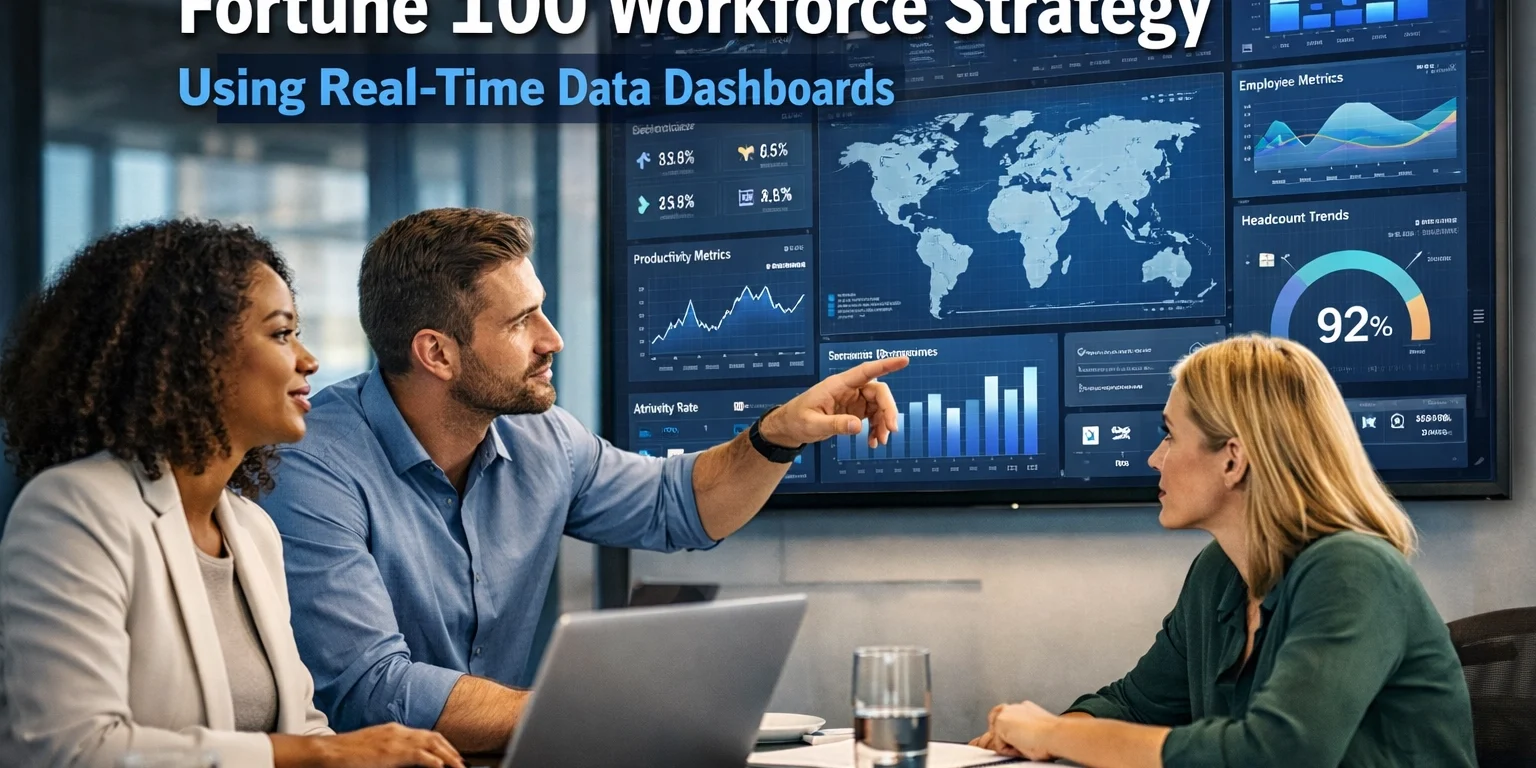
In the modern corporate landscape, the speed of information often dictates the speed of success. For Fortune 100 companies, the challenge isn't a lack of data; it is the ability to interpret and act upon that data in real-time. Traditional workforce strategies relied on retrospective analysis: looking at what happened last quarter to make decisions for the next. Today, that model is obsolete. To remain competitive, executives are shifting toward real-time data dashboards that offer a living, breathing view of their greatest asset: their people.
At USA Entertainment Ventures LLC, we see this transition not just as a technological upgrade, but as a fundamental shift in how businesses interact with the talent pipeline. By integrating advanced data analytics with foundational education in media literacy and Name, Image, and Likeness (NIL) principles, organizations are building a "Future Ready" workforce.
The Shift to Real-Time Leadership
The primary driver behind the optimization of workforce strategy is the move away from siloed information. High-performing organizations are now utilizing leadership dashboards to drive transparency and agility. For example, companies like Box have pioneered the use of leadership dashboards to navigate the complexities of hybrid work models. These tools allow managers to see, in real-time, how teams are collaborating and where bottlenecks are forming.
Real-time analytics provide a level of responsiveness that was previously impossible. When a leader can see a dip in engagement or a spike in turnover risk as it happens, they can intervene before the problem scales. This proactive stance is what separates the market leaders from the laggards. Data from Fortune's 100 Best list indicates that companies utilizing these high levels of agility and data-driven insight achieve more than eight times greater revenue per employee than their competitors.

Key Metrics for the Modern Executive
To optimize a workforce strategy, one must know which metrics actually move the needle. It is no longer enough to track headcount and payroll. The "Future Ready" executive looks at:
- Employee Sentiment and Real-Time Feedback: Using apps to gather daily or weekly insights into workplace sentiment allows leaders to respond to cultural shifts immediately.
- Predictive Turnover Models: By analyzing patterns in behavior and engagement, AI-driven dashboards can predict which employees are likely to depart, allowing for targeted retention efforts.
- Collaboration Tracking: Tools like Accenture’s "Leader Network Diagnostic" help visualize how information flows through an organization, identifying where silos are hindering innovation.
These metrics, when viewed through a centralized dashboard, provide a roadmap for internal mobility and training investments. For more on how media and data intersect in the professional world, you can explore resources like Zoomedia News.
Bridging the Gap: NIL Education and Media Literacy
While dashboards help manage the existing workforce, a comprehensive strategy must also focus on the incoming talent pipeline. This is where the concepts of Name, Image, and Likeness (NIL) and media literacy become critical.
Originally confined to the world of collegiate athletics, NIL principles are now a cornerstone of personal branding for all professionals. In an era where every employee is a representative of the corporate brand online, understanding NIL is essential. We believe that "Future Ready" schools must prioritize this education to prepare students for a world where their digital footprint is their resume.
Media literacy is the other side of this coin. A workforce that cannot distinguish between credible information and misinformation is a liability. By fostering media literacy, companies ensure that their employees are better decision-makers and more effective communicators. This education leads to a more discerning workforce that understands the nuances of Sports Media and broader digital trends.
Positioning for the Future: The 'Future Ready' School Anchor
USA Entertainment Ventures LLC serves as an anchor for schools and organizations looking to implement these "Future Ready" programs. We believe that the integration of real-time data and modern literacy is the key to sustainable growth.
When schools adopt a "Future Ready" curriculum focused on data analytics, NIL, and media literacy, they produce graduates who are already aligned with the needs of Fortune 100 companies. These students enter the workforce not just with technical skills, but with the "media-native" intelligence required to navigate complex corporate environments.
This alignment creates a seamless transition from education to employment. Companies that partner with these educational initiatives gain a first-look at talent that is already trained to operate within a data-driven framework. This synergy is a core component of modern Business Consulting.
Media Literacy Outcomes and Corporate Strategy
The outcomes of a media-literate workforce are measurable. When employees understand the mechanics of media, they are better equipped to handle external communications and internal collaboration.
- Improved Crisis Management: Media-literate employees understand how information spreads and can help mitigate reputational risks.
- Enhanced Brand Advocacy: Employees who understand their own "personal brand" (NIL) are more likely to share corporate content effectively, acting as organic ambassadors.
- Data-Informed Decision Making: Media literacy includes the ability to interpret data visualizations correctly, ensuring that the insights provided by dashboards are used effectively.
For organizations looking to enhance their external reach while maintaining internal clarity, exploring platforms like Mobile Highway Ads can provide insights into how modern media consumption patterns are shifting.

Actionable Steps for Implementation
For executives ready to optimize their workforce strategy using these principles, the path forward involves three clear steps:
1. Centralize Your Data
The first step is moving away from fragmented reporting. Invest in a real-time dashboard that integrates HR data, performance metrics, and employee feedback into a single pane of glass. This allows for the "executive-level" view necessary for quick decision-making.
2. Invest in Literacy, Not Just Skills
While technical training is important, literacy: specifically media and data literacy: is what empowers employees to use those skills effectively. Consider implementing NIL education programs for your junior staff to help them manage their professional identities in a way that aligns with corporate values.
3. Build the Pipeline
Look toward "Future Ready" schools and programs as your primary talent sources. By supporting educational initiatives that focus on these modern pillars, you are essentially pre-optimizing your future workforce. Programs that focus on the Ultimate Fan Experience and professional media management provide excellent training grounds for these skills.
The Long-Term Vision
Optimizing a Fortune 100 workforce is a continuous journey. As technology evolves, so too must the strategies we use to manage human capital. The shift toward real-time data dashboards is not a trend; it is the new standard for operational excellence.
By combining the analytical power of these dashboards with a deep commitment to media literacy and NIL education, businesses can create an environment where employees thrive and revenue follows. We are moving toward a future where the boundary between "learning" and "working" is blurred, and where data serves as the bridge between potential and performance.
The companies that succeed will be those that view their workforce not as a cost to be managed, but as a dynamic ecosystem to be nurtured through insight and education. At USA Entertainment Ventures LLC, we are proud to be at the forefront of this transformation, helping to build the "Future Ready" infrastructure that will define the next decade of American business.
For more information on our initiatives and how we are shaping the future of media and business consulting, visit our About Us section and discover how we are making a difference in the corporate and educational landscapes.





