
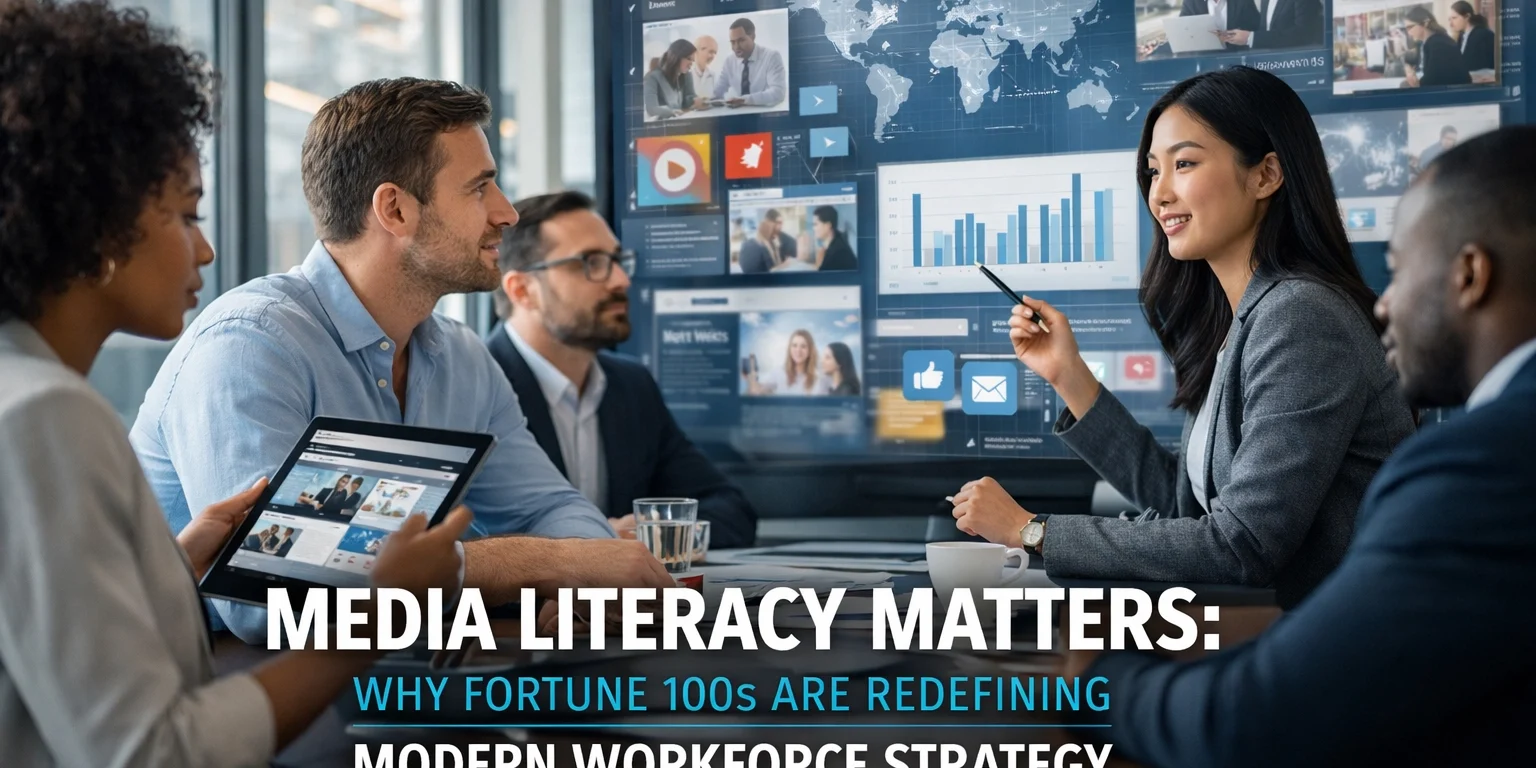
In the current business landscape of March 2026, the definition of a "qualified candidate" has undergone a radical transformation. For decades, Fortune 100 companies focused their recruitment efforts on technical proficiency and academic pedigree. However, as digital transformation has accelerated into an era of synthetic media, hyper-personalized AI, and decentralized information, a new priority has emerged at the top of the executive agenda: Media Literacy.
Today, media literacy is no longer viewed as a "soft skill" reserved for communications departments. It has become a fundamental hard skill, essential for risk management, strategic decision-making, and brand integrity. At USA Entertainment Ventures LLC, we are seeing a significant shift in how the world’s most successful organizations approach workforce development. They are no longer just hiring for what an employee knows, but for how an employee processes what the world tells them.
The Information Crisis as a Business Risk
The urgency surrounding media literacy is driven by the sheer complexity of the modern information environment. With the rise of deepfakes and sophisticated misinformation campaigns, the ability to distinguish fact from fiction is a primary defensive measure. A single employee misinterpreting a synthetic news report or a fraudulent executive memo can lead to catastrophic financial or reputational damage.
Data from recent industry audits suggests that organizations with low media literacy scores among their mid-level management are 40% more likely to fall victim to social engineering attacks. Consequently, Fortune 100s are integrating media literacy outcomes directly into their daily executive newsletter content and internal training modules. The goal is to create a "human firewall" capable of navigating a world where reality is often a variable, not a constant.

From Classrooms to Boardrooms: The 'Future Ready' School Anchor
The solution to the skills gap does not start on the first day of employment; it starts years earlier. Forward-thinking corporations are now positioning themselves as anchors for "Future Ready" schools. This model moves beyond traditional philanthropy, creating a direct pipeline between educational curricula and corporate requirements.
USA Entertainment Ventures LLC acts as a bridge in this ecosystem, helping schools implement programs that prioritize digital citizenship and media competency. A "Future Ready" school is one where students are taught to analyze the source, intent, and bias of every piece of digital content they consume. When these students enter the workforce, they possess an inherent analytical agility that traditional education models often overlook.
By investing in these educational outcomes, businesses ensure that their future talent pool is already equipped with the critical thinking skills necessary to handle high-stakes data environments. This alignment reduces onboarding costs and accelerates the time-to-value for new hires.
Data Analytics Dashboards: Measuring Intellectual Agility
One of the most significant innovations in 2026 is the use of data analytics dashboards to track media literacy outcomes across an organization. Executives are no longer guessing about the competency of their workforce; they are seeing it in real-time.
These dashboards track metrics such as:
- Information Verification Speed: How quickly a team can identify and debunk misinformation within their specific sector.
- Source Diversity: The range of credible sources utilized by departments when compiling strategic reports.
- Synthesis Accuracy: The ability to merge disparate data points into a cohesive, factual narrative.
For a CEO like Dan Kost, these metrics provide a clear picture of an organization’s resilience. "In a world of noise, clarity is our most valuable asset," says Kost. By leveraging these dashboards, leadership can identify specific geographic or departmental trends, allowing for targeted training interventions that maintain a high standard of media literacy across the global enterprise.
The NIL Factor: Employees as Brand Ambassadors
The concept of Name, Image, and Likeness (NIL) was once confined to the world of collegiate athletics. In 2026, the principles of NIL education have migrated into the corporate sector. Fortune 100 companies recognize that every employee is a digital representative of the brand. Whether on professional networking sites or private social media, an employee's digital footprint reflects back on the organization.
Media literacy plays a pivotal role here. When employees understand the mechanics of digital influence, they are better equipped to manage their own personal brands in a way that aligns with corporate values. NIL education for the modern workforce teaches employees how to be effective brand ambassadors while avoiding the pitfalls of digital polarization.
This isn't about micromanaging personal lives; it's about empowering employees with the tools to navigate a public-facing digital world. Organizations that provide NIL and media literacy training report higher levels of employee engagement and a significant decrease in PR crises originating from internal sources.

Strategic Implementation: A Business Consulting Perspective
As a business consulting leader, USA Entertainment Ventures LLC emphasizes that the transition to a media-literate workforce requires a structured, top-down approach. It is not enough to offer a one-time seminar. Media literacy must be woven into the fabric of the corporate culture.
The implementation process typically follows three stages:
- The Assessment Phase: Utilizing data analytics to establish a baseline of current media literacy levels within the organization. This involves testing the ability of staff to identify biased reporting and synthetic media.
- The Integration Phase: Updating daily executive communications to include media literacy tips and real-world case studies. This keeps the concepts top-of-mind for leadership and staff alike.
- The Partnership Phase: Establishing connections with "Future Ready" schools to influence curriculum and secure a talent pipeline that is already fluent in these critical skills.
This structured approach ensures that the investment in media literacy yields measurable returns in the form of improved decision-making and reduced operational risk.
The Competitive Advantage of Early Adoption
The data is clear: companies that prioritize "skills thinking": specifically regarding media and data literacy: are outperforming their peers. According to recent workforce studies, only about 12% of large organizations have fully integrated these practices into their operations. This creates a massive opportunity for early adopters to differentiate themselves.
A media-literate workforce is more adaptable, more skeptical of false trends, and more capable of identifying genuine market opportunities. In an era where "fake news" can move stock prices, the ability to remain grounded in verified data is the ultimate competitive advantage.

Conclusion: A Future-Focused Strategy
As we look toward the remainder of 2026 and beyond, the role of media literacy in workforce strategy will only continue to grow. The boundary between the digital and physical worlds is blurring, and the tools we use to navigate these spaces must evolve accordingly.
For Fortune 100 companies, the shift toward media literacy and "Future Ready" educational partnerships is a pragmatic response to a complex world. By treating information processing as a core competency, these organizations are building a workforce that is not only prepared for the challenges of today but is resilient enough to thrive in the uncertainties of tomorrow.
USA Entertainment Ventures LLC remains committed to guiding businesses through this transition. By focusing on data-driven outcomes and strategic educational alignment, we help our clients turn the challenge of digital complexity into a platform for sustained growth and innovation.
To learn more about our approach to modern workforce strategy and media literacy, visit our portfolio or explore our latest news. The future of business isn't just about what we build; it's about how we see the world.





