
For decades, the "computer lab" was a staple of educational and corporate environments. It was typically a cavernous room filled with rows of identical desktop towers, a tangle of beige cables, and the persistent hum of overworked cooling fans. While these spaces served their purpose in the early digital age, the rapid evolution of technology and the shift toward specialized career pathways have rendered the traditional lab obsolete.
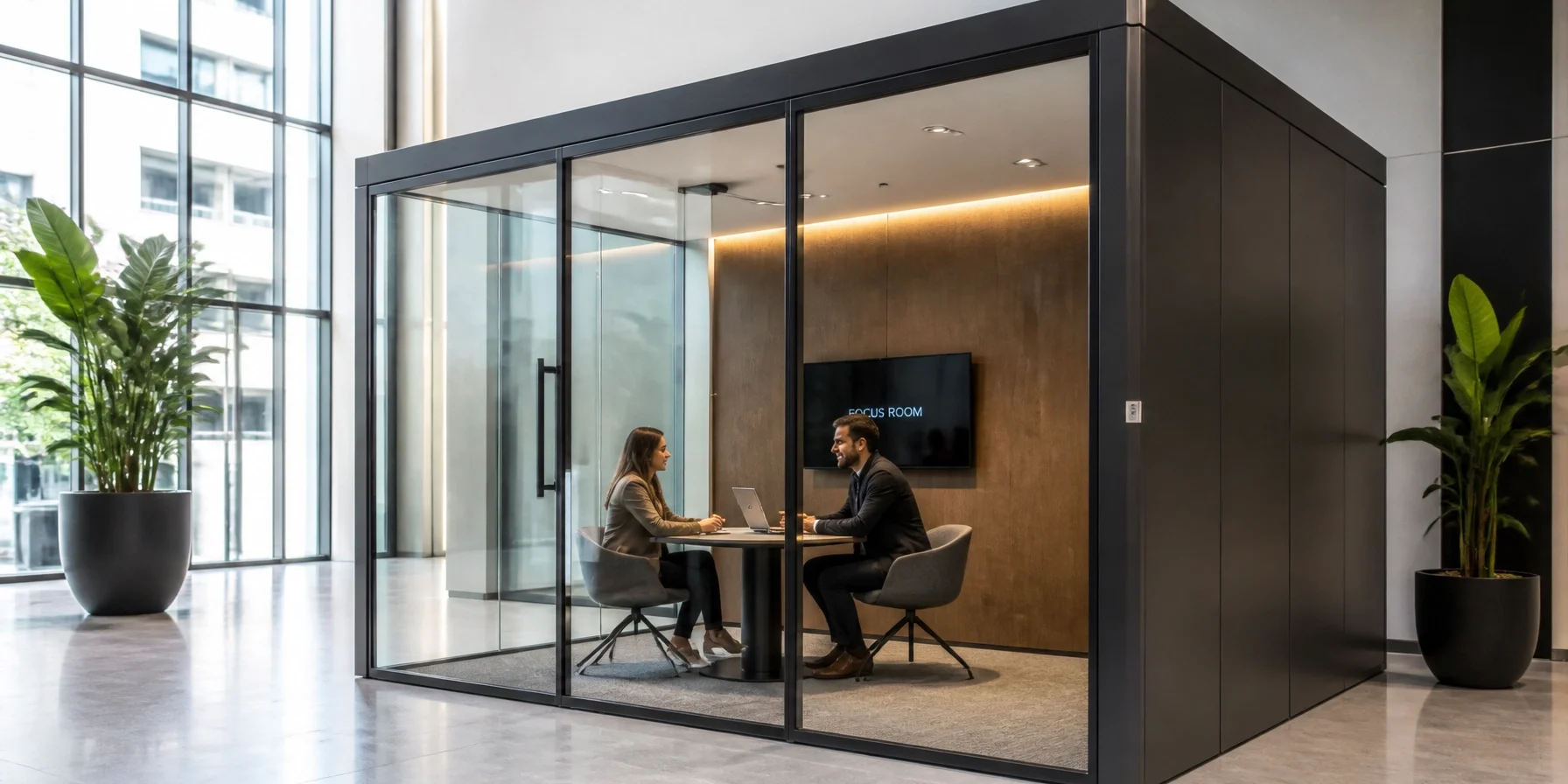
Today, physical infrastructure is undergoing a radical transformation. The "one-size-fits-all" approach is being replaced by modular, purpose-built environments known as pods. These self-contained units are more than just partitioned desks; they are high-tech hubs designed to facilitate deep focus, collaboration, and specialized technical training. As organizations like USA Entertainment Ventures LLC look toward the future of business development and recruitment, pods are emerging as the gold standard for modern tech education and career readiness.
The Evolution of the Learning Environment
The traditional computer lab often resulted in what researchers call the “zombie stare”: rows of students or employees isolated behind monitors with little opportunity for collaborative problem-solving. Furthermore, these labs are difficult to upgrade. If a school or business wants to pivot from teaching basic word processing to hosting high-level cybersecurity simulations, the entire infrastructure must often be overhauled at a significant cost.
In contrast, pods offer a modular architecture. Much like the E-Sports Pod project, these units are prefabricated and can be deployed in a fraction of the time required for traditional construction. They are designed to be "swappable," meaning a pod configured for basic data entry today can be upgraded to a high-performance graphics workstation tomorrow without taking an entire facility offline.
Cybersecurity: The Need for Isolation
In the realm of cybersecurity, the traditional lab is often a liability. Training future analysts requires "live-fire" exercises: environments where trainees can interact with actual malware, conduct penetration tests, and engage in Red Team vs. Blue Team simulations. Running these exercises on a standard campus or corporate network is inherently risky.

Pods solve this problem by providing a "sandbox-in-a-box." These units can be physically and digitally isolated from the main network, allowing for high-fidelity security simulations in a safe environment. A dedicated cybersecurity pod functions as a miniature Security Operations Center (SOC). It provides the acoustic isolation needed for intense focus and the multi-monitor setups required for real-time threat hunting. This specialized infrastructure ensures that when a trainee enters the workforce, they have already experienced the "battlefield" in a setting that mirrors a professional SOC.
Logistics: Mission Control for the Modern Supply Chain
The logistics industry has moved far beyond simple warehouse management. Modern logistics involves real-time data analytics, global supply chain tracking, and complex Enterprise Resource Planning (ERP) systems. Training for these roles requires an environment that feels less like a classroom and more like a mission control center.

Modular pods are uniquely suited for this type of high-stakes training. A logistics-focused pod can be outfitted with triple-monitor arrays displaying live shipping data and global maps. By placing these pods directly at ports, depots, or manufacturing hubs, organizations can provide "forward-deployed" training. This proximity to real-world operations reduces the "ramp-up" time for new hires, as they are learning on the same dashboards and interfaces they will use on the job.
Content Creation: Professional Studios for Everyone
As digital media becomes a primary driver of marketing and internal communications, the demand for content creation skills: such as 4K video editing, podcasting, and streaming: has skyrocketed. Traditional labs, with their poor acoustics and generic hardware, are ill-equipped for professional media production.

Content creation pods bridge the gap between a makeshift office setup and an expensive, permanent recording studio. These units are built with acoustic treatment, integrated lighting rigs, and professional-grade audio equipment. They allow users to produce high-quality media in a compact, turn-key environment. For businesses, this means the ability to rapidly iterate on marketing materials or training videos without the overhead of building a dedicated media wing.
Bridging the Gap for Veterans and the Workforce
One of the most significant applications for pod-based infrastructure is in the realm of recruitment and career transitions, particularly for programs like DOD SkillBridge. For veterans transitioning from military service to the civilian tech sector, the learning curve can be steep. Pods provide an immersive environment that honors the structured, mission-focused nature of military life while providing the high-tech tools needed for the modern economy.
At USA Entertainment Ventures LLC, the focus on DOD SkillBridge recruitment highlights the importance of creating pathways into tech careers. By utilizing specialized pods, organizations can provide veterans with a "home base" where they can master cybersecurity, logistics, or digital media in an environment designed for success. This isn't just about providing a computer; it’s about providing a career launchpad.
Actionable Insights: Moving Toward a Pod-Based Model
For organizations looking to modernize their physical infrastructure, the transition to pods offers several tangible benefits:
- Reduced Infrastructure Costs: Research suggests that modular pods can be up to 30% more cost-effective than traditional lab renovations, as they avoid the need for extensive architectural redesigns and permanent construction.
- Scalability: Pods allow for incremental growth. Rather than building a 50-seat lab that may sit half-empty, an organization can start with two pods and add more as demand increases.
- Enhanced Learning Outcomes: By replicating the actual tools and environments of a workplace, pods increase student engagement and knowledge retention.
- Flexibility: Pods can be placed in "dead zones" like lobbies or warehouse corners, maximizing the utility of existing real estate.
The Future is Modular
The era of the monolithic computer lab is coming to a close. As we look toward a future defined by rapid technological shifts and specialized skill sets, the physical spaces where we learn and work must become as agile as the software we use. Pods represent a commitment to high-fidelity training, security, and professional excellence.
Whether it’s a cybersecurity expert hunting threats in a sandboxed environment or a veteran mastering logistics via a mission-control pod, the message is clear: the right infrastructure doesn't just hold the technology: it enables the career.
Stay updated on the latest in tech infrastructure and recruitment strategies by following the USA Entertainment Ventures LLC blog.





