
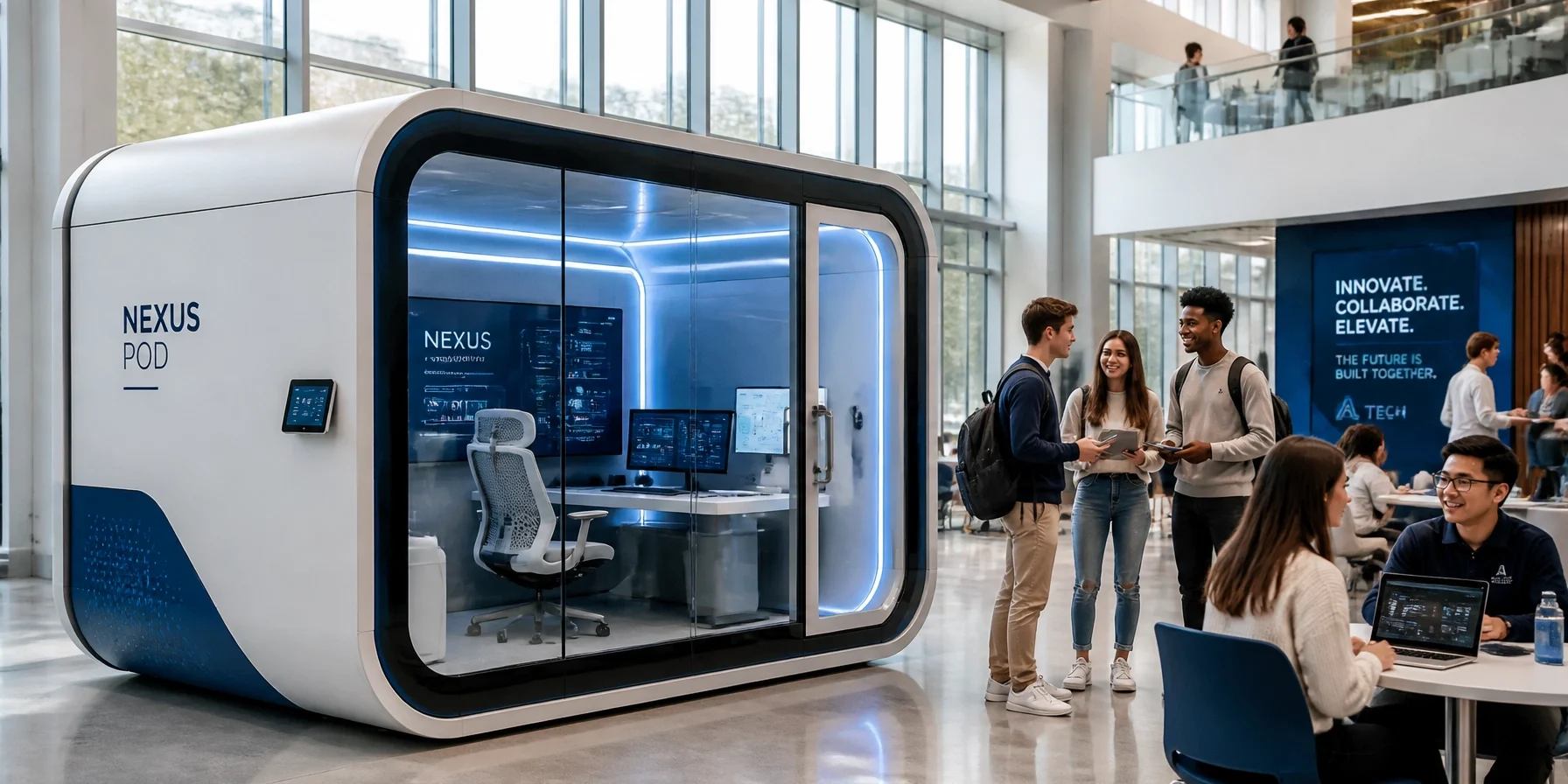
The architectural landscape of technical education is undergoing a fundamental transformation. For decades, the "computer lab": a room filled with rows of identical, stationary desktop computers: served as the primary gateway to digital literacy. However, as the global economy shifts toward highly specialized technical domains such as cybersecurity, complex logistics, and high-fidelity content creation, these traditional spaces are proving insufficient. In their place, a more agile, modular solution has emerged: the pod.
Physical infrastructure is no longer just about providing access to hardware; it is about creating immersive, specialized environments that mirror the professional world. As institutions look to modernize their technical offerings, pod-based spaces are rapidly becoming the gold standard for career-aligned education.
The Limitation of Traditional Computing Spaces
The traditional computer lab was designed for a 1:1 ratio of student-to-device, primarily for general tasks like word processing or basic web navigation. While functional for general education, this model faces significant challenges in the modern era of emerging technology.
First, the hardware requirements for modern career paths are diverse. A workstation optimized for logistics management requires different specifications than one built for 4K video editing or high-speed data analysis. In a standardized lab, institutions often settle for a "middle ground" machine that is over-engineered for basic tasks but underpowered for advanced ones.
Second, the lack of environment control in open labs hinders specialized training. Domains like cybersecurity require isolated networks and controlled environments to simulate real-world threats effectively. This is where the concept of the "pod" transitions from a design choice to a pedagogical necessity.
What Are Pods? A New Standard for Modular Learning
A "pod" is a compact, modular, purpose-built workspace designed to facilitate a specific professional workflow. Unlike a generic lab, a pod is "standardized on the outside but customized on the inside." This allows for a plug-and-play approach to physical infrastructure, where an institution can deploy a "Cyber Pod" next to a "Logistics Pod" without a total renovation of their physical footprint.
According to research into modular learning environments, these spaces provide greater flexibility and better alignment with real-world professional settings. Organizations like USA Entertainment Ventures LLC have pioneered this model through projects like the E-Sports Pod, which utilizes a controlled, modular environment to ensure hardware consistency and performance data collection: a model that is now being adapted for broader technical education.
Cybersecurity: The New Front Line

In the field of cybersecurity, the environment is as important as the curriculum. Pod-based infrastructure allows for the creation of mini Security Operations Centers (SOCs). Within these pods, students can engage in high-stakes simulations involving isolated networks that would be impossible to run in a shared campus lab.
The specialization offered by these pods directly aligns with the NICCS Career Pathways Roadmap, providing a direct bridge to certifications like CompTIA Security+ and CySA+. By learning in a space that replicates the physical atmosphere of a professional security hub, students develop the environmental awareness required in high-pressure defensive roles.
Logistics and Supply Chain Management

Logistics has evolved into a data-driven science requiring real-time monitoring and coordination. Pods designed for logistics education function as miniature command centers. These spaces allow students to manage simulated global supply chains, tracking assets and optimizing routes using the same dual-monitor and touch-interface setups found at major shipping hubs like Amazon or FedEx.
The modularity of these pods allows educational institutions to update software and hardware components as logistics technology: such as AI-driven route optimization: evolves, ensuring that students are always training on current-generation systems.
Content Creation and Professional Media

The rise of the "creator economy" has turned content creation into a multi-billion dollar industry. However, high-quality media production requires more than just a fast computer; it requires acoustic control, professional lighting, and specialized input devices.
Modular content pods provide a soundproofed, pre-calibrated environment where students can master podcasting, video production, and streaming. This eliminates the "set-up time" associated with traditional media labs, allowing for more time spent on the actual creative process. For agencies focusing on brand management and digital services, a workforce trained in these consistent, professional environments is significantly more prepared for the demands of modern media production.
Actionable Takeaways for Modernizing Infrastructure
For institutions and businesses considering the shift to pod-based infrastructure, the following steps are recommended:
- Identify High-Impact Clusters: Determine which programs (e.g., Cybersecurity, Esports, Media) require specialized hardware or environmental controls.
- Pilot Modular Units: Instead of a full-scale lab renovation, pilot a small number of pods to gauge student engagement and technical ROI.
- Standardize the Exterior: Use consistent pod dimensions to allow for easy relocation and scaling as program needs change.
- Integrate Data Collection: Utilize pods that offer performance monitoring, similar to the USA Entertainment Ventures' E-Sports Pod model, to provide students with feedback on their technical workflows.
Conclusion: The Future is Modular
The shift from general-purpose computer labs to specialized pods represents a broader trend in both education and business: the move toward precision. By providing students and professionals with infrastructure tailored to their specific career pathways, we are closing the gap between academic theory and industrial practice.
As we look toward the future, the agility provided by pod-based systems will allow institutions to remain relevant in a rapidly changing technological landscape. Modular infrastructure is not just a trend in furniture design; it is a vital evolution in how we prepare the next generation for the complexities of the modern workforce.





