
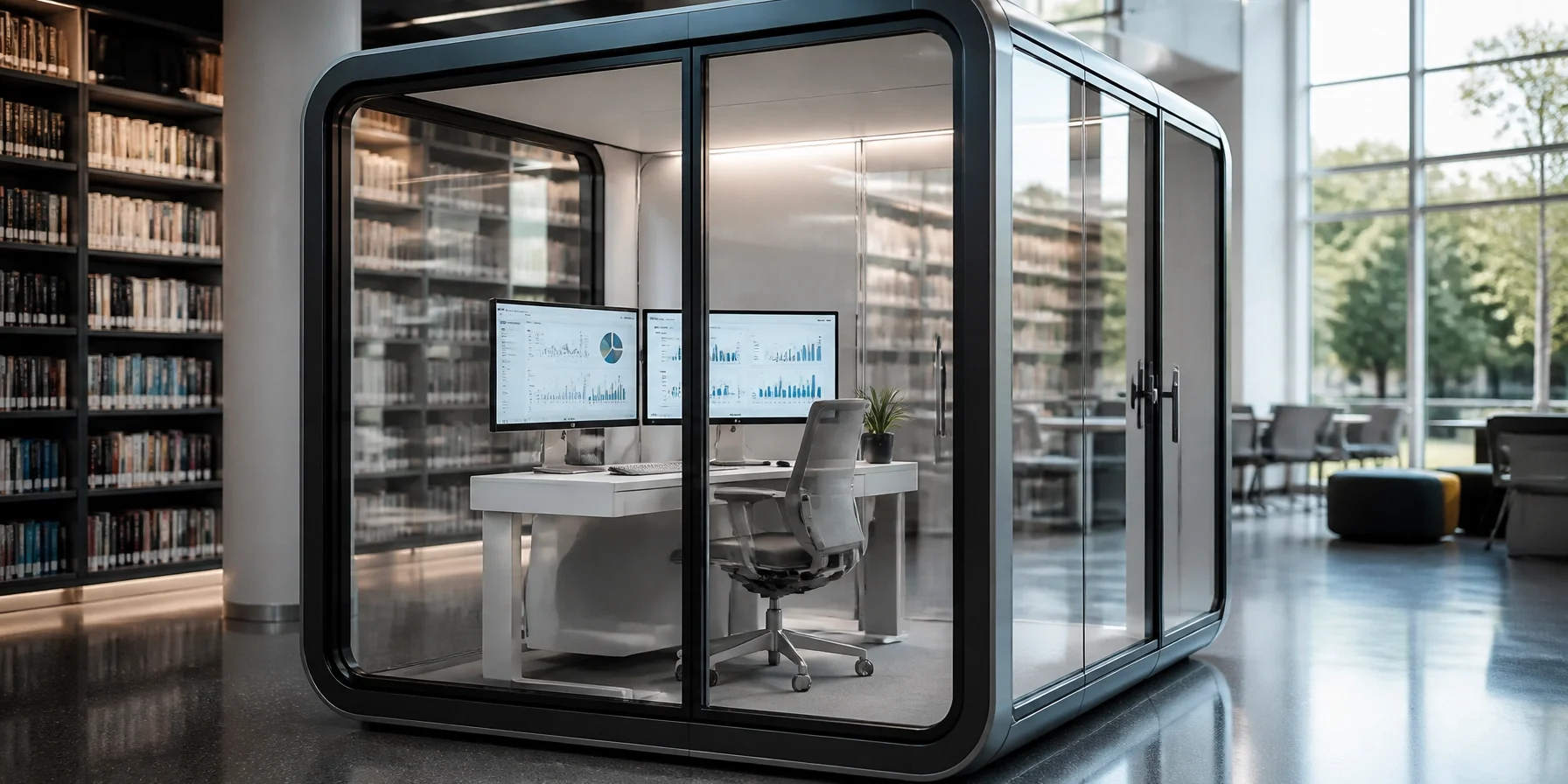
Remember the classic college computer lab? That windowless, fluorescent-lit basement filled with rows of beige (or slightly-less-beige) PCs, the faint hum of a hundred cooling fans, and the distinct aroma of desperation and day-old pizza? If you’re a student in 2026, that image is quickly becoming a relic of the past, right next to floppy disks and dial-up modems.
The "dusty dungeon" model is officially dead. In its place, a new king of physical infrastructure has emerged: The Pod.
At USA Entertainment Ventures LLC, we’ve spent years consulting on the next generation talent funnel, and the shift toward modular, high-tech pods isn't just a design trend: it’s a workforce revolution. Here is why the traditional computer lab is being evicted and why pods are the future of the Talent Pipeline.
The BYOD Revolution: Why the "Computer" in Lab is Redundant
The biggest reason computer labs are disappearing? Everyone already has one in their backpack. With nearly 95% of students owning a laptop or tablet, the mission of providing "access to a computer" is mission accomplished.
When you combine Bring Your Own Device (BYOD) policies with the power of the Cloud, a student’s $500 laptop can suddenly perform like a $5,000 workstation. Through Virtual Desktop Infrastructure (VDI), the heavy lifting: whether it’s Data Analytics, complex AI training, or high-end rendering: happens on a remote server.
So, if students bring the screens, what does the school provide? They provide the environment. That’s where the pod comes in.
What Exactly is a "Pod"?
Think of a pod as a specialized, modular, and collaborative micro-environment. While a lab was a "one-size-fits-all" warehouse for PCs, a pod is a "fit-for-purpose" sanctuary for specific career pathways.

1. The Logistics & Simulation Hub
In the world of supply chain management, theory only gets you so far. Modern logistics pods are designed to simulate a high-stakes command center. Imagine a space equipped with triple-monitor setups, real-time data feeds, and specialized consoles that mimic the software used by global shipping giants. Here, students don’t just read about Project Management; they live it, rerouting virtual fleets in response to simulated weather patterns or port strikes.
2. The Cybersecurity War Room
Cybersecurity isn't a solo sport; it’s a team-based defensive play. Traditional labs, with their isolated rows of desks, are "fundamentally anti-social," as industry experts often note. Cybersecurity pods, however, are designed like "war rooms." They feature circular seating, shared "smart glass" for brainstorming, and sandboxed networks where students can safely engage in red-team/blue-team exercises. It’s the perfect environment for a cyber career hotspot.

3. The Creator Economy Pod
Content is the currency of 2026. A generic computer lab is the worst place to record a podcast or edit 8K video: it’s loud, the lighting is terrible, and the acoustics are non-existent. Specialized creator pods offer sound-proofed walls, professional-grade microphones, and the high-end GPUs required for seamless video editing. These spaces allow students to build their personal brands and professional portfolios in a studio-quality setting.

Building the Talent Funnel for the Future Workforce
Why should a College or a business care about these modular boxes? Because they are the ultimate tool for workforce strategy.
At USA Entertainment Ventures LLC, our work with DOD Skill Bridge Recruitment has shown us that the gap between "classroom knowledge" and "job readiness" is often a gap in physical experience. Pods bridge that gap by providing:
- Applied Skills: Students get hands-on with the actual tools and hardware they will use on Day 1 of their careers.
- Modular Flexibility: If the local labor market suddenly needs 200 more data analysts, a college can swap out its logistics pods for Data Analytics pods in a weekend. You can’t do that with a built-in lab.
- Collaboration by Design: Pods force students to talk, manage projects, and solve problems together: soft skills that are just as important as knowing how to code an AI algorithm.
The Bottom Line: Costs and Connectivity
Beyond the "cool factor," pods make financial sense. Institutions report that moving from sprawling labs to targeted pods can result in 50–75% cost savings on hardware maintenance and real estate. By focusing resources on high-value, specialized infrastructure rather than hundreds of identical PCs, colleges can offer a higher "Return on Education."
As we look toward the Future Workforce, the physical infrastructure of our learning institutions must reflect the reality of our industries. The days of sitting in a row, staring at a static monitor, are over. The future is modular, it’s collaborative, and it’s happening inside a pod.
Are you ready to modernize your physical infrastructure and supercharge your Talent Pipeline? Whether you’re a college administrator looking to repurpose "dusty labs" or a business seeking to develop a next-gen talent funnel, the move to pod-based environments is the smartest play you can make in 2026.





