
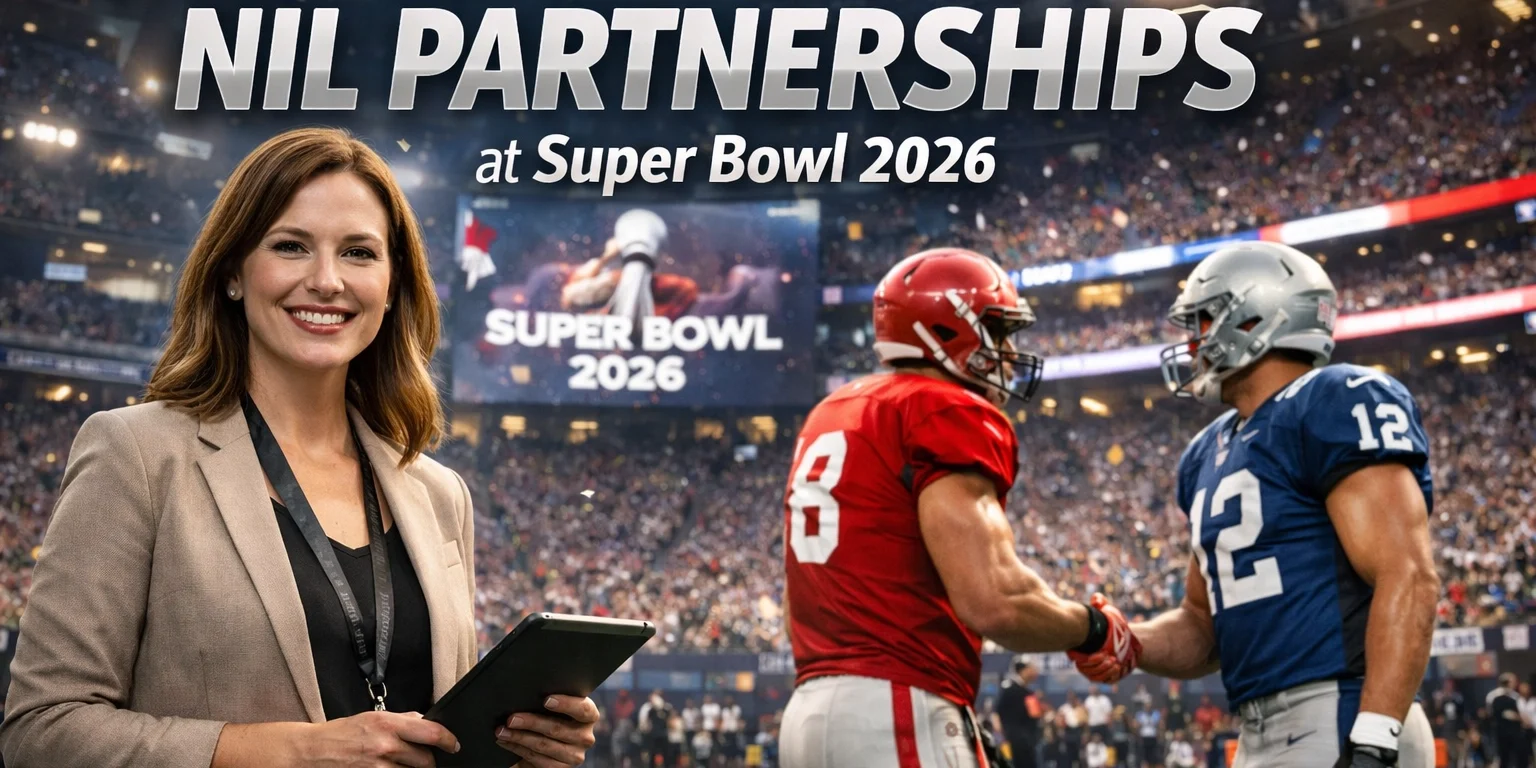
As we sit in the wake of Super Bowl 2026, the landscape of sports marketing has undergone a fundamental transformation. For Fortune 100 brand managers, the playbook has changed. The days of relying solely on a multi-million dollar, 30-second television spot are fading. Today, the most successful campaigns are built on the foundations of Name, Image, and Likeness (NIL) partnerships that bridge the gap between national prestige and grassroots authenticity.
At USA Entertainment Ventures LLC, we have watched this evolution closely. Our CEO, Dan Kost, has often noted that the real power of modern marketing isn’t just in the reach: it’s in the resonance. By leveraging college athletes, brands are no longer just talking at an audience; they are participating in a cultural conversation that begins weeks before kickoff and continues long after the confetti has been cleared from the field.
The NIL Revolution: Bridging the Gap at the Super Bowl
The 2026 season marked a definitive turning point. We saw a record-breaking integration of college athletes into the Super Bowl marketing ecosystem. This wasn't just about localized deals; it was a national infrastructure rollout of influence.
Experience the energy of this shift in the video below:
https://www.youtube.com/watch?v=l6J-0zileKE
Moving Beyond the 30-Second Myth
For decades, the "Super Bowl Ad" was the pinnacle of a brand manager’s career. However, the 2026 data suggests that traditional ads secure only 30 to 60 seconds of focused attention. In contrast, NIL partnerships provide a "long-tail" engagement model.
According to recent industry research, brands that integrated NIL athletes into their Super Bowl strategies saw sustained engagement for an average of 21 days surrounding the event. While a television commercial is a flash in the pan, a well-structured NIL campaign is a slow-burn narrative that builds genuine consumer trust.
The Strategic Framework for Fortune 100 Brands
To master NIL at this level, brand managers must move away from "one-off" endorsements and toward integrated strategic frameworks. The most successful campaigns at Super Bowl 2026 followed a three-phase execution model:
1. The Pre-Game Build (The Anticipation Phase)
Weeks before the Super Bowl, athletes serve as the primary drivers of anticipation. Instead of a generic brand teaser, college athletes share behind-the-scenes content, personal "road to the game" narratives, and interactive predictions. This phase is crucial for capturing the attention of Generation Z, who value the authentic voice of an athlete over a polished celebrity script.
2. Game Day Real-Time Integration
During the game, NIL partners act as "brand correspondents." They provide real-time social media reactions that create additional touchpoints. For a Fortune 100 brand, this means having hundreds of micro-conversations happening simultaneously across TikTok, Instagram, and X (formerly Twitter), all reinforcing the central brand message in a way that feels organic to the platform.
3. Post-Game Sustained Momentum
The 72 hours following the Super Bowl are often a missed opportunity. However, in 2026, forward-thinking brands used their NIL roster to provide post-game analysis and "morning after" content. This kept the brand active in the news cycle while competitors’ traditional ads were already being forgotten.

Prioritizing Authenticity Over Celebrity
One of the most significant findings from the "Super Bowl Blitz" of 2026 was the performance of mid-tier college athletes compared to high-profile professional celebrities. Generation Z audiences respond measurably better to athletes who integrate brands naturally into their existing lifestyle content.
Campaigns during the 2026 Super Bowl Blitz achieved average engagement rates of 8.7%. This is nearly triple the industry standard for traditional celebrity endorsements. As Dan Kost frequently emphasizes, "Authenticity is the new currency." For a brand manager at a major corporation, this means looking beyond the "Heisman winners" and identifying athletes whose audience demographics and brand values align perfectly with the corporate identity.
Diversity and Market Penetration
The 2026 Super Bowl Blitz connected brands with 1,247 athletes from 43 different sports. This wasn't limited to football players. We saw female soccer stars, track and field athletes, and even collegiate swimmers driving massive ROI.
This diversity allowed Fortune 100 brands to expand their market penetration into college towns nationwide. While the physical event was held in a single host city, the NIL strategy ensured the brand was "present" in hundreds of markets simultaneously. This geographic spread is something a traditional billboard or local activation simply cannot replicate.
Navigating Compliance and Complexity
For many Fortune 100 companies, the primary barrier to NIL entry has been the perceived "legal headache." Navigating NCAA regulations, state laws, and individual university policies can be daunting.
However, the infrastructure has caught up with the opportunity. Automated compliance checking and integrated payment processing have streamlined the operations. At USA Entertainment Ventures LLC, we specialize in removing these administrative barriers. By using pre-vetted contract templates and data-driven matching platforms, we ensure that brands can scale their NIL efforts without increasing their legal risk.
For more information on how we handle these complexities, visit our Services page or explore our Agency insights.

The Economic Reality: Efficiency and ROI
The economics of NIL at the Super Bowl are increasingly favorable. In 2026, 89 Fortune 500 companies participated in the Super Bowl Blitz, generating over $15 million in partnership opportunities within a 72-hour window.
The most successful partnerships were not one-and-done deals. Data shows that 67% of the partnerships initiated during the Super Bowl weekend extended into long-term brand ambassadorships. This conversion from a "event-based" tactic to a "relationship-based" strategy is where the true ROI lies for large-scale business consulting and consumer goods firms.
Actionable Takeaways for Brand Managers
If you are looking to refine your strategy for the upcoming season, consider these practical steps:
- Shift the Timeline: Start planning your NIL activations four months before the event, not four weeks.
- Audit for Alignment: Use data-driven platforms to evaluate athletes based on audience sentiment and engagement quality, not just follower count.
- Focus on Storytelling: Move away from "post this photo" instructions. Instead, give athletes a creative brief that allows them to tell your brand story in their own voice.
- Automate Compliance: Partner with experts who provide a future-ready pipeline for NIL management to ensure every post is legally sound.

Looking Toward the Future
The success of the 2026 NIL initiatives proves that the "Revolution" is no longer a trend: it is the new standard. As we look toward future engagements, the brands that will win are those that treat college athletes as strategic partners rather than just media buys.
At USA Entertainment Ventures LLC, we are committed to helping brands navigate this exciting new territory. We believe that by bridging the gap between corporate goals and athlete authenticity, we can create connections that truly stick.
The Super Bowl is no longer just a game; it is a multi-platform, multi-voiced narrative. The question for brand managers is no longer if they should participate in NIL, but how they can do so with the precision and scale that a Fortune 100 company requires.
For a deeper dive into creating these connections, check out The Ultimate Guide to Super Bowl 2026 Fan Engagement.
Conclusion
Mastering NIL partnerships at the Super Bowl requires a blend of data-driven strategy and an appreciation for authentic storytelling. As the digital and physical worlds continue to merge, the ability to leverage the influence of college athletes will remain a cornerstone of successful sports marketing.
If you’re ready to scale your brand’s presence and navigate the complexities of NIL, we invite you to contact our team to discuss how we can build your future-ready marketing pipeline. The game has changed; it’s time to update your playbook.





