
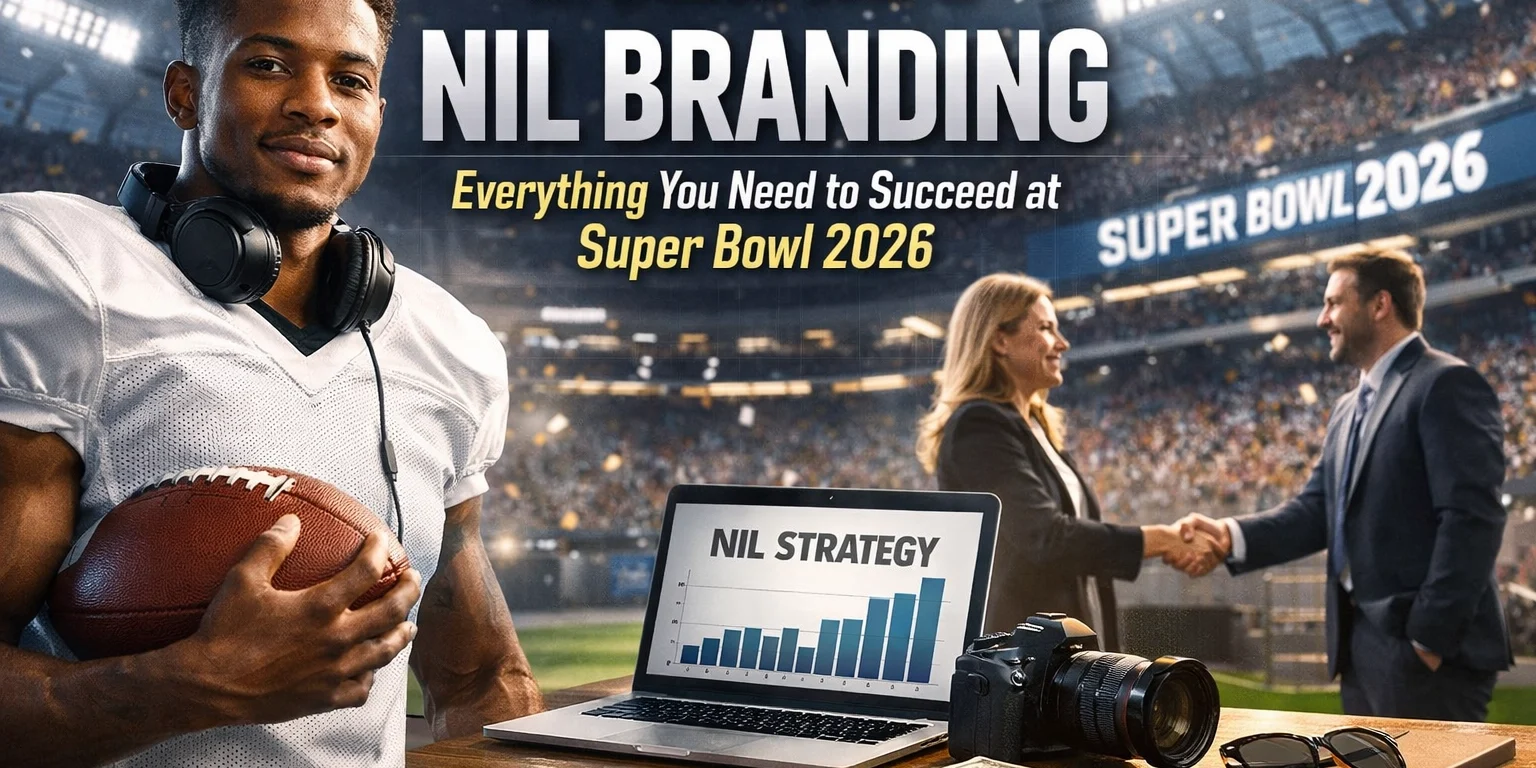
The landscape of sports marketing changed forever this past February. As we look back from the vantage point of March 2026, it is clear that the traditional "one-and-done" Super Bowl commercial is no longer the undisputed king of the hill. While a 30-second spot during the big game now commands a staggering $8 million, Fortune 100 brands are discovering that the real ROI lies in the "long-tail" effect of Name, Image, and Likeness (NIL) partnerships.
At USA Entertainment Ventures LLC, we’ve watched this revolution unfold in real-time. The Super Bowl has evolved from a single broadcast moment into a month-long engagement cycle. For brands looking to capture the attention of Gen Z and Millennial audiences, NIL branding isn’t just an option: it’s the cornerstone of a modern championship strategy.
The NIL Revolution: Bridging the Gap
The gap between a national television audience and a hyper-local, engaged social following has historically been wide. NIL athletes have become the bridge. By leveraging the authentic voices of athletes, brands can move beyond passive viewing and into active conversation.
In the following video, we explore how the NIL revolution has redefined athlete-brand relationships:
https://www.youtube.com/watch?v=l6J-0zileKE
This shift is particularly relevant for major corporations. When a Fortune 100 brand partners with a roster of athletes, they aren't just buying ad space; they are buying trust, community, and a seat at the table during the world's most-watched sporting event.
The Three-Phase Timeline for Super Bowl Success
Success at the Super Bowl doesn't happen on Sunday; it’s built over weeks of strategic execution. Our data from the 2026 season shows that the most successful campaigns followed a strict three-phase framework.
Phase 1: Pre-Game Hype (January 15 – February 7)
The goal here is momentum. Between mid-January and the week before the game, athlete partners should focus on "leak" messaging. This is the time for behind-the-scenes content, preparation vlogs, and teasing the game-day activation. By having athletes share their journey toward the Super Bowl: whether they are playing in it or attending as ambassadors: brands build curiosity among millions of followers before the official TV spot ever airs.
Phase 2: Game Day Execution (February 8)
On Super Bowl Sunday, the "second screen" is where the battle is won. While the primary broadcast is running, audiences are glued to their phones. NIL athletes serve as digital ambassadors, providing real-time reactions and authentic commentary. In 2026, we saw that raw, unpolished, and genuine moments outperformed highly produced content by nearly 3x in engagement metrics.

Phase 3: Post-Game Leverage
The conversation doesn't end with the trophy presentation. The days following the game are crucial for capitalizing on the "what’s next" mentality. Brands that sustain their presence by leveraging highlights and "day-after" reflections from their athlete partners see a significantly slower decay in brand sentiment compared to those who rely solely on television ads.
Building a Portfolio, Not a Single Bet
One of the most common mistakes large brands make is putting their entire budget behind a single superstar. While a Heisman Trophy winner or a Pro-Bowler brings prestige, the smart money is on the "Portfolio Approach."
Rather than investing $2 million in one athlete, forward-thinking brands are diversifying. By mixing one or two top-tier partners with 5 to 10 mid-tier athletes who have highly engaged, niche followings, brands achieve:
- Broader Reach: Tapping into different demographics and interests.
- Cost Efficiency: Lowering the average cost per engagement.
- Strategic Redundancy: If one athlete becomes unavailable or underperforms, the campaign remains intact.
In the 2026 Super Bowl Blitz, we saw over 20,000 athlete voices facilitated within a 72-hour window. This scale demonstrates that NIL is no longer a "boutique" marketing tactic: it is a mass-market powerhouse.
The Shift to Equity: Skin in the Game
As the NIL market matured leading into 2026, we observed a significant trend: the transition from fixed-fee contracts to equity-based partnerships. Data confirms that athletes with equity stakes in the brands they represent produce content at higher frequencies and demonstrate greater creativity.
When an athlete feels like a partner rather than a "hired gun," their content reflects that ownership. These arrangements generated 40-60% higher audience interaction rates during the 2026 Super Bowl cycle compared to traditional flat-fee deals. For a Fortune 100 brand, this means more than just impressions; it means building long-term brand advocates.
Financial Realities and ROI
Let’s talk numbers. The median athlete earnings during the 2026 Super Bowl Blitz reached approximately $1,850 per engagement, with top performers clearing upwards of $25,000 across multiple partnerships. When you compare this to the $8 million cost of a single television ad, the scalability of NIL becomes clear.
A brand can hire 100 high-impact athletes for a fraction of the cost of one TV spot and generate a "surround-sound" effect that dominates the social conversation for an entire month. This isn't just a cost-saving measure; it’s a strategic optimization of marketing spend.

Infrastructure: Creating Content Hubs
For brands looking to truly lead, the 2026 season introduced the concept of "Mobile Content Facilities." Smart organizations set up dedicated hubs at Super Bowl fan zones where NIL athletes could produce professional-grade material alongside brand experts and communication students.
This infrastructure does two things:
- Quality Control: It ensures the brand's message is clear and the production value is high.
- Talent Pipeline: It allows brands to assess an athlete's work ethic and cultural fit in real-time. This "try before you buy" approach has led many Fortune 100 companies to recruit their most successful NIL partners into full-time marketing or social media roles after their playing days are over.
Actionable Takeaways for CMOs
If you are a Chief Marketing Officer or a brand manager looking ahead to the next cycle, here is what you should be implementing today:
- Integrate Early: Do not treat NIL as an add-on. Athletes should be part of the creative strategy from day one, not brought in at the last minute to "amplify" a finished ad.
- Prioritize Engagement Over Followers: A million followers mean nothing if they aren't listening. Focus on athletes with high interaction rates and niche authority.
- Measure What Matters: Move beyond "likes." Track sentiment, conversion, and long-term brand recall.
- Utilize Professional Consulting: Navigating the complexities of NIL requires expertise. From compliance to talent scouting, having a partner like USA Entertainment Ventures LLC ensures your brand is protected and positioned for success.

The Future of Brand Consulting
At USA Entertainment Ventures LLC, we specialize in helping businesses navigate these complex transitions. Whether you are looking for business consulting or specifically exploring the entertainment industry management space, the principles of NIL branding apply across the board.
The Super Bowl is no longer just a game; it is the ultimate testing ground for how brands will communicate for the rest of the decade. By adopting a "NIL-first" mentality, you aren't just buying an ad: you're building a legacy.
Looking Ahead
As we move deeper into 2026, the lessons from the Super Bowl will ripple through every other major sporting and cultural event. The brands that won this year weren't necessarily the ones with the biggest TV budgets, but the ones with the most authentic connections.
The NIL revolution is here to stay. It has bridged the gap between national reach and personal connection, and it has given Fortune 100 brands a way to speak directly to the next generation of consumers. The question is no longer if you should be involved in NIL branding, but how quickly you can adapt your strategy to keep up.
For more insights on how to scale your brand through strategic partnerships and innovative marketing, visit our main site and explore our latest portfolio developments. The future of branding is personal, it’s digital, and it’s happening right now.





