
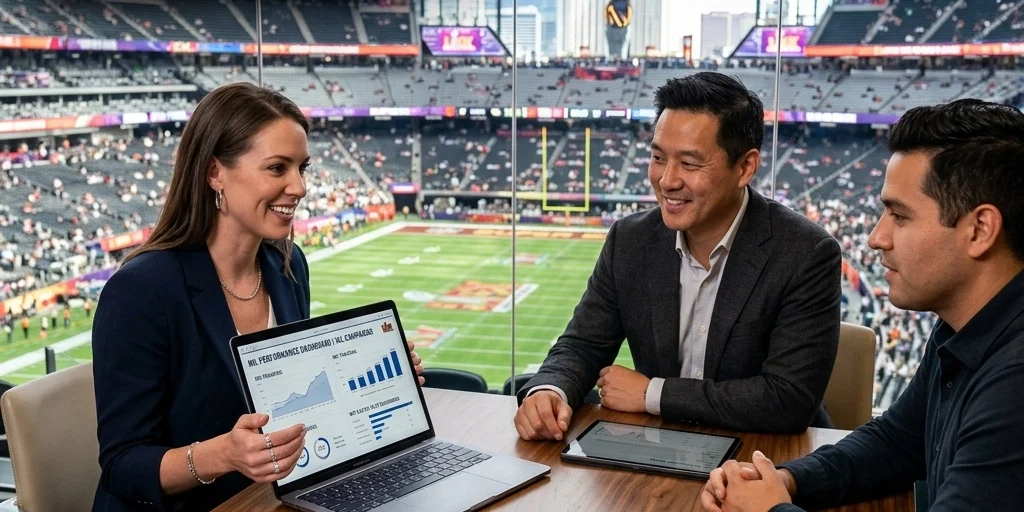
As we move into the second quarter of 2026, the marketing landscape for major sporting events has reached a definitive turning point. For Fortune 100 brands, the Super Bowl is no longer just a 60-minute window of broadcast dominance; it is the epicenter of a multi-week, cross-platform digital engagement cycle. The most significant driver of this change is the Name, Image, and Likeness (NIL) revolution, which has fundamentally altered how corporations interact with athletes and their fanbases.
At USA Entertainment Ventures LLC, we have observed a massive shift in how CMOs allocate their "Big Game" budgets. The traditional $7 million price tag for a 30-second television spot is increasingly being supplemented: or in some cases, challenged: by high-scale NIL activations that offer better data, higher engagement, and a direct path to ROI.
The NIL Revolution: More Than Just Collegiate Compliance
When NIL regulations first emerged, they were viewed primarily as a compliance hurdle for collegiate athletics. Fast forward to May 2026, and NIL has matured into a sophisticated pillar of enterprise-level marketing. For Fortune 100 brands, NIL represents the ability to harness the "authentic influence" of thousands of athletes simultaneously.
Unlike a single celebrity endorsement that carries the risk of a high-profile PR blunder, a diversified NIL portfolio spreads risk and maximizes reach across diverse demographics. This is particularly relevant for the Super Bowl, where national brands need to appeal to both the casual viewer and the die-hard sports enthusiast.

Bridging the Gap at the Super Bowl
The gap between traditional advertising and digital influence is closing. Brands that succeed at the Super Bowl are those that use NIL platforms to create "surround sound" marketing. This means that while a commercial plays on the screen, hundreds of athletes are engaging with fans on social platforms, creating a secondary and often more personal layer of brand interaction.
To understand the scope of this evolution, it is helpful to look at the current state of NIL marketplaces. For a deep dive into how these worlds collide, watch this industry overview:
https://www.youtube.com/watch?v=l6J-0zileKE
Top NIL Platforms for Enterprise Success
Choosing the right platform is critical for a Fortune 100 brand. The requirements for an enterprise-level campaign: such as automated compliance, tax documentation, and massive scalability: are far beyond what a basic marketplace can provide. Here is an analysis of the leading platforms currently dominating the 2026 landscape:
1. NIL Club: The Scalability Powerhouse
NIL Club has emerged as the preferred choice for brands requiring massive activation. With a network of over 650,000 athletes and a combined reach of 1.7 billion followers, it allows a brand like a national bank or a global beverage company to launch a campaign across thousands of influencers in a matter of hours.
The primary advantage of NIL Club for the Super Bowl is its performance-based model. Instead of paying for "potential eyes," brands can track verified conversions. In recent campaigns, major players like Subway have seen engagement rates as high as 8.4%, far exceeding traditional digital ad benchmarks.
2. Opendorse: The Gold Standard for Professional Management
For brands that want a mixture of high-profile professional athletes and collegiate stars, Opendorse remains a staple. Their platform is built with a heavy emphasis on compliance and deal management. For a Fortune 100 legal team, the peace of mind provided by Opendorse's "all-in-one" tax and reporting features is often the deciding factor.
3. MarketPryce: Authenticity Through Seeding
MarketPryce focuses on building genuine relationships. While it may not offer the raw "button-push" scale of NIL Club, it is excellent for brands looking to seed products during Super Bowl week. If your goal is to see your brand in the hands of athletes at every Super Bowl party in the host city, this is a platform to consider.

The Strategy: How to Deploy $10M+ in NIL Spend
For a Fortune 100 brand, the strategy must be bifurcated:
- The Anchor Partnerships: Secure 5-10 high-profile NIL deals with athletes who have a direct connection to the Super Bowl (e.g., former stars from the competing teams' universities). These athletes serve as the "face" of the digital campaign.
- The Grassroots Surge: Use a platform like NIL Club to activate 5,000+ "micro-influencer" athletes. These athletes post synchronized content during the kickoff, halftime, and post-game windows. This creates a trending effect that broadcast ads alone cannot replicate.
By leveraging our consulting services, brands can navigate these platforms to ensure that every dollar spent is backed by data. The goal is to move from "awareness" to "action."
Why Performance Marketing Trumps Awareness
In the past, Super Bowl success was measured by "impressions" and "brand lift." In 2026, those metrics are considered secondary. Fortune 100 CMOs are now demanding cost-per-acquisition (CPA) data. NIL platforms that offer integrated tracking links and verified conversion data allow marketing teams to prove that their Super Bowl spend actually moved the needle on sales.
Statistics from the 2026 Super Bowl cycle indicate that brands using a performance-based NIL strategy saw a 74% lower customer acquisition cost compared to traditional digital spend. This is largely because an athlete’s recommendation carries more weight than a generic brand banner.
Addressing the Compliance and Legal Hurdle
For any large corporation, the legal implications of NIL are a primary concern. The landscape involves a complex web of state laws, NCAA regulations, and professional league rules. This is why enterprise-level platforms are non-negotiable. They provide the necessary infrastructure to handle:
- Automatic Disclosures: Ensuring every post meets FTC and league guidelines.
- Tax Withholding: Managing 1099s for thousands of individual athletes.
- Contract Standardization: Using pre-approved templates to avoid months of legal back-and-forth.

The Future: Looking Toward the 2027 Super Bowl
As we look ahead, the integration of AI and Augmented Reality (AR) will be the next frontier in NIL. We are already seeing "Virtual NIL" deals where athletes' digital likenesses are used in metaverse activations during the Super Bowl. Brands that adopt these technologies early will not only capture the attention of Gen Z and Gen Alpha but will also define the future of sports marketing.
The "Virtual NIL" concept allows for 24/7 engagement without the physical constraints of an athlete's schedule. Imagine a fan being able to interact with an AR version of a star quarterback in their living room, powered by a brand's app. This is no longer science fiction; it is the strategy currently being developed for the 2027 season.

Practical Steps for Brand Managers
If your brand is looking to dominate the next Super Bowl cycle, here are three actionable takeaways:
- Audit Your Current Spend: Review how much of your "Big Game" budget is going toward unmeasurable broadcast reach versus measurable NIL engagement.
- Select a Platform for Scale: Don't try to manage NIL deals manually. Choose a platform like NIL Club or Opendorse that can handle the volume of a Fortune 100 campaign.
- Start Early: The best NIL partnerships are not made in January. They are cultivated months in advance to ensure the athlete's audience is primed for the Super Bowl message.
The NIL revolution is not a trend; it is a structural shift in the entertainment and sports economy. At USA Entertainment Ventures LLC, we specialize in bridging the gap between corporate goals and athlete influence. Whether you are navigating the career-ready infrastructure of today's workforce or the high-stakes world of sports marketing, the principles of authenticity and scale remain the same.
Final Thoughts on ROI and Responsibility
While the focus is often on the bottom line, it is also important to recognize the positive social impact of these NIL platforms. By distributing marketing spend among thousands of athletes, Fortune 100 brands are helping to fund educations and support local communities. This "social good" component is a powerful narrative that can be woven into a Super Bowl campaign, further enhancing brand loyalty among socially conscious consumers.
The opportunity for Fortune 100 brands to succeed at the Super Bowl has never been greater, but the path to success has changed. It requires a move away from the "one-size-fits-all" broadcast model toward a data-driven, athlete-centered NIL strategy.
For more information on how to navigate this landscape, feel free to explore our Q&A section or contact us directly to discuss your 2027 Super Bowl strategy.





