
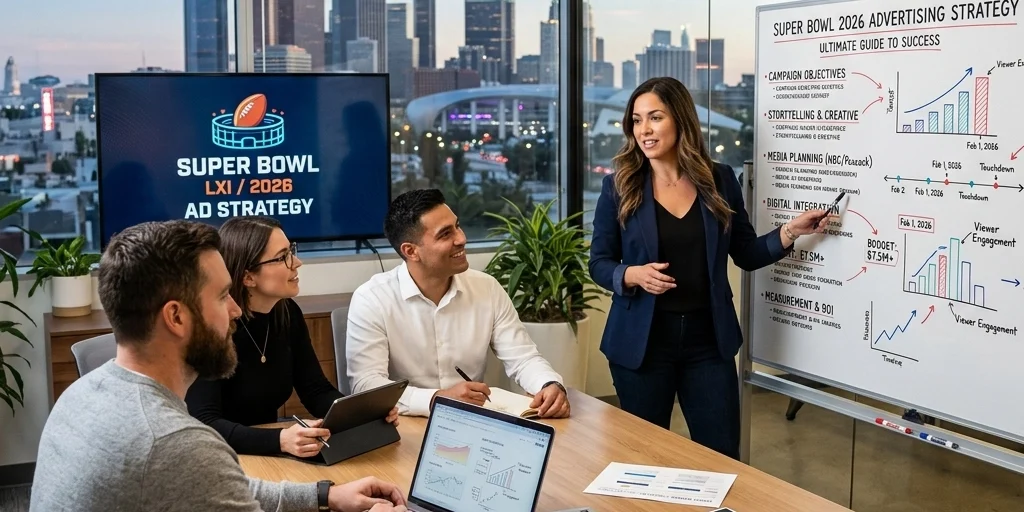
The landscape of professional sports media has undergone a seismic shift as we navigate the midpoint of 2026. Following the conclusion of Super Bowl LX, the industry has reached a pivotal realization: the traditional 30-second television spot is no longer a standalone tactic, but the centerpiece of a multi-month narrative ecosystem. With the cost of a half-minute advertisement hovering at a record-breaking $8 million, the margin for error has vanished, replaced by a demand for precision-engineered strategy and cross-platform synergy.
At USA Entertainment Ventures LLC, we specialize in navigating these complex intersections of business consulting and high-stakes media. As brands begin their post-game analysis and look toward the 2027 season, understanding the core pillars of modern Super Bowl advertising is essential for any enterprise seeking a measurable return on investment.
The Evolution of the Monocultural Moment
In an era of hyper-fragmented media consumption, the Super Bowl remains the final frontier of monocultural engagement. It is one of the few remaining instances where tens of millions of viewers across linear and streaming platforms converge on a single event. However, the nature of this engagement has changed.
Modern viewers are rarely "single-screen" participants. Data from the 2026 broadcast indicates that over 85% of viewers engaged with a second screen: smartphones, tablets, or laptops: during the game. This "two-screen" reality means that an advertisement must not only capture attention on the television but also trigger a digital response. Successful brands in 2026 did not just "run an ad"; they launched a conversation that lived on social media, betting apps, and interactive web platforms simultaneously.

The Multi-Platform Media Strategy: The "Long Tail" Approach
The most significant strategic shift in 2026 was the abandonment of the "big reveal" on game day. The most successful campaigns functioned as three-act plays:
- The Pre-Game Build (The Tease): Brands began releasing narrative-driven content weeks before kickoff. This included cryptic social media posts, short-form video "leaks," and partnership announcements. The goal was to build narrative momentum, making the Super Bowl spot the climax of a story viewers were already following.
- The Game-Day Climax: The $8 million spot served as the narrative payoff. By the time the ad aired, the audience was already emotionally invested. The creative focused on storytelling first and branding second, knowing that captive attention is a rare commodity.
- The Post-Game Extension: Post-game performance is now as critical as the live broadcast. Through platforms like YouTube and TikTok, ads gained a "long tail" of engagement that lasted for weeks. Strategic use of hashtags and digital promotions allowed brands to recapture viewers who might have missed the live airing.
For brands looking to implement these high-level strategies, our services provide the framework necessary to manage multi-channel campaigns with professional oversight.
AI in Advertising: Balancing Innovation and Authenticity
Artificial Intelligence (AI) was the most discussed technological theme of the 2026 Super Bowl. However, the execution was nuanced. Research indicates that while consumers are aware of AI’s potential, there is a prevailing sense of concern over its role in creative arts.
The successful 2026 campaigns positioned AI as helpful, human, and accessible. Rather than showcasing AI as a replacement for human creativity, brands used it to enhance human experiences. For legacy brands, the risk of looking "inauthentic" was high. Those who succeeded utilized AI to solve human problems or create humorous, self-aware scenarios that acknowledged the technology's current limitations.

The Power of Nostalgia and Relatability
In a world moving rapidly toward automation, the 2026 advertising cycle leaned heavily into nostalgia. But this wasn't just about looking backward. Effective strategy used nostalgia as a bridge between generations. By grounding familiar cultural touchstones in a modern context, brands were able to appeal to Baby Boomers, Gen X, Millennials, and Gen Z simultaneously.
Humor remained a dominant tool, though the tone shifted toward self-awareness. Polished, corporate perfection was largely ignored in favor of ads that felt genuine, slightly imperfect, and highly relatable. This "human-centric" approach fosters trust: a commodity that is increasingly valuable in a high-tech marketplace.
The Super Bowl Playbook: Sports Media's Advertising Strategy
To further understand the tactical execution of these concepts, we recommend viewing "The Super Bowl Playbook," which outlines the specific media maneuvers utilized by top-tier sports brands during the most recent broadcast cycle.
https://www.youtube.com/watch?v=l6J-0zileKE
Trust and Authority: Choosing the Right Talent
One of the most notable trends of 2026 was the shift from "A-list celebrity" to "subject matter authority." While traditional celebrities still appeared, the most impactful ads featured influencers and experts with built-in credibility in their specific categories.
Audiences in 2026 are increasingly skeptical of paid endorsements. Using a celebrity who has no authentic connection to a product can lead to "brand mismatch," where the viewer remembers the star but forgets the message. Successful campaigns prioritized trust and authority. When an expert or a highly respected influencer in a niche category endorses a brand, the message carries more weight with a broad audience because it is rooted in perceived competence rather than just fame.
Practical Takeaways for Your 2027 Strategy
As we project current trends into the future, several actionable takeaways emerge for business owners and marketing executives:
- Prioritize Narrative Over Features: Don't use your Super Bowl spot to list product specifications. Use it to tell a story that evokes emotion. If you win the viewer's heart, they will find the features on their own.
- Invest in the "Second Screen": Ensure your digital infrastructure is ready for a surge in traffic. Your social media team should be active and responsive in real-time during the broadcast to capitalize on trending moments.
- Bridge the Gap with Authenticity: Whether you are a legacy brand or a newcomer, your creative must align with your core identity. In 2026, the "authenticity gap" is where many expensive campaigns failed.
- Maximize the Long Tail: View your $8 million investment as a content production budget, not just a media buy. Repurpose the creative assets across every digital channel for at least 30 days post-game.
For a deeper dive into how these strategies can be tailored to your specific business model, you can review our Q&A section or explore our showcase of past successes.

Conclusion: The Forward-Looking Perspective
The 2026 Super Bowl has proven that while the medium is changing, the fundamental need for human connection remains constant. As we look toward 2027 and beyond, the brands that thrive will be those that view advertising not as an interruption, but as an invitation to participate in a larger cultural narrative.
Strategic business consulting is no longer just about the bottom line; it’s about navigating the complex emotional and technological landscape of modern commerce. At USA Entertainment Ventures LLC, we remain committed to helping our clients master these high-stakes environments through evidence-based strategy and innovative thinking.
If you are ready to begin planning your next major media move or require expert guidance on your current business trajectory, we invite you to contact our team today. The future of advertising is narrative, multi-platform, and authentically human( let's build it together.)





