
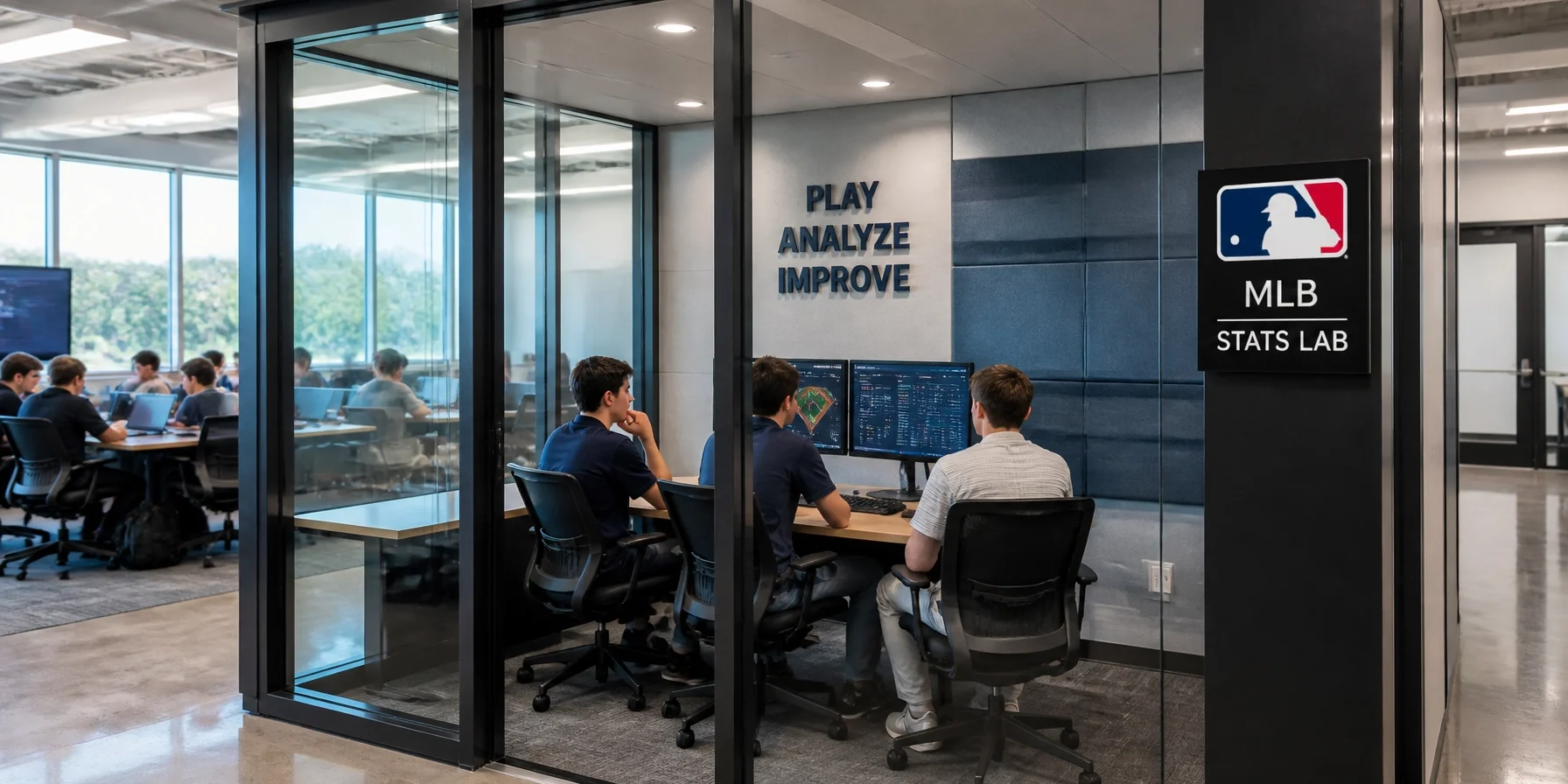
For decades, the high school "computer lab" was a predictable, somewhat sterile environment: rows of beige towers, tangled VGA cables, and the faint, rhythmic clicking of mechanical keyboards. But as we move deeper into the 2020s, the physical and digital infrastructure of education is undergoing a radical transformation. The era of the fixed-row lab is ending, replaced by the rise of Cloud Learning Labs: flexible, modular "Pods" that function as high-tech hubs for specialized, career-ready exploration.
At USA Entertainment Ventures LLC, we see this shift as more than just a furniture upgrade. It is a strategic move toward simulating professional environments. By leveraging real-world data: specifically the massive, high-velocity data pipelines provided by Major League Baseball (MLB): schools can turn these modular pods into launchpads for careers in logistics, cybersecurity, and content creation.
Why MLB data? Because baseball is no longer just a game; it is a data-driven enterprise. From the 1,000 data points collected per second by Statcast to the complex logistics of a 162-game season, it provides the perfect sandbox for students to solve real-world problems.
Here are the top 10 POD ideas to revolutionize your high school's cloud learning lab.
1. The Statcast Sanctuary (Data Science & Analytics)
In this pod, students move beyond basic algebra and into the world of predictive modeling. Using MLB's Statcast data, learners can analyze exit velocity, launch angles, and pitch spin rates.
The physical pod is designed for deep focus, equipped with dual monitors and cloud-integrated workstations. Students aren't just looking at averages; they are building "Data Lakes" and using tools like Python to predict the likelihood of a home run based on atmospheric conditions.
- Career Pathway: Data Scientist, Sports Analyst, Business Intelligence.
- Actionable Takeaway: Start by integrating the Baseball Savant API into your cloud curriculum to give students raw datasets to clean and visualize.
2. The SOC Dugout (Cybersecurity Operations Center)
Protecting the data integrity of a professional sports team is a high-stakes game. The "SOC Dugout" pod simulates a Security Operations Center. Here, students learn the fundamentals of cybersecurity by defending a simulated stadium network against hypothetical attacks.
Imagine a scenario where a rival team (hypothetically, of course) attempts to breach the "scouting database" or disrupt the stadium’s Wi-Fi-enabled ticketing system. Students use this pod to monitor network traffic, identify vulnerabilities, and implement encryption protocols.
- Career Pathway: Cybersecurity Analyst, SOC Manager, Network Architect.
- Witty Insight: It’s all fun and games until someone "steals" the signs digitally. In this pod, the only things being stolen are encrypted packets.

3. The Logistics Lineup (Supply Chain & Operations)
Managing an MLB team is a logistical nightmare: or a dream, depending on how much you love spreadsheets. The Logistics Lineup pod focuses on the movement of people, equipment, and assets.
Students use cloud-based logistics software to model the most efficient routes for a 10-city road trip, accounting for fuel costs, equipment weight, and even the "human capital" of player rest cycles. This pod teaches the "invisible" side of the industry that keeps the lights on and the bats in the rack.
- Career Pathway: Logistics Coordinator, Supply Chain Manager, Operations Specialist.
- Internal Link: Explore our consulting services to see how logistics and management drive business success.
4. The Broadcast Booth (Content Creation & Media)
The modern "Content Creator" is a hybrid of a journalist, a video editor, and a data analyst. The Broadcast Booth pod is a sound-isolated environment equipped with 4K cameras and professional-grade microphones.
Students don’t just record podcasts; they produce data-driven highlight reels. They use cloud-based editing suites to overlay Statcast data (like the "catch probability" of a diving outfield play) onto live-action footage. It’s about telling a story through numbers.
- Career Pathway: Video Editor, Digital Content Producer, Sports Journalist.

5. The Cloud Bullpen (Cloud Engineering & DevOps)
Behind every great data dashboard is a robust infrastructure. The Cloud Bullpen pod is where the "heavy lifting" of IT happens. Students learn about cloud architecture: AWS, Azure, or Google Cloud: by setting up the pipelines that ingest live MLB box scores.
They learn the importance of "uptime" and "latency." If the data feed lags during a game, the analytics are useless. This pod turns students into the engineers who build the digital stadiums of the future.
- Career Pathway: Cloud Engineer, DevOps Specialist, Database Administrator.
6. The Fan Engagement Zone (Marketing & UX Design)
How do you keep a fan in Seat 402 engaged during a pitching change? The Fan Engagement Zone pod focuses on the User Experience (UX). Students analyze fan behavior data to design mobile app interfaces, "gamified" stadium experiences, and targeted marketing campaigns.
Using A/B testing and heat maps of digital interaction, students learn that the "product" isn't just the game on the field: it's the experience in the palm of the fan's hand.
- Career Pathway: UX/UI Designer, Marketing Strategist, Brand Manager.
7. The Smart Stadium Lab (IoT & Edge Computing)
Modern ballparks are becoming "Smart Cities" in miniature. This pod explores the Internet of Things (IoT). Students work with simulated sensors that track everything from concession line lengths to the moisture levels of the infield grass.
They learn how "Edge Computing" processes this data locally to provide real-time updates to stadium operations, reducing wait times and improving the fan experience.
- Career Pathway: IoT Engineer, Systems Architect, Facilities Manager.

8. The Scouting Department (AI & Machine Learning)
In the Scouting Department pod, students use Machine Learning (ML) to evaluate talent. By feeding historical MLB data into cloud-based AI models, they can identify "undervalued" players: much like the famous Moneyball strategy, but with 21st-century processing power.
This isn't just about baseball; it's about learning how to train models to find patterns that the human eye might miss.
- Career Pathway: AI Researcher, Machine Learning Engineer, Quantitative Analyst.
9. The Performance Lab (Biomechanics & Health Tech)
Using high-speed video and motion-capture data, the Performance Lab pod allows students to study the physics of the human body. They can analyze a pitcher's mechanics to see how slight adjustments in elbow angle affect both ball velocity and the risk of injury.
This intersection of healthcare, data, and sports is one of the fastest-growing sectors in the economy.
- Career Pathway: Biomechanist, Physical Therapist, Sports Tech Developer.
10. The Strategy Suite (Game Theory & Simulations)
Finally, the Strategy Suite pod is where all the data comes together. Students use simulations to test game-theory scenarios. Should a manager "shift" the infield? Should they "bunt"? By running thousands of cloud-based simulations, students learn that every decision is a calculated risk.
This pod teaches critical thinking and strategic planning: skills that are infinitely transferable to any business environment.
- Career Pathway: Strategy Consultant, Project Manager, CEO.
Bridging the Gap: Education to Career
At USA Entertainment Ventures LLC, we are committed to more than just discussing technology; we are invested in the people who will run it. Our involvement with DoD Skill Bridge recruitment highlights our dedication to helping individuals transition from structured environments into high-impact civilian careers.
Modular pods in high schools represent the first step in this pipeline. By creating a professional, "brand-neutral" environment that mimics a modern office, we are preparing students for the transition into the workforce or the military with technical skills that are immediately applicable.
The Urgency of Change
The world is moving toward modularity. According to recent industry reports on workplace trends, flexible infrastructure increases productivity and reduces "burnout" by providing varied environments for different tasks. Why should our schools be any different?
Implementing these pods isn't just an aesthetic choice; it’s a pedagogical necessity. It allows schools to scale their technology offerings without the need for massive, permanent renovations. If your school’s "technology" section is still just a room full of desks, it’s time to consider a modular upgrade.
Conclusion: A Future Built on Data
The transition from traditional computer labs to specialized cloud learning pods is an investment in the future of our workforce. By using the rich, engaging world of MLB data as a hook, we can teach the complex, high-demand skills of the 21st century in a way that is both rigorous and relatable.
Whether a student is interested in the logistics of a cross-country road trip, the cybersecurity of a major event, or the creative thrill of digital storytelling, the "Pod" model provides the physical and digital space to excel.
For more information on how we are shaping the future of media, technology, and career management, visit our About Us page or check out our latest technology insights. The game is changing( is your school ready to play?)





