
In the competitive landscape of global business, many organizations find themselves perpetually stuck in the "group stage" of recruitment. They rely on traditional methods: waiting for university graduates to enter the market, competing over a limited pool of seasoned professionals, and reacting to talent shortages rather than anticipating them. As we progress through 2026, this reactive approach is no longer sufficient to maintain a competitive edge, particularly in high-growth sectors like Artificial Intelligence (AI), Cloud Computing, and Data Analytics.
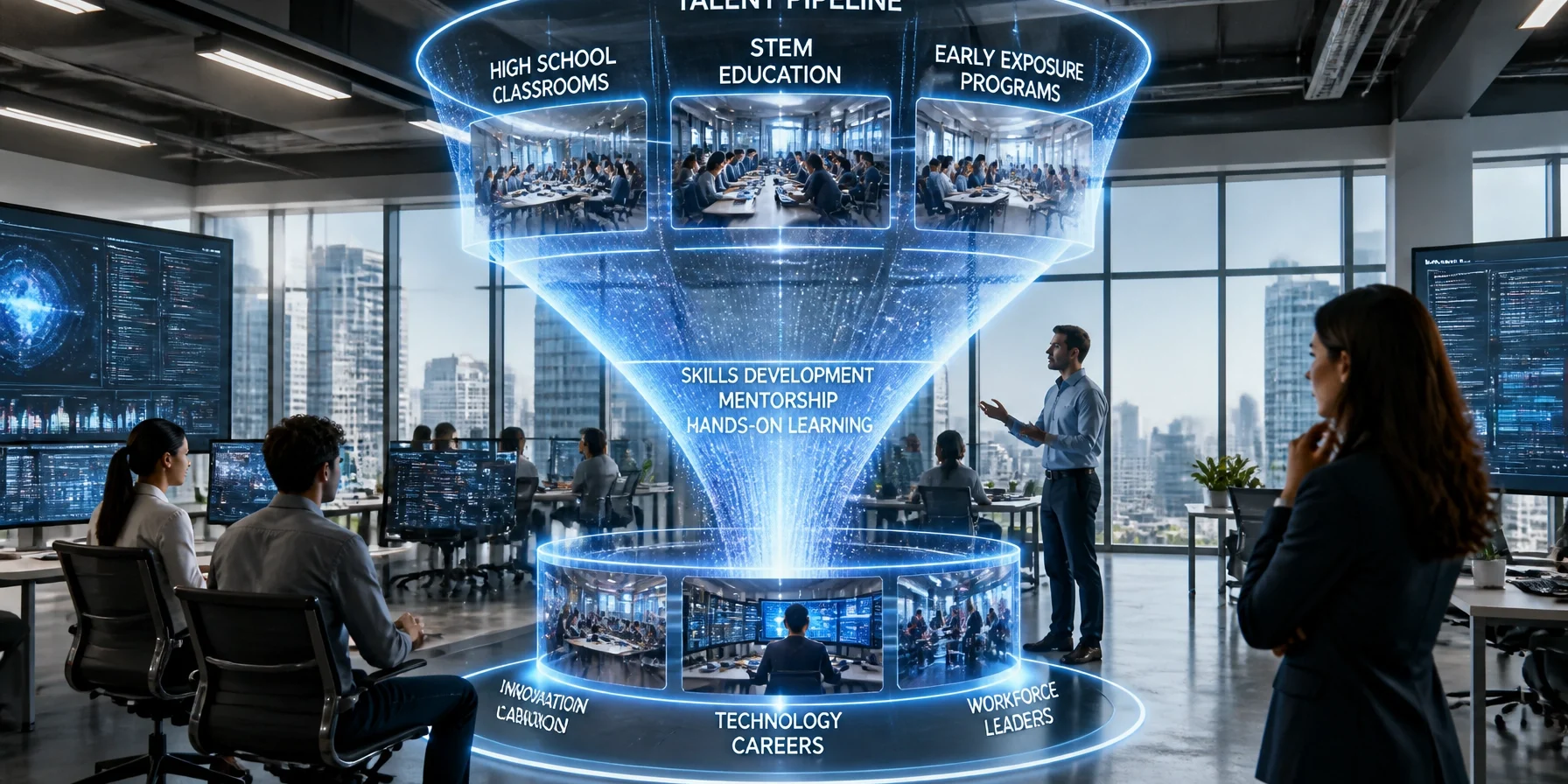
To ascend to a world-class level, companies must adopt a "Next-Gen Talent Funnel" strategy. This involves moving upstream: reaching into high schools to identify, nurture, and secure the workforce of the future before they even set foot on a college campus. By building these pathways early, businesses can ensure they are not merely participants in the talent war, but leaders of it.
The Scarcity Crisis: Understanding the 2026 Talent Landscape
The urgency for a new recruitment model is driven by a widening skills gap that traditional education and hiring cycles have struggled to close. Data from early 2026 indicates a staggering mismatch between market demand and available expertise. In January 2026 alone, there were over 275,000 active job postings in the United States specifically tied to AI-related skills, including machine learning, automation, and AI infrastructure. This follows a period from 2024 to 2025 where AI and machine learning job postings grew by 163%.
Despite this explosive growth, the supply of qualified talent remains critically low. Research into the global labor market reveals that while some regions produce millions of engineers annually, fewer than 3% are adequately trained for specialized AI roles. Furthermore, nearly 97% of candidates in typical recruitment processes lack the AI and cloud skills that modern employers fundamentally require.
This bottleneck creates a scenario where 73% of employers plan to hire fresh graduates, yet a significant portion of those graduates enter the market without the specific technical fluencies needed for high-impact roles. The solution lies in intervention: shaping the skills of the next generation before the mismatch occurs.

Moving Upstream: The Strategic Advantage of High School Recruitment
Building a talent funnel that begins in high school is a proactive measure that de-risks the future talent pool. When an organization waits until a student reaches their junior or senior year of university to recruit them, they are competing with every other major firm for a sliver of the population. By engaging earlier, companies can influence educational choices: encouraging students to pursue certifications, bootcamps, and specific majors that align with the company's future needs in Cloud and Data Analytics.
Dan Schawbel, a leading voice in millennial and Gen Z branding, emphasizes the necessity of this early start: "In today's economy, students have to start building their careers in high school in order to better compete in the college admissions process, for college internships and eventually full-time jobs."
For the employer, the benefits are equally profound. Schawbel notes that "Employers who offer high school internships build brand awareness early, fill up their talent pipelines and are able to remain competitive in their marketplace." This early exposure fosters a sense of loyalty and cultural alignment that is difficult to replicate with late-stage hires.
The Rise of Skills-Based Hiring
The shift toward high school recruitment is supported by a broader trend: the move toward skills-based hiring. As of 2026, nearly 70% of organizations prioritize specific skills over traditional four-year degree requirements. This "skills-first" approach can expand talent pools by nearly 16 times in the U.S. market.
By focusing on high schoolers who show aptitude in coding, data literacy, and cloud platforms, companies can create pathways such as pre-apprenticeships and dual-credit courses. These initiatives allow students to enter the workforce with industry-recognized credentials, often bypassing the traditional bottlenecks of elite university admissions and the associated debt.
Expert Insights: Redefining Tech Readiness
The definition of "tech talent" is also evolving. In an era where AI handles many routine technical tasks, the value of human-centric skills is rising. According to Davron, a specialized engineering recruiting firm, the post-AI generation must master adaptability and creativity rather than just memorization.
The firm suggests that high schools should connect students with:
- Job shadowing and apprenticeships.
- Industry guest speakers.
- Career mapping tools.
- Digital portfolios showcasing real-world projects and code.
This holistic development ensures that when these students eventually enter the full-time workforce, they possess the critical thinking, communication, and leadership qualities that technical roles demand. As Steve Jobs famously noted, "It doesn’t make sense to hire smart people and tell them what to do; we hire smart people so they can tell us what to do." Investing in high schoolers allows companies to identify these "smart people" early and empower them to innovate within the corporate ecosystem.

Actionable Steps: How to Build Your World-Class Funnel
Transitioning your recruitment from a reactive "group stage" model to a world-class talent funnel requires a structured approach. Organizations should consider the following actionable strategies:
1. Establish School Partnerships
Collaborate with local high schools to integrate industry-relevant curriculum. This could include sponsoring "Cloud Fundamentals" or "AI Ethics" modules. By providing the tools and resources, you position your brand as a leader in education and career development.
2. Implement High School Internships
Move beyond the college-only internship model. High school internships provide young talent with a firsthand look at corporate culture and real-world technology applications. This hands-on training within real work environments is essential for developing strong, practical skills early on.
3. Focus on Digital Portfolios
Encourage students to build and maintain digital portfolios. Instead of relying solely on grades, look for projects, essays, and code that demonstrate curiosity and problem-solving abilities. This provides a more accurate metric of a student's potential in fields like Data Analytics.
4. Optimize the Candidate Experience
For Gen Z and the emerging Gen Alpha, the application process is a reflection of the company’s technological maturity. Ensure your recruitment platforms are mobile-first and minimalist. A clunky, outdated application process will deter the very tech-savvy talent you are trying to attract.
5. Leverage Managed Recruitment Services
Managing an early-stage talent funnel can be resource-intensive. Partnering with specialized management firms, such as USA Entertainment Ventures LLC, can help bridge the gap. Whether through business development or specialized consulting, having an external partner to manage recruitment divisions: including programs like DOD SkillBridge recruitment: can streamline the process and ensure a high quality of candidates.

Future-Proofing for Long-Term Success
The shift toward a high school-focused talent funnel is not just a trend; it is a strategic necessity for the 2026 economy and beyond. Organizations that invest in "upstream" recruitment report significantly higher retention rates. In fact, skills-based organizations see a 98% higher retention of high performers compared to those using traditional hiring models.
By building a pipeline that starts early, companies reduce their future time-to-fill for junior AI and cloud roles. They create a known pool of trained candidates who already understand the company’s tools, workflows, and mission. This leads to a more stable, loyal, and efficient workforce.
As Marc Benioff of Salesforce suggested, the secret to successful hiring is looking for people who want to change the world. By reaching into high schools, you find those individuals at the peak of their curiosity and idealism, providing them with the platform to turn that potential into professional excellence.
Conclusion
Is your recruitment stuck in the group stage, or are you building a world-class pipeline? The answer lies in how far ahead you are willing to look. The talent shortage in AI, Cloud, and Data Analytics is a challenge that cannot be solved by traditional means alone. It requires a bold, future-focused strategy that embraces the next generation today.
By partnering with schools, prioritizing skills over degrees, and utilizing professional management services like USA Entertainment Ventures LLC, your organization can move from reactive hiring to proactive talent cultivation. The future of your workforce is currently in a classroom; it is time to invite them into the boardroom.






