Let’s take a trip down memory lane. Think back to your middle school computer lab. If you’re of a certain vintage, you probably remember rows of beige towers, the rhythmic click-clack of mechanical keyboards, and a teacher who spent half the period trying to figure out why the printer was jammed. It was a one-size-fits-all room where you learned how to type "The quick brown fox" and maybe played Oregon Trail if you finished your spreadsheet early.
Fast forward to 2026, and that model isn't just outdated: it’s a relic. In a world where technology moves at the speed of a fiber-optic pulse, the "general purpose" computer lab has become the "landline telephone" of the education world.
At USA Entertainment Ventures LLC, we spend a lot of time thinking about how businesses and educational institutions can stay ahead of the curve. And right now, the biggest curveball is physical infrastructure. Specifically, the shift away from generic labs and toward specialized "Pods."
Why? Because pods are where the real work happens. They aren't just rooms with computers; they are launchpads for careers in cybersecurity, content creation, and logistics. Let’s dive into why this shift matters and why pods are the cool kids on the block.
The Death of the Beige Box
The traditional computer lab was built on the idea that everyone needs the same basic tools. But in today’s economy, a "basic tool" doesn't exist. A student interested in ethical hacking needs a completely different setup than a student who wants to produce the next viral documentary or a student learning how to manage a global supply chain.
When you try to make one room do everything, you end up with a room that does nothing particularly well. You get "standardized" machines that are too weak for high-end video editing and too open for secure cybersecurity training.
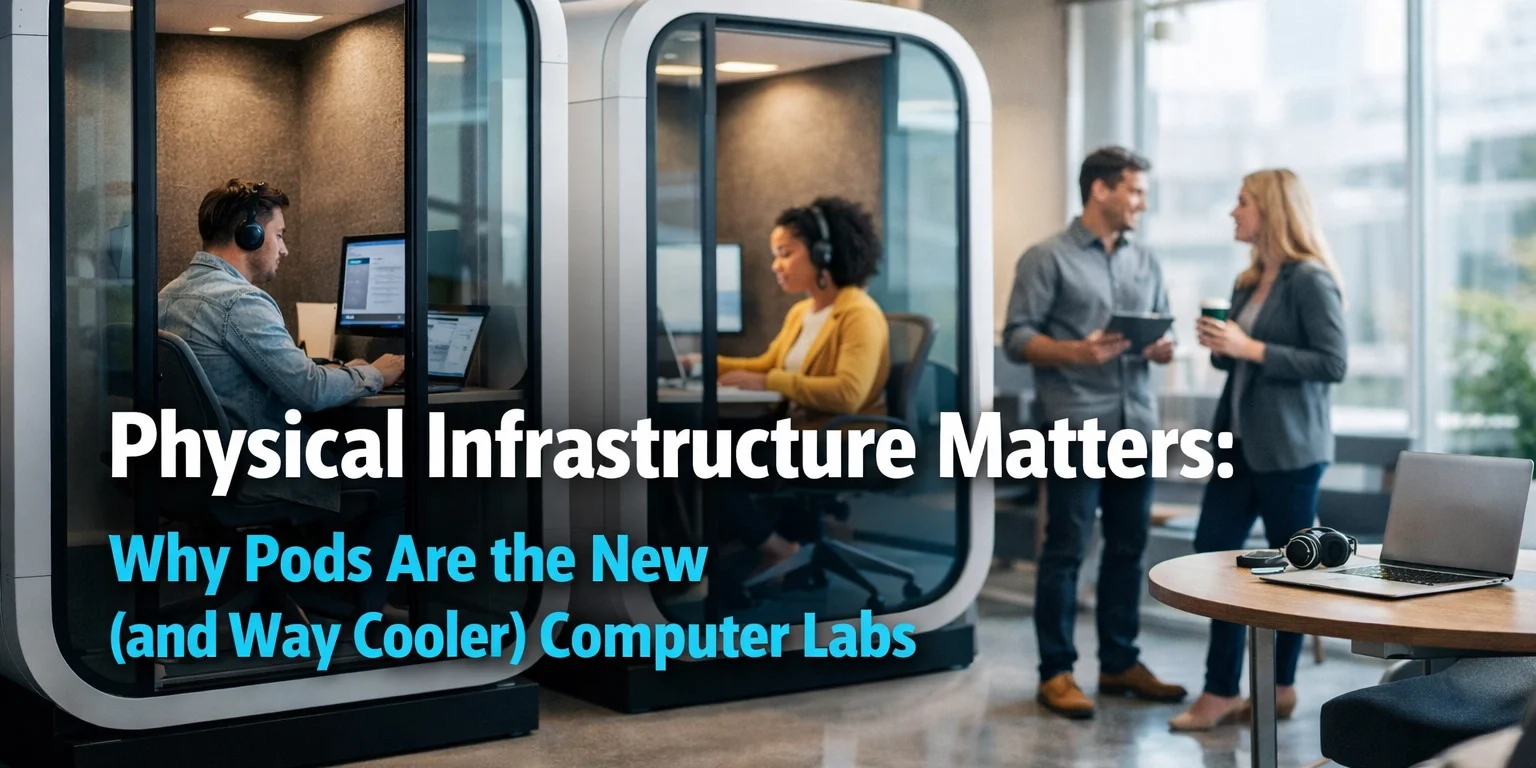
This is where the concept of the Pod comes in. Instead of a generic sea of monitors, a Pod is a purpose-built, specialized environment designed around a specific career pathway. It’s the difference between a Swiss Army knife and a professional-grade surgeon’s scalpel.

Specialized Spaces for Specialized Careers
So, what does a Pod actually look like? It depends on who it’s for. By tailoring the physical infrastructure to the skill set, we’re not just giving people tools; we’re giving them a professional identity.
1. The Cybersecurity Pod: The Digital Fortress
Cybersecurity is no longer a niche IT job; it’s a matter of national and corporate security. You can't learn to defend a network on a machine that’s tied to the main school server: unless you want to accidentally take down the administrative office's payroll system.
A Cybersecurity Pod is an isolated "sandbox" environment. It features dual monitors (because you need one for the code and one for the network map), high-speed local servers, and specialized software for penetration testing and incident response. It’s a place where students can safely break things to learn how to fix them.
2. The Content Creation Pod: The New Media Studio
The creator economy is a multi-billion dollar industry. But you don't become a professional content creator just by staring at a webcam.
A Content Creation Pod mirrors a professional production house. We’re talking acoustic treatment on the walls, high-fidelity microphones, 4K cameras, and the kind of GPU power that makes standard PCs cry. This is where the next generation of producers, editors, and digital marketers learn their craft. At USA Entertainment Ventures LLC, we see the demand for these skills every day: from sports media to corporate storytelling.
3. The Logistics and Supply Chain Pod: The Engine Room
Logistics is the invisible thread that holds our world together. From making sure a Super Bowl jersey reaches a fan in time for kickoff (check out our Super Bowl 2026 guide for more on that madness) to managing global shipping routes, it’s a high-stakes game.
A Logistics Pod uses industry-standard simulation software and real-time data tracking tools. It’s designed for collaboration, with large "war room" displays where teams can visualize supply chains and practice solving bottlenecks in real-time. It’s not just about data entry; it’s about strategic movement.

Why Physical Infrastructure Still Matters in a Cloud World
Wait a minute, Dan. Isn't everything in the cloud now? Why do we need "physical" Pods?
It’s a fair question. While it’s true that much of our processing happens on remote servers, the human element still happens in a physical chair. Pods are designed for "Hybrid Architecture." This means they combine the power of the cloud with local, high-performance hardware.
This is crucial for two reasons:
- Latency and Reliability: If you’re editing 8K video or running a complex logistics simulation, you can't afford to wait for a spinning "loading" icon because the Wi-Fi is acting up. Local hardware provides the "grunt" while the cloud provides the "reach."
- Collaboration: You can Zoom all day, but nothing beats sitting next to a teammate and pointing at a screen to solve a problem. Pods are designed with "collaborative infrastructure": movable desks, whiteboards, and shared displays that encourage people to actually talk to each other.
The Business Case: Why Pods Are a Smart Investment
If you’re a Dean, a CEO, or a facility manager, you might be thinking, "This sounds expensive."
Actually, the data says the opposite. Research shows that institutions implementing pod-based infrastructure can see cost savings of 50 to 75 percent compared to maintaining traditional, bloated labs.
How? Because you aren't trying to upgrade 100 machines every three years. Instead, you’re investing in specialized equipment for 15-20 people that actually gets used. Engagement goes through the roof because the students aren't bored: they are using the same gear they’ll see on their first day of work.
Furthermore, pods allow for career clarity. It’s better for a student to realize they hate the meticulous nature of cybersecurity in a Pod during their first semester than to graduate with a degree and realize it three weeks into their first job. This efficiency saves money for the individual and the institution.

Leading the Way with USA Entertainment Ventures LLC
At USA Entertainment Ventures LLC, we’re passionate about bridging the gap between education and the real world. Whether it’s through our work with Zoomedia or our insights into Sports Media, we know that the right environment makes all the difference.
We don't just consult on business; we consult on the future. And the future of learning isn't a room full of identical computers. It’s a network of specialized, high-energy, and highly-capable Pods that prepare people for the careers of tomorrow.
The Bottom Line
The "computer lab" isn't dead: it’s just evolving. It’s shedding its beige skin and becoming something more dynamic, more specialized, and frankly, way cooler.
By investing in Pods, we aren't just buying better computers. We are creating environments that respect the complexity of modern careers. We are giving students and workers the physical infrastructure they need to master cybersecurity, dominate content creation, and navigate the world of logistics.
So, the next time you walk past a room full of dusty old desktops, ask yourself: is this a place where someone is going to change the world, or is it just a place where they're going to check their email?
If you're ready to look at how your organization can transition into the world of Pods and specialized infrastructure, let’s chat. The beige boxes have had their day. It’s time for something better.
For more updates on how we’re shaping the intersection of tech, entertainment, and business, keep an eye on our news section. The future is coming fast: don't get stuck in the old lab.