
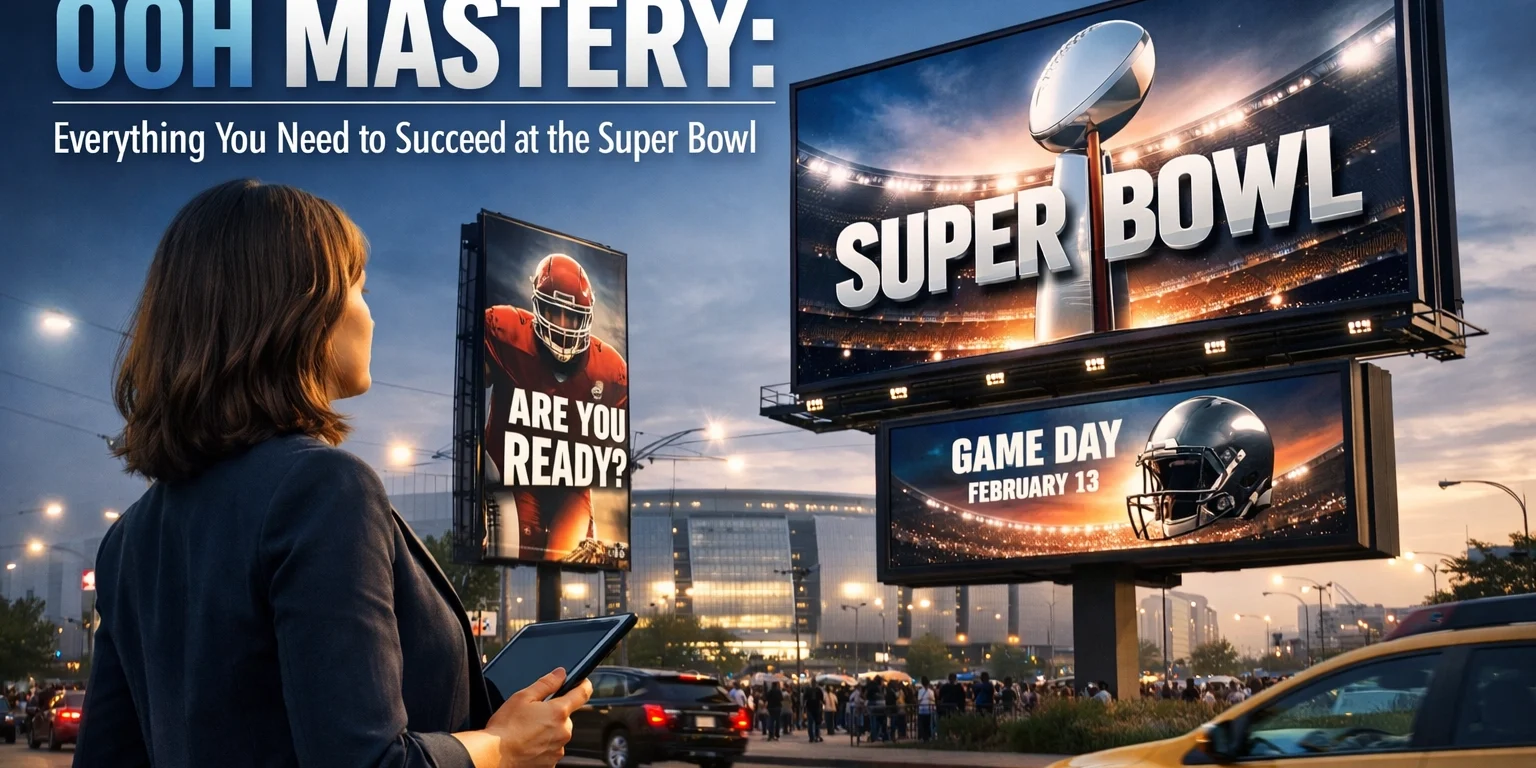
The Super Bowl is not just a championship game; it is a global cultural phenomenon that commands the undivided attention of millions. For advertisers, it represents the pinnacle of visibility. However, as the media landscape fragments, the traditional 30-second television spot: once the undisputed king of the "Big Game": is facing a new challenger for brand dominance: Out-of-Home (OOH) advertising.
At USA Entertainment Ventures LLC, we have observed a significant shift in how the world’s most successful brands approach major sporting events. While a television commercial offers a momentary flash of exposure at a premium price point, OOH advertising delivers a sustained, environmental presence that builds cumulative brand impact over several days. To truly master the Super Bowl environment, brands must look beyond the screen and focus on owning the physical space where the experience actually happens.
The Strategic Advantage of Environmental Presence
The fundamental advantage of OOH lies in temporal dominance. In the high-stakes environment of the Super Bowl, television spots disappear in 30 seconds, and digital social ads can be bypassed with a single scroll. Conversely, a strategic OOH campaign creates an "environmental saturation" that shapes attendee perception from the moment they land in the host city until the moment they depart.
Research indicates that brands executing integrated OOH campaigns achieve measurably higher engagement rates than those relying solely on traditional media. This is because repeated exposure over time builds a layer of brand trust and familiarity that a single touchpoint cannot achieve. When an attendee sees your brand at the airport, on the highway, and again near the stadium, your message moves from being an advertisement to becoming part of the event's atmosphere.

Mapping the Environmental Footprint
Effective OOH mastery begins with comprehensive environmental mapping. To succeed, a brand must trace the movement of attendees through the host city, identifying high-value "bottleneck" areas where attention levels are highest.
Phase 1: The Gateway (Airports and Transit)
The journey begins at the airport. Attendees arriving for the Super Bowl are in a high-state of anticipation, making them more receptive to messaging. Placements in baggage claims, terminal walkways, and ride-share pickup zones serve a dual purpose: they establish initial brand awareness and set the tone for the visitor’s weekend. By utilizing networks like 360 Sports Media, brands can secure these crucial first impressions.
Phase 2: The Arteries (Highways and Main Thoroughfares)
As visitors move from the airport to their hotels and the stadium, major thoroughfares become the primary canvas for brand storytelling. This is where Mobile Highway Ads and large-scale billboards play a vital role. These placements capture audiences during transition moments: times when they are moving between events and looking for the next destination or brand interaction.

Digital Integration and the Sporttron Digital Network
The evolution of technology has transformed OOH from static posters into dynamic, responsive brand experiences. The Sporttron Digital Network is at the forefront of this transformation, allowing brands to adapt their messaging in real-time based on the pulse of the game.
Unlike traditional billboards, digital OOH networks enable capabilities that allow for ultimate flexibility:
- Real-time Updates: Adjust messaging based on game developments, weather conditions, or trending social media conversations.
- Time-of-Day Targeting: Promote breakfast offerings at 8:00 AM, game-time specials at noon, and post-game celebrations in the evening.
- Live Content Integration: Incorporate live game statistics or social media feeds directly into the advertisement to increase engagement.
By bridging physical brand encounters with digital interactivity, such as QR codes or location-based mobile triggers, brands transform passive viewers into active participants. This integration generates measurable interaction data, providing a level of accountability previously unavailable in outdoor advertising.
Watch: Owning the Environment at the Big Game
To see these strategies in action and understand how the Sporttron Digital Network dominates the visual landscape, watch our comprehensive overview below:
https://www.youtube.com/watch?v=l6J-0zileKE
Phasing the Campaign Across the Event Lifecycle
Success at the Super Bowl requires a phased approach. A common mistake is focusing all resources on game day itself, ignoring the days leading up to and following the event.
- The Build-Up (Pre-Event): During the Wednesday through Friday before the game, competition for attention is high, but the "clutter" is often more manageable than on Sunday. Use this time to build anticipation and establish your brand as a primary destination for fans.
- The Peak (Event Day): On Sunday, focus shifts to high-impact placements near the primary venue and official fan zones. This is the moment for bold, unmissable creative that reinforces your brand's association with the event.
- The Departure (Post-Event): As attendees leave the city on Monday, they are in a reflective state. Use OOH placements at transit hubs to leave a lasting final impression, reinforcing brand loyalty as they return home.

Creating Immersive Experiential Activations
While billboards and digital screens provide the reach, experiential activations provide the depth. The modern consumer expects more than a message; they expect an experience. Successful Super Bowl campaigns leverage multisensory engagement: things fans can touch, see, and share.
The strategic advantage of an experiential activation lies in "earned media amplification." When an attendee finds an activation worth sharing on Instagram or TikTok, the brand gains authentic content distribution that advertising budgets cannot buy. For instance, a branded photo-op integrated with a digital screen through Sports Media can turn a single impression into thousands as it ripples through social networks.
When selecting locations for these activations, it is essential to balance accessibility with distinctiveness. High-traffic areas like the "Super Bowl Experience" fan fest offer volume, but unique or unexpected locations in the host city’s entertainment district can create a sense of curiosity and exclusivity that draws fans in.
Measuring Success: Moving Beyond "Eyes on Glass"
In the past, OOH was often criticized for a lack of granular data. Today, however, we can measure the success of an OOH campaign with incredible precision. By integrating mobile location data, we can track how many people saw a billboard and subsequently visited a retail location or searched for the brand online.
Key performance indicators (KPIs) for OOH mastery include:
- Reach and Frequency: Total estimated impressions across the event lifecycle.
- Digital Sentiment: The volume and tone of social media mentions sparked by physical placements.
- Mobile Conversion: The number of users who engaged with a QR code or location-triggered mobile ad.
- Brand Lift: Pre- and post-event surveys measuring changes in brand awareness and favorability.

Conclusion: The Future of Big Game Advertising
As we look toward future Super Bowls, the trend is clear: the most successful brands will be those that view the event as an ecosystem rather than a broadcast. The competitive advantage no longer belongs exclusively to those with the largest television budgets, but to those who most effectively own the physical environment.
By leveraging the Sporttron Digital Network and a strategic, phased OOH approach, brands can achieve a level of sustained presence that resonates long after the final whistle has blown. At USA Entertainment Ventures LLC, we believe that the physical world is the ultimate canvas for brand storytelling. In a world of fleeting digital moments, there is nothing more powerful than being present in the real world, right where the action happens.
To learn more about how to dominate your next major event, explore our specialized divisions at USA Entertainment Ventures. The future of advertising isn't just on the screen; it's everywhere.





