
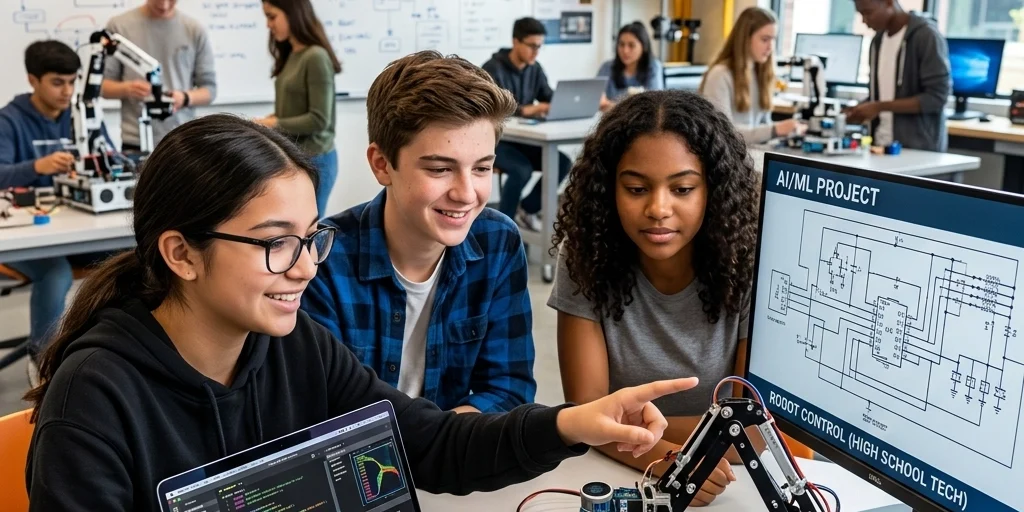
The traditional roadmap for talent acquisition is undergoing a fundamental shift. For decades, the standard operating procedure for corporations was simple: wait for students to complete a four-year degree, browse the top of the graduating class, and initiate recruitment during the final semester. However, in the current landscape: dominated by rapid advancements in Cloud computing, Artificial Intelligence (AI), and Data Analytics: this "wait and see" approach is becoming a strategic liability.
As we look at the data from early 2026, the gap between academic output and industry requirements is widening. Relying solely on college graduates often means entering a bidding war for talent that is already behind the curve in practical, hands-on experience. To secure a competitive advantage, forward-thinking organizations are moving their recruitment funnels upstream. The new frontier for talent acquisition is no longer the university career fair; it is the high school classroom.
The Traditional Talent Lag: A Growing Concern
The assumption that a college degree equates to workforce readiness is being challenged by hiring managers across the globe. Recent data suggests that approximately one in four hiring managers find recent college graduates to be unprepared for the rigors of the modern workforce. Common criticisms include a lack of practical work ethic and a sense of entitlement that does not align with the entry-level realities of the corporate world.
Furthermore, the unemployment rate for recent graduates aged 22 to 27 has hovered around 5.8%, a figure significantly higher than the national average. This discrepancy highlights a "mismatch" between the skills taught in a four-year theoretical environment and the immediate needs of businesses. For companies in specialized sectors like Business Consulting, waiting four years to see if a candidate can handle professional responsibility is a high-risk strategy.

Why the High School Funnel is Essential for Tech
The fields of AI, Cloud infrastructure, and Data Analytics are not merely academic subjects; they are practical languages. Much like learning a foreign tongue, fluency is achieved through early immersion and consistent practice. When companies engage students at the high school level, they are tapping into a demographic that is inherently "digitally native."
1. Accelerating Technical Fluency
By the time a student enters college, their learning patterns are often set. High school students, however, possess a cognitive plasticity that allows them to absorb complex logic structures: the foundation of Data Analytics and AI: with remarkable speed. Engaging students early allows companies to guide their learning toward specific platforms (such as AWS, Azure, or proprietary AI models) before they are influenced by broader, less focused academic curricula.
2. Mitigating the "Experience Gap"
A primary drawback of waiting for college graduates is the lack of professional context. A graduate might understand the theory of a "Data Lake," but they likely haven't managed one under the pressure of a real-world business deadline. By establishing internship programs or vocational partnerships with high schools, companies can instill professional discipline and project management skills years before a student would otherwise enter the market.
3. Solving the "Lock-in Effect"
The current labor market is experiencing what economists call the "lock-in effect." Experienced employees are becoming increasingly reluctant to change roles, which reduces the turnover that typically creates entry-level opportunities. This stagnation freezes the normal flow of opportunities for early-career workers. By building a pipeline that starts in high school, companies create their own internal "talent ecosystem," reducing their reliance on the volatile external mid-level market.
The Strategic Advantage of Early Engagement
From a business consulting perspective, the cost of acquisition for a high school recruit is significantly lower than that of a high-demand college graduate or a seasoned professional. But the benefits extend beyond the balance sheet.
Cultural Integration and Loyalty
When an organization invests in a student's development starting at age 16 or 17, they build a level of brand loyalty that is rare in the modern "job-hopping" economy. These students grow up within the company culture, understanding the nuances of the business's mission and operations. By the time they would traditionally be graduating college, they are already "senior" in their understanding of the company's specific needs.
Diversity of Thought
Engaging with high schools allows companies to reach a broader, more diverse pool of candidates who might not have considered a career in tech or may not have the resources for an elite four-year university. This democratizes access to high-paying roles in Cloud and AI while providing the company with a wider range of perspectives: a critical component for innovation in digital spaces.

Implementing the High School Talent Funnel
Transitioning to an early-engagement model requires a shift in how HR departments and executive leadership view "entry-level" roles. It is no longer about finding the person with the right degree; it is about finding the person with the right aptitude and providing them the right path.
- Partnerships with Vocational Programs: Many high schools are expanding their STEM (Science, Technology, Engineering, and Math) offerings. Businesses can provide these programs with real-world datasets for students to analyze, or cloud credits for them to build applications.
- Micro-Internships: Rather than a full summer commitment, companies can offer 2-4 week "micro-internships" focused on specific tasks, such as prompt engineering for AI or basic data cleaning.
- Mentorship Models: Assigning current staff to mentor high school students not only prepares the students but also develops the leadership and communication skills of the mentors.
Addressing the Skepticism
A common critique of this approach is the concern over a student's maturity or their ability to balance schoolwork with professional exposure. However, career advisors note that work experience during developmental years: even if part-time: demonstrates diligence and helps students learn to balance workloads effectively. It differentiates them from their peers and provides a sense of purpose that theoretical study often lacks.
As one industry expert noted, the goal is not to replace education, but to provide a "parallel track" that ensures the education is relevant. We are moving toward a future where "work-study" isn't just a financial aid program, but a core component of the tech talent strategy.

A Future-Focused Workforce
The decision to wait for college graduates is becoming a gamble that many businesses can no longer afford to take. With the average job search for a new grad taking 4-6 months, and many requiring additional months of on-the-job training to become productive, the "time-to-value" for a new hire is unacceptably long.
By starting the funnel in high school, companies like USA Entertainment Ventures LLC and others in the consulting space can ensure they have a steady stream of talent that is already technically proficient, culturally aligned, and ready to contribute on day one.
The future of tech talent is young, agile, and already sitting in a high school classroom. The question for leadership is simple: will you meet them there, or will you wait for your competitors to hire them first?
Conclusion: The New Standard
As we advance through 2026, the integration of high school talent into the professional tech ecosystem will likely become the standard, not the exception. The complexities of Cloud, AI, and Data Analytics demand a workforce that is trained with a "hands-on" mindset from the earliest possible stage.
Organizations that choose to invest in these young minds now are not just filling roles; they are building the foundational pillars of their future success. For more information on how to adapt your talent strategy or to explore current opportunities, visit our career opportunities page or contact our consulting team today.
The transition may require a departure from traditional hiring norms, but the data is clear: the earlier the engagement, the stronger the funnel. The time to start is now.





