
Walking into a traditional computer lab in 2026 feels a bit like stepping into a museum dedicated to the early 2000s. You remember the vibe: rows of identical monitors, the faint hum of cooling fans struggling against the dust, and the unmistakable scent of ozone and floor wax. For decades, this "factory model" of computing was the backbone of digital literacy. But as we navigate the mid-2020s, a question has emerged from the hallowed halls of academia and the sleek corridors of corporate headquarters: Are computer labs finally dead?
The short answer is yes: at least in the way we used to know them. The long answer is much more exciting. We aren't losing our communal tech spaces; we are witnessing their evolution into something far more dynamic. The "Pod" has arrived, and it is quickly becoming the essential physical infrastructure for the next generation of content creators, cybersecurity experts, and logistics wizards.
The Slow Death of the "Factory Model"
The decline of the traditional computer lab wasn't an overnight phenomenon. It was a slow fade accelerated by a perfect storm of technological shifts. According to industry data, nearly 95% of students and young professionals now operate under a "Bring Your Own Device" (BYOD) reality. When everyone has a high-powered laptop or tablet in their backpack, a room full of stationary desktops starts to look like a lot of wasted real estate.
As an IT representative from Eastern Michigan University famously noted during the transition, the traditional lab has been "dying a slow death" for years. The COVID-19 pandemic served as the final nail in the coffin, forcing institutions to move software to the cloud. Once students realized they could access high-end creative suites via SaaS (Software as a Service) from their couch, the motivation to sit in a windowless room on a Tuesday night vanished.
But the real issue wasn't just the hardware; it was the layout. Traditional labs were designed for isolation. They were anti-social by nature, built for one person to stare at one screen in silence. Modern work: especially in technology and creative fields: doesn't happen in a vacuum. It happens in the "Studio Model," where collaboration is the primary feature, not a bug.
Enter the Pod: Infrastructure for the Modern Creator
So, what exactly is a "Pod"? If the old lab was a factory floor, the Pod is a mission control center.
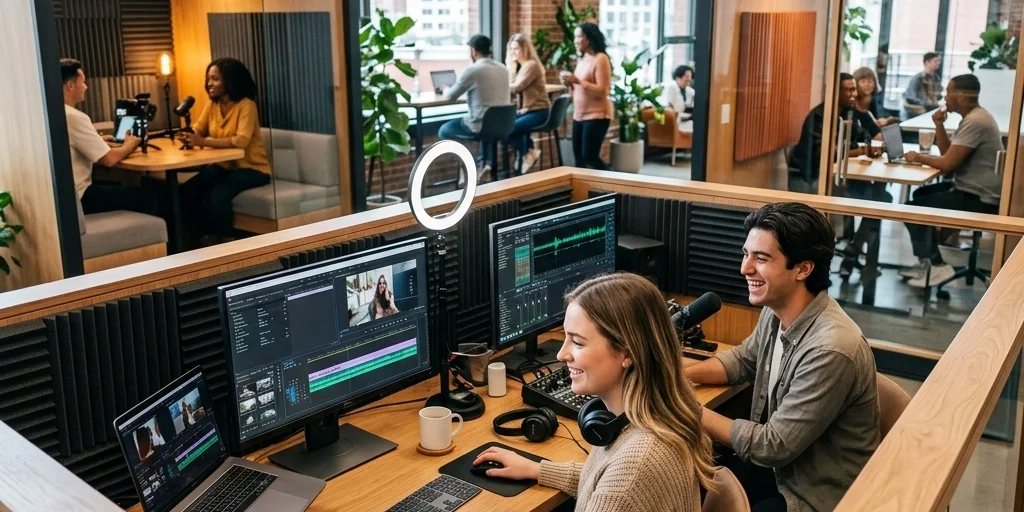
Physically, Pods are modular, flexible units designed to facilitate teamwork. Instead of rows of desks facing a chalkboard, Pods usually feature round or hexagonal tables equipped with shared monitors, integrated power hubs, and "whiteboard walls" for rapid brainstorming. They are the physical manifestation of a Google-style office, brought to the educational and local business environment.

The Pod is not just a place to check email. It is a hub specifically engineered for high-output activities. For content creators, this infrastructure is a game-changer. Creating high-quality video, audio, or interactive media requires more than just a laptop; it requires an environment. Pods provide the acoustic treatment, the high-speed hardwired uplinks, and the collaborative screens necessary to edit a 4K podcast or render a 3D animation in real-time with a team.
Career Pathways: More Than Just "Influencing"
While "Content Creator" is the flashy title that grabs headlines, the shift to Pod-based infrastructure opens up critical career pathways in fields that keep the modern world turning. At USA Entertainment Ventures LLC, we see these pods as the training ground for three specific pillars of the 2026 economy.
1. Content Creation and Media Management
The creator economy is no longer a hobby; it’s a multi-billion dollar industry. Pods allow creators to move from being "solo-preneurs" to managing small production houses. By providing the physical infrastructure: think lighting grids, green screen backdrops, and multi-user editing bays: Pods turn a simple idea into a professional media product. This isn't just about TikTok; it's about corporate training videos, digital marketing, and the burgeoning world of educational content.
2. Cybersecurity and "War Room" Training
Cybersecurity is inherently collaborative. When a breach occurs, you don't want a lone wolf; you want a team. The modular nature of Pods makes them the perfect "War Room." Many modern institutions are using Pod infrastructure to run "Red Team vs. Blue Team" simulations. These high-intensity drills require a physical space where team members can see each other's screens, swap data instantly, and communicate without the friction of a digital-only interface.
3. Logistics and Mobile Tech Management
Here is the part people often forget: someone has to manage the Pods. The shift from stationary labs to modular Pods has created a massive demand for logistics experts. These units are often mobile or "plug-and-play," meaning they need to be deployed, maintained, and optimized across different locations. Managing the lifecycle of these high-tech units: from hardware refreshes to spatial optimization: is a high-level logistics career that didn't exist a decade ago.
Why the Physical Space Still Matters
You might be wondering: "If everything is in the cloud, why do we need physical Pods at all?"
It comes down to human psychology and the "studio effect." Research in educational design suggests that physical environments heavily influence creative output. When you enter a space designed for creation, your brain switches gears. Pods provide a "third space": neither home nor a traditional office: that fosters deep work and spontaneous innovation.
Furthermore, Pods solve the "digital divide" that still exists even in 2026. While 95% of people might have a device, not everyone has a dedicated, quiet space with fiber-optic internet and professional-grade peripherals. Pods democratize access to high-end production tools, ensuring that the next great storyteller or cybersecurity expert isn't held back by their home environment.

The Business Case for Pods
For business owners and educational leaders, the transition to Pods is a matter of fiscal responsibility. Traditional labs are expensive to maintain and often sit empty for 60% of the day. They represent a sunk cost in real estate.
Pods, however, are multi-functional. A Pod used for a morning seminar on marketing can be used for an afternoon esports tournament and an evening cybersecurity workshop. This flexibility ensures that the investment in physical infrastructure is being utilized 24/7.
At USA Entertainment Ventures LLC, we believe that the future of business consulting lies in helping organizations bridge the gap between their current outdated setups and these future-ready hubs. The goal is to move away from the "maintenance of hardware" and toward the "enablement of people."
Looking Ahead: The Future is Modular
As we look toward the late 2020s, the "Pod" will likely become even more specialized. We are already seeing the rise of "AI-Pods" equipped with dedicated neural processing units for local machine learning development, and "VR-Pods" that allow teams to collaborate in fully immersive meta-environments.
The traditional computer lab isn't just dead; it’s been reincarnated as something much better. It’s been broken down into smaller, smarter, and more social units that actually reflect how we live and work today.

Whether you are aiming to dominate the esports arena, secure the nation's digital borders, or simply create content that moves the world, the infrastructure you choose matters. The era of the Pod is here, and it’s time to find your seat at the table.
For more insights into how technology is reshaping the landscape of business and entertainment, explore our technology category or reach out to us at USA Entertainment Ventures LLC. The future is being built in a Pod( don't get left in the lab.)





