
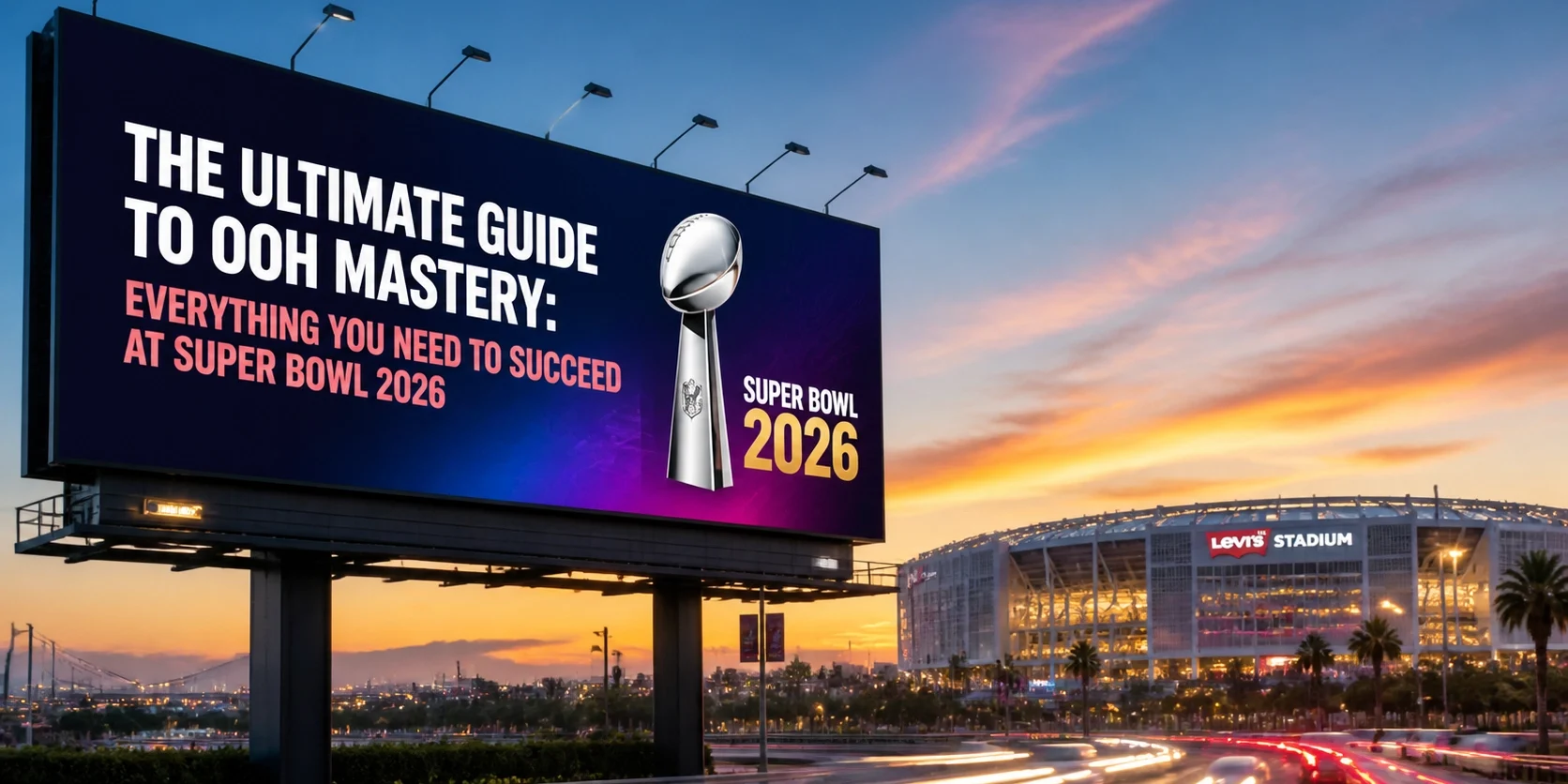
The dust has settled on Super Bowl LX, but the lessons learned from the streets of Santa Clara and the greater San Francisco Bay Area are just beginning to reshape how we think about high-impact advertising. For brands that played the long game, the 2026 Super Bowl wasn't just a four-quarter football match; it was a masterclass in Out-of-Home (OOH) dominance.
In an era where a 30-second television spot during the Big Game commands a staggering $10 million, the shift toward "owning the environment" has moved from a secondary strategy to a primary objective. At USA Entertainment Ventures LLC, we’ve watched the landscape evolve, and the data is clear: the most successful brands in 2026 didn't just buy airtime, they bought the atmosphere.
The Shift: Why OOH Outperformed the $10 Million TV Spot
For decades, the Super Bowl was synonymous with the "TV Commercial." However, as consumer habits fragmented and digital fatigue set in, the physical environment became the new premium real-time feed. While millions of viewers at home might use a commercial break to check their phones or grab a snack, the hundreds of thousands of fans on the ground are fully immersed in the "Super Bowl City" experience.
OOH mastery allows a brand to achieve something television cannot: persistent presence. A TV ad is gone in 30 seconds. A strategically placed digital billboard on the path to Levi’s Stadium, integrated with the Sporttron Digital Network, stays in the consumer's peripheral and direct vision for days.

Owning the Environment with Sporttron Digital Network
The core of "owning the environment" lies in the ability to deliver high-definition, dynamic content where the action is happening. This is where the Sporttron Digital Network comes into play. By leveraging a network designed specifically for sports-centric environments, advertisers can synchronize their messaging with the pulse of the crowd.
Whether it’s real-time score updates, social media feeds, or interactive countdowns, DOOH (Digital Out-of-Home) provides an agility that traditional static billboards simply lack. This flexibility was the hallmark of 2026’s most successful campaigns.
To see the Sporttron Digital Network in action and understand how it transforms the physical space into a digital playground, watch this overview:
https://www.youtube.com/watch?v=l6J-0zileKE
The 5-Step Framework for OOH Mastery
Succeeding at an event of this magnitude requires more than just a big budget; it requires a tactical framework. Based on our experience at USA Entertainment Ventures LLC, we have identified five critical steps that defined OOH mastery in 2026.
1. Map High-Traffic Zones with Precision
Successful OOH isn't about being everywhere; it’s about being where it matters most. Mapping the "Fan Journey" is essential. In 2026, this meant identifying the primary transit hubs, official fan zones, and the specific arteries leading into the stadium.
By analyzing foot traffic data and transportation patterns, brands were able to place their messaging at the exact points where fans were most likely to be delayed, such as security lines or rideshare pickup zones, turning idle time into brand engagement time.
2. Leverage Digital Out-of-Home (DOOH) Networks
Static is a relic of the past for events this dynamic. The mastery of DOOH allowed brands to change their creative on the fly. If a particular player was having a career-defining game, brands could update their digital displays within minutes to reflect the narrative. This level of relevance creates a connection with the fan that feels authentic and "in the moment."
3. Create Tangible Fan Connections
The best OOH campaigns in 2026 didn't just ask fans to look; they asked them to participate. We saw a massive surge in the use of:
- QR Codes: Providing instant access to exclusive filters, digital programs, or limited-edition merchandise.
- Augmented Reality (AR): Allowing fans to point their phones at a billboard and see 3D animations of players or interactive games.
- Pop-up Prompts: Directing fans to the nearest physical activation or brand booth.
The 3-Second Rule: Even with these bells and whistles, the core message must be understood in three seconds. If a fan can't grasp who you are and what you're offering while walking at a brisk pace, the opportunity is lost.
4. Partner with Reliable Infrastructure
When the world is watching, there is no room for technical failure. Relying on established partners like Mobile Hwy Ads or 360 Sports Media ensures that the hardware is as resilient as the software is creative. OOH mastery involves vetting the reliability of the screens, the uptime of the network, and the capability of the support team on the ground.

5. Synchronize Physical and Digital
The most overlooked aspect of OOH is its relationship with social media. In 2026, the goal was to create "Instagrammable" moments. If a billboard is striking enough or an installation is interactive enough, the fans do the distribution for you. Every photo taken of an OOH display and shared on social media essentially provides a free digital impression to the fan’s entire network.
Timing is Everything: The Friday-to-Sunday Squeeze
While the Super Bowl is a single day, the "OOH Window" is a 72-hour marathon. The most effective campaigns we saw in 2026 concentrated their heaviest rotation from Friday afternoon through Sunday evening.
During this window, the San Francisco Bay Area became a concentrated hub of decision-makers, influencers, and die-hard fans. By saturating the environment during these peak hours, brands created an "omnipresence" effect where it felt as though the brand was the official sponsor of the weekend itself, regardless of their official status with the league.
The Technical Side: Behind the Scenes of the Big Game
Success in business consulting for entertainment ventures often comes down to the logistics that the public never sees. Managing a network like Sporttron during the Super Bowl requires massive bandwidth and real-time coordination.
The industry professionals we work with emphasize that the "mastery" part of OOH mastery is really about data management. Knowing when to trigger a specific ad based on local weather, traffic congestion, or game highlights is what separates a standard campaign from a championship-winning one.

Actionable Takeaways for Future Events
While the 2026 Super Bowl is in the books, the blueprint remains the same for any major cultural or sporting event on the horizon. If you are looking to dominate the physical space, consider these shifts:
- Move from Static to Dynamic: Invest in DOOH networks that allow for real-time creative swaps.
- Prioritize Geography over Reach: Ten screens in a high-density "fan funnel" are worth more than a hundred screens spread across a city.
- Focus on the "Share Factor": Ask yourself, "Will someone take a photo of this?" If the answer is no, the creative needs more work.
- Integrate with Mobile: Your OOH should be the "hook" that pulls them into your digital ecosystem via QR or AR.
Conclusion: The Future of Owning the Room
As we look toward the future of entertainment and brand placement, the lessons from Super Bowl 2026 serve as a permanent guide. The environment is the ultimate canvas. By combining the physical scale of OOH with the agility of digital networks like Sporttron, brands are no longer just "advertising": they are becoming a part of the event's history.
At USA Entertainment Ventures LLC, we believe that the physical world remains the most powerful place to build a brand connection. While digital ads can be blocked and TV spots can be skipped, you cannot "close" the environment around you. Mastery isn't just about being seen; it's about being unforgettable.
For more insights into how to navigate the complex world of sports media and entertainment, explore our full portfolio and see how we help businesses own their environment every single day.





