
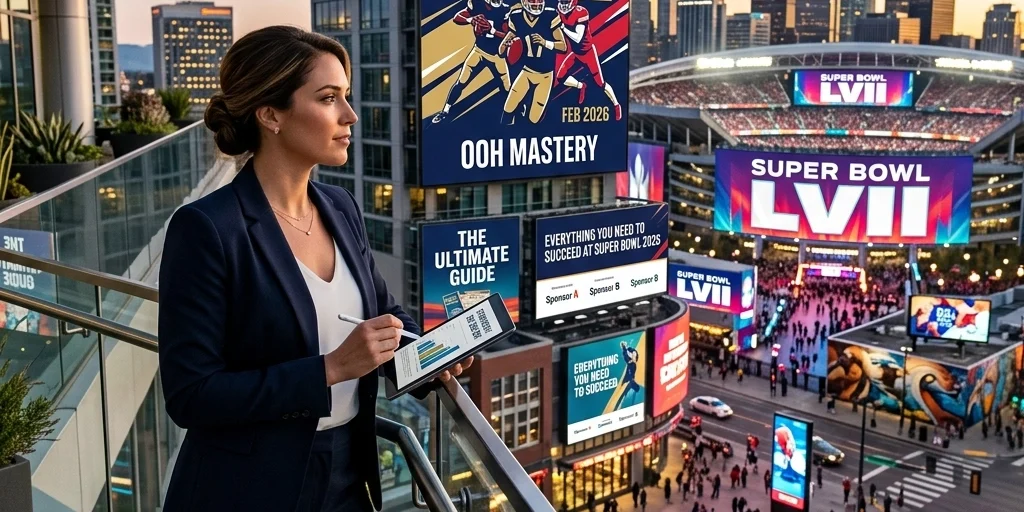
The dust has finally settled on Super Bowl LX. On February 8, 2026, Levi’s Stadium in Santa Clara became the epicenter of the sporting world. For brands, however, the real game wasn't just played on the turf; it was played on the streets, in the airports, and across the digital skyline of the San Francisco Bay Area.
As we sit here in May 2026, looking back at the data and the campaign performances, one thing is abundantly clear: Out-of-Home (OOH) advertising has undergone a radical transformation. It is no longer enough to simply "buy a billboard." To succeed in an environment as competitive as the Big Game, advertisers must master the art of "Owning the Environment."
At USA Entertainment Ventures LLC, we’ve analyzed the most successful activations from this year’s event to bring you the definitive guide to OOH mastery. Whether you are planning for the next championship or looking to dominate a local market, these five pillars represent the gold standard of modern brand visibility.
The Evolution of the Big Game Landscape
The 2026 Super Bowl was a landmark event for the advertising industry. We saw a shift away from traditional, static placements toward hyper-connected, data-driven experiences. The Bay Area presented unique challenges: a sprawling geography, diverse transit hubs, and a highly tech-savvy audience.
Brands that treated OOH as a secondary medium found themselves drowned out by the noise. Those that viewed it as a primary driver of engagement: integrating it with mobile, social, and real-time data: saw unprecedented returns on their investment. To understand how they did it, we must look at the five-step framework for OOH mastery.

Step 1: Map High-Traffic Zones with Precision
Mastery begins with geography. During a major event like the Super Bowl, "high traffic" isn't a general term; it is a moving target. Successful campaigns in 2026 didn't just target the stadium; they targeted the entire "fan journey."
Identifying the Fan Arteries
The first step is identifying primary transit hubs. For Super Bowl LX, this meant dominating San Francisco International (SFO), San Jose Mineta International (SJC), and the major arteries leading into Santa Clara. However, the real precision came from analyzing foot traffic data to find "idle time" points.
Security lines, rideshare pickup zones, and hotel lobby corridors became the most valuable real estate. Why? Because that is where the audience is stationary. By placing messaging in areas where fans are waiting, brands converted "dead time" into active engagement opportunities.
The "Last Mile" Strategy
The "last mile" refers to the final stretch of the journey to the stadium. In 2026, the most effective brands utilized mobile highway ads and transit wraps to maintain a constant presence as fans moved from their hotels to the gate. You can see how our divisions like Mobile Hwy Ads have specialized in this type of omnipresence.
Step 2: Leverage Digital Out-of-Home (DOOH) Networks
The era of the static paper billboard is effectively over for major event marketing. In 2026, the winner was Digital Out-of-Home (DOOH). The ability to change creative on the fly is no longer a luxury: it is a requirement.
The Sporttron Digital Network Advantage
The gold standard for sports-related OOH is the Sporttron Digital Network. This network allows advertisers to synchronize their messaging with the pulse of the game. If a star quarterback makes a historic play in the second quarter, a brand using Sporttron could have a congratulatory ad live on the streets of San Francisco within minutes.
https://www.youtube.com/watch?v=l6J-0zileKE
As seen in the video above, the Sporttron Digital Network transforms a static environment into a living, breathing media channel. This dynamic capability allows for:
- Momentum-based creative: Adjusting tone based on which team is winning.
- Time-of-day optimization: Showing breakfast promotions in the morning and post-game party locations at night.
- Weather triggers: Displaying relevant products (like umbrellas or sunblock) based on real-time local conditions.

Step 3: Create Tangible Fan Connections
In a world where everyone is staring at their phones, OOH must act as a bridge between the physical and digital worlds. The most successful 2026 campaigns followed the "3-Second Rule."
The 3-Second Rule
A fan walking through a crowded fan zone has a limited attention span. Your message must be understood in three seconds or less. This requires bold typography, high-contrast visuals, and a singular, clear call to action.
Interactive Elements: QR and AR
We saw a massive resurgence in QR codes during the Big Game. However, these weren't just links to websites. They were gateways to exclusive content, such as:
- Augmented Reality (AR) Filters: Billboards that triggered 3D animations of players or team mascots when viewed through a smartphone.
- Exclusive Merchandise Access: QR codes that allowed fans to "skip the line" at pop-up shops.
- Interactive Games: DOOH screens that allowed fans to play short, gesture-controlled games while waiting for transit.
By using these technologies, brands like 360 Sports Media have been able to turn a passive viewer into an active participant in the brand narrative.
Step 4: Strategic Timing: The 72-Hour Blitz
Timing is the difference between a campaign that resonates and one that is forgotten. While many brands start their OOH presence weeks in advance, the most effective window for "Mastery" is the 72-hour period from Friday afternoon through Sunday evening.
The Peak Rotation Period
During Super Bowl weekend, the density of fans reaches its peak on Friday. This is when the "big spenders" arrive and the atmosphere shifts from anticipation to action. Successful advertisers concentrated their heaviest campaign rotations during this 72-hour window.
By saturating the environment during this period, brands created an "omnipresence effect." To the average fan, it seemed as though the brand was everywhere: not because they had more billboards, but because they had the right billboards at the right time. This targeted saturation is a core strategy discussed in our Business Consulting services, where we help clients optimize their ad spend for maximum impact.

Step 5: Synchronize Physical and Digital
The final step in OOH mastery is ensuring that your physical presence fuels your digital reach. In 2026, the best OOH campaigns were designed to be photographed.
Building "Instagrammable Moments"
An "Instagrammable moment" is a physical placement so visually striking or unique that fans feel compelled to take a photo and share it on social media. When a fan shares a photo of your billboard, your OOH ad suddenly becomes a social media ad, reaching thousands of people who aren't even in the same city.
This "earned media" is the ultimate ROI multiplier. It transforms a local placement into a global conversation. To achieve this, brands must think like artists. It’s not about the logo size; it’s about the experience the visual creates.

Data-Driven Decisions: The New Bottom Line
As we look toward the 2027 season and beyond, the integration of data will only deepen. The 2026 Super Bowl proved that data management is the real differentiator in OOH success.
Advertisers are now using real-time data to trigger ads based on:
- Traffic Congestion: Increasing ad frequency on highway boards when traffic slows down to 10 mph.
- Social Sentiment: Changing creative if a specific player or team begins trending positively or negatively.
- Local Inventory: Only showing ads for products that are currently in stock at nearby retailers.
This level of sophistication allows brands to save money by not wasting impressions on irrelevant audiences or at times when the impact would be minimal.
Conclusion: Preparing for the Future
Mastering OOH for a massive event like the Super Bowl requires a blend of creative intuition and technical precision. By mapping high-traffic zones, leveraging dynamic DOOH networks like Sporttron, creating tangible connections, timing the 72-hour blitz, and synchronizing with digital channels, any brand can "Own the Environment."
The lessons from 2026 are clear: the world is getting noisier, and only those who are willing to innovate will be heard. At USA Entertainment Ventures LLC, we remain committed to helping businesses navigate this evolving landscape.
If you are looking to elevate your brand’s presence at the next major cultural milestone, the time to start planning is now. The "Big Game" happens once a year, but the strategies required to win are timeless.
For more information on our media divisions and how we can help your brand succeed, visit our portfolio or check out our latest news at ZooMedia News.





