In the current economic landscape, the intersection of education and employment is undergoing a radical transformation. As institutions strive to become "Future Ready," the traditional methods of workforce branding and recruitment are no longer sufficient. Today’s executive leaders are finding that the "old ways" of talent acquisition: static job postings and siloed career services: are leading to significant strategic gaps.
At USA Entertainment Ventures LLC, we observe a growing disconnect between how organizations present themselves and how talent perceives them in a digitally saturated market. Bridging this gap requires more than just a marketing refresh; it requires a deep integration of media literacy, data-driven decision-making, and specialized recruitment strategies like the DOD SkillBridge program.
By identifying and correcting these seven common mistakes, schools and organizations can transform into anchors of regional economic development, ensuring their talent pipelines are not only filled but are also high-performing and media-savvy.
1. Ignoring Personal Brand Literacy (NIL)
One of the most significant oversights in modern workforce strategy is viewing Name, Image, and Likeness (NIL) education as a niche requirement for elite athletes. In reality, NIL is the vanguard of personal brand literacy.
The Mistake: Treating personal branding as an extracurricular activity rather than a core workforce competency.
When students and young professionals do not understand the mechanics of their own digital presence, they become liabilities to their future employers and themselves. Media literacy education provides the framework for understanding how content creation, social media algorithms, and digital reputation intersect with professional opportunities.
By embedding NIL education into broader workforce branding strategies, "Future Ready" schools empower all students: not just athletes: to navigate the complexities of digital endorsements, contracts, and personal reputation management. This foundational knowledge ensures that when they enter the workforce, they do so as brand-conscious assets who understand the value of institutional alignment.

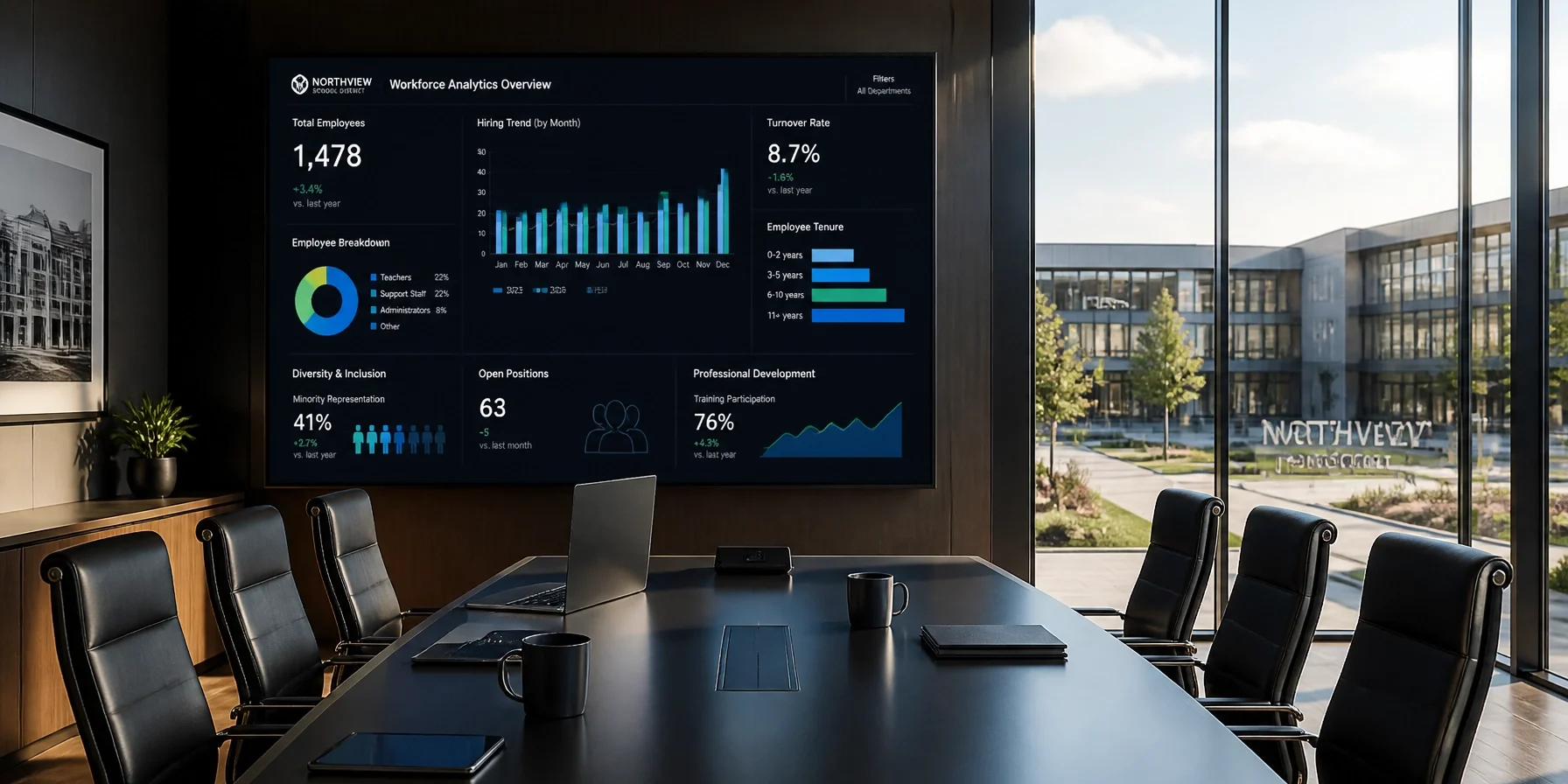
2. Relying on "Gut Feel" Instead of Data Analytics Dashboards
In the executive suite, decisions are only as good as the data supporting them. Yet, many workforce branding strategies are still driven by anecdotal evidence or outdated annual surveys.
The Mistake: Operating without real-time visibility into recruitment funnels and talent sentiment.
Modern workforce development requires the same level of analytical rigor as financial management. Data analytics dashboards are no longer a luxury; they are a necessity for tracking metrics such as application rates, time-to-hire, and long-term retention.
For schools and institutions, these dashboards provide a "single source of truth" regarding student outcomes and employer satisfaction. According to industry experts, organizations that leverage real-time data to refine their employer value proposition (EVP) see a marked increase in candidate quality. Without these insights, leaders are essentially flying blind, unable to identify where their "Future Ready" initiatives are succeeding or failing.
3. Failing to Decode Digital Noise (Media Literacy)
The digital landscape is rife with misinformation, algorithmic bias, and hyper-polished marketing that often masks internal cultural issues. For recruiters and candidates alike, the ability to decode this noise is a critical skill.
The Mistake: Assuming that "digital natives" are naturally media literate.
Just because a candidate can navigate a smartphone does not mean they can critically analyze a recruitment campaign or verify the claims made on a corporate "About Us" page. Media literacy is the "fix" that allows both sides of the hiring equation to move beyond the surface level.
Recruiters must be trained to look past aesthetic polish to find genuine talent, while students must learn to distinguish between a "perk-heavy" culture and a "growth-heavy" career. This critical analysis prevents the costly mistake of a "bad hire" caused by a misunderstanding of digital signals.

4. Disjointed School-to-Work Pipelines
Many institutions operate as if education and employment are two separate chapters of a book. In a "Future Ready" ecosystem, these chapters must be written concurrently.
The Mistake: Failing to integrate local industry requirements directly into the educational curriculum.
Workforce branding is most effective when it is a collaborative effort between schools and employers. When institutions act as an anchor, they facilitate a seamless transition by aligning their branding with the real-world needs of the local economy.
This alignment often involves co-branded initiatives, specialized training modules, and a shared commitment to media literacy. By breaking down the silos between these departments, organizations can create a pipeline that is not only efficient but also highly resilient to economic shifts. Explore our Ultimate Guide to Future Ready Workforce Strategy for a deeper dive into these integration techniques.
5. Overlooking the DOD SkillBridge Opportunity
One of the most underutilized talent pools in the United States is the transitioning veteran community. The Department of Defense (DOD) SkillBridge program offers a unique opportunity for service members to gain civilian work experience during their final 180 days of service.
The Mistake: Ignoring specialized recruitment pathways that offer highly trained, disciplined talent at little to no cost to the employer during the internship period.
USA Entertainment Ventures LLC specializes in managing these divisions, particularly in the DOD SkillBridge recruitment sector. Veterans bring a level of leadership, technical proficiency, and adaptability that is perfectly suited for "Future Ready" organizations. By failing to include SkillBridge in a workforce branding strategy, institutions miss out on a cohort that is inherently equipped with the "soft skills" and operational discipline that are often missing in traditional talent pipelines.

6. Prioritizing "Seeming" Over "Being" (The Authenticity Gap)
In the age of transparency, an organization’s internal culture will eventually become its external brand. Glassdoor, LinkedIn, and social media have made it impossible to hide a toxic or stagnant environment behind a polished careers page.
The Mistake: Investing heavily in external branding while neglecting internal cultural development.
Authenticity is the currency of the modern workforce. Media literacy teaches candidates how to spot the "authenticity gap": the space between what a company says it is and what its employees actually experience.
When the external brand promises innovation and a "Future Ready" mindset but the internal reality is one of rigid hierarchy and technical debt, turnover rates skyrocket. Leaders must ensure that their workforce branding is an honest reflection of their internal reality. If the reality isn't where it needs to be, the solution isn't better marketing; it’s better management and cultural evolution.
7. Lack of Future-Ready Institutional Positioning
Finally, many organizations fail to position themselves as forward-looking entities. They are reactive rather than proactive, responding to workforce trends only after they have already disrupted the market.
The Mistake: Maintaining a "business as usual" stance in a world that demands constant innovation.
A "Future Ready" school or organization is one that anticipates the needs of the next decade. This includes adopting emerging technologies, embracing sustainable practices, and, crucially, fostering a culture of continuous media literacy education.
Being an "anchor" institution means more than just providing jobs; it means providing a vision for what the future of work looks like. This involves leveraging tools like e-sports pods for student engagement or implementing sports medical group standards for physical wellness: areas where USA Entertainment Ventures LLC has significant expertise.
The Path Forward: Media Literacy as the Strategic Bridge
Correcting these mistakes requires a shift in perspective. Workforce branding is no longer just the responsibility of the HR department; it is a strategic imperative that touches every level of an organization.
By integrating media literacy into the core of your strategy, you provide your team with the tools to navigate a complex digital world. When combined with robust data analytics dashboards and a commitment to specialized recruitment like DOD SkillBridge, your institution becomes more than just a place of work or study. It becomes a "Future Ready" leader in the community.
The future of workforce development is technical, data-driven, and media-savvy. By avoiding these seven common mistakes, you ensure that your organization is not just keeping up with the changes, but leading them.
Ready to anchor your institution’s future?
USA Entertainment Ventures LLC provides the expertise and management services necessary to navigate the complexities of modern workforce branding and recruitment. Whether you are looking to enhance your NIL education programs or optimize your DOD SkillBridge recruitment, our team is here to help you become truly "Future Ready."
Visit USA Entertainment Ventures LLC to learn more about our divisions and how we can support your strategic goals.