
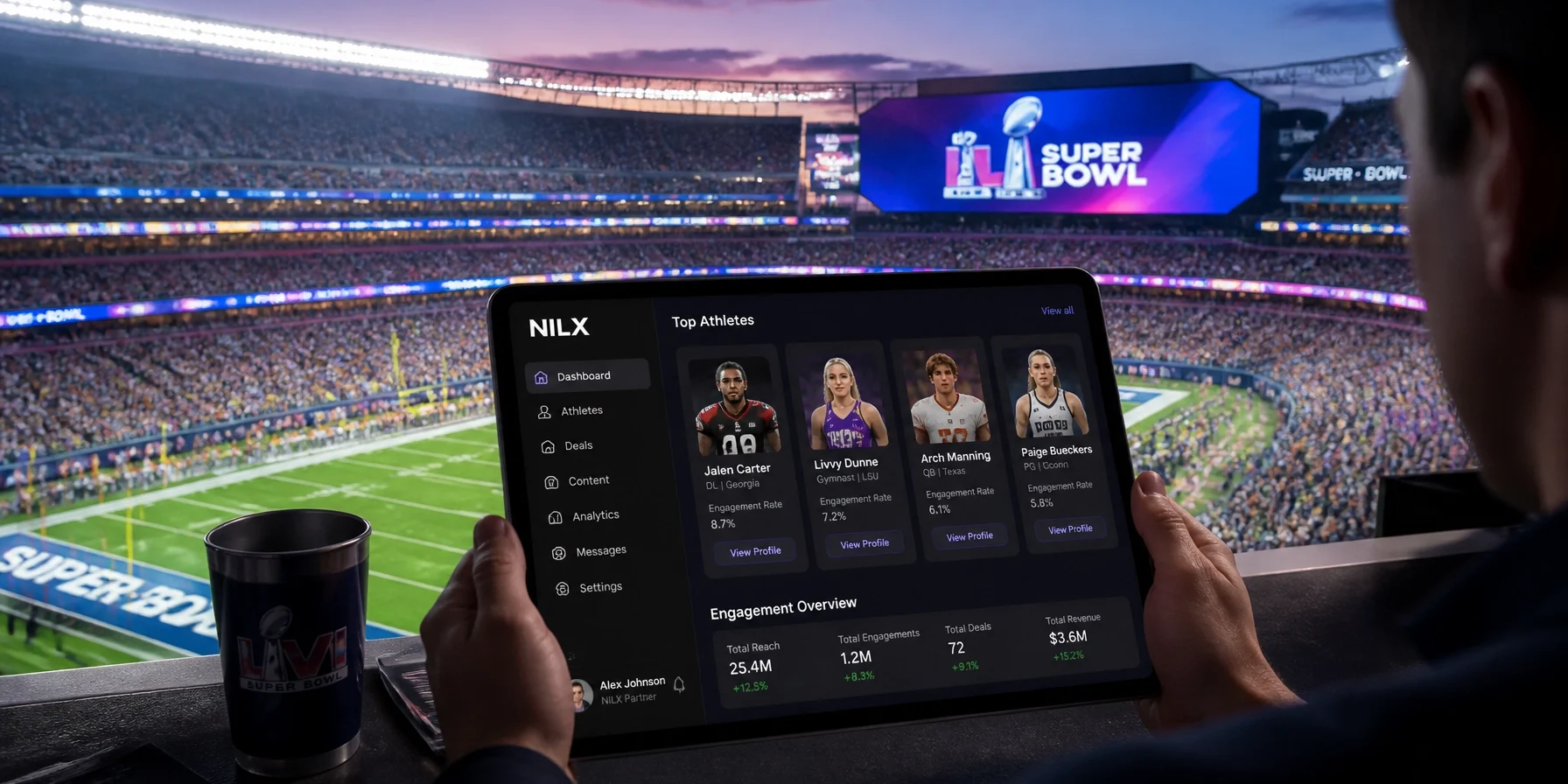
The landscape of sports marketing has undergone a fundamental transformation. For decades, the Super Bowl was defined by the singular, high-budget 30-second television spot: a prestigious but isolated broadcast event. However, as we look at the legacy of Super Bowl 2026, it is clear that the "Big Game" is no longer a moment; it is a multi-week, cross-platform narrative driven by individual human influence. For Fortune 100 brands, the bridge between corporate messaging and cultural relevance is now built through Name, Image, and Likeness (NIL) platforms.
NIL platforms have shifted from being experimental tools for niche marketing to becoming core infrastructure for global enterprises. In an era where 70% of consumers trust influencers more than traditional celebrities, the ability to activate thousands of student-athletes simultaneously is the new gold standard for ROI. This guide explores the strategic integration of NIL platforms, the importance of scale, and the technical methodologies required to dominate the Super Bowl stage.
The Infrastructure of Influence: Why NIL Platforms are Vital
At the enterprise level, the challenge of NIL is not finding an athlete; it is managing the complexity of thousands of them. For a Fortune 100 brand, a single endorsement is a rounding error. To move the needle on brand sentiment or market share, scale is a prerequisite.
NIL platforms serve as the central nervous system for these campaigns. They provide the necessary visibility into athlete demographics, engagement rates, and, most importantly, compliance. As state and federal regulations regarding student-athlete compensation continue to evolve, the legal risk for a major corporation is significant. A robust NIL platform automates the vetting and contracting process, ensuring that every piece of content meets both brand safety standards and NCAA eligibility requirements.
As noted by industry analysts, the NIL ecosystem has matured into a structural change in how influence is brokered. Brands now have access to over 20,000 authentic voices: student-athletes who define culture for the next generation. By leveraging these platforms, companies like USA Entertainment Ventures LLC help brands bridge the gap between traditional advertising and the hyper-engaged communities that these athletes command.

The Super Bowl 2026 Blueprint: A Three-Phase Strategy
Success at the Super Bowl is rarely the result of a single day’s effort. Data from the 2026 season suggests that the most effective NIL campaigns are structured across three distinct phases: the pre-game narrative, game-day activation, and the post-game long tail.
Phase 1: The Pre-Game Build
The Super Bowl television spot should be treated as the climax of a story, not the introduction. In the weeks leading up to the game, NIL platforms allow brands to seed narratives through "local heroes." By activating athletes in key regional markets or specific university ecosystems, a brand can build earned media buzz. This "teaser" content: ranging from training footage to behind-the-scenes glimpses: positions the brand as a participant in the sports culture rather than just an advertiser.
Phase 2: Game-Day Real-Time Execution
On Super Bowl Sunday, authenticity outperforms polish. While the 30-second ad plays on the screen, thousands of NIL athletes are on their own platforms, providing live reactions and watch-party content. This creates a "surround-sound" effect. When a brand’s television spot airs, it is immediately validated by the athletes their audience already trusts. Research indicates that NIL content around major sporting events delivers 3–4 times higher interaction rates than pre-scheduled corporate posts.
Phase 3: The Post-Game Long Tail
The 72 hours following the final whistle are often the most underutilized window in sports marketing. While traditional ad impact begins to fade, NIL athletes can sustain the momentum. Post-game reflections, "unboxing" of promotional gear, and redemption pushes for digital offers allow brands to convert high-level awareness into tangible leads and sales.
The Portfolio Approach: Balancing Stars and Micro-Influencers
One of the critical mistakes brands made in early NIL cycles was betting their entire budget on a single marquee "star" athlete. The modern, factual approach favored by Fortune 100 leaders is the Portfolio Strategy.
This involves building a tiered roster:
- National Anchors: One or two high-visibility athletes who align with the national television creative.
- Regional Specialists: 10–20 mid-tier athletes who have dominant influence in specific geographic territories (e.g., the host city or key sales regions).
- Niche Creators: Hundreds of micro-athletes who represent specific demographics, such as women’s sports, HBCUs, or specific academic conferences.
This diversified approach manages risk and maximizes reach. If one athlete underperforms or faces an injury, the overall campaign remains intact. Furthermore, regional NIL activations can reach engaged local consumers at approximately 10–20% of the cost of national celebrities, providing a significantly higher return on ad spend (ROAS).

Technical Integration and Measuring ROI
For the C-suite, the primary question is always one of validation. How do we prove the ROI of a multi-thousand-athlete NIL campaign?
The answer lies in predictive modeling and fan sentiment analysis. Advanced NIL platforms, such as those utilized by the Sports Media division of USA Entertainment Ventures, integrate directly with a brand’s measurement stack. By tracking real-time metrics: including reach, engagement, click-through rates, and sentiment shifts: brands can see the incremental contribution of NIL across their entire marketing mix.
Furthermore, the integration of physical and digital assets is crucial. The Sporttron digital network, for example, allows brands to synchronize NIL social content with in-venue exposure on ribbon boards and jumbotrons across 780+ venues nationwide. This ensures that the brand’s message is inescapable, whether a fan is looking at their phone or the scoreboard.
Actionable Insights for Fortune 100 Brands
To succeed in the post-2026 NIL landscape, brand leaders should consider the following practical shifts:
- Implement Centralized Governance: Establish a central dashboard for legal, compliance, and marketing teams to oversee NIL activities. This ensures brand safety and regulatory compliance at scale.
- Prioritize Co-Creation: Move away from rigid scripts. Allow athletes to co-author content so it aligns with their personal brand voice, which is why their audience follows them in the first place.
- Leverage Out-of-Home (OOH) Synergy: Combine digital NIL campaigns with physical touchpoints, such as high-touch concession platforms or billboards, to create a tangible fan experience.
- Invest in Sentiment Analysis: Use AI-driven tools to monitor how fans are reacting to athlete partnerships in real-time, allowing for mid-campaign pivots if necessary.
The Role of Professional Consulting
Managing these moving parts requires veteran precision. USA Entertainment Ventures LLC provides the management and consulting expertise necessary to navigate the complex ecosystem of sports media and NIL recruitment. By aligning your brand with unmatched expertise, you ensure that your Super Bowl investment is not just a gamble, but a calculated success.
Conclusion: The Future of Sports Marketing
The NIL revolution is not a temporary trend; it is the new frontier of corporate communication. As we move beyond 2026, the brands that thrive will be those that view athletes not as billboards, but as authentic partners in storytelling. By utilizing sophisticated NIL platforms and strategic management, Fortune 100 companies can achieve a level of cultural resonance that traditional media simply cannot replicate.
The Super Bowl remains the ultimate stage, but the way we perform on that stage has changed forever. It is time to bridge the gap and embrace the power of authentic influence.
Watch: The NIL Revolution – Bridging the Gap at the Super Bowl
https://www.youtube.com/watch?v=l6J-0zileKE

For more information on how to optimize your sports marketing strategy, visit our services page or contact us to schedule a consultation.





