
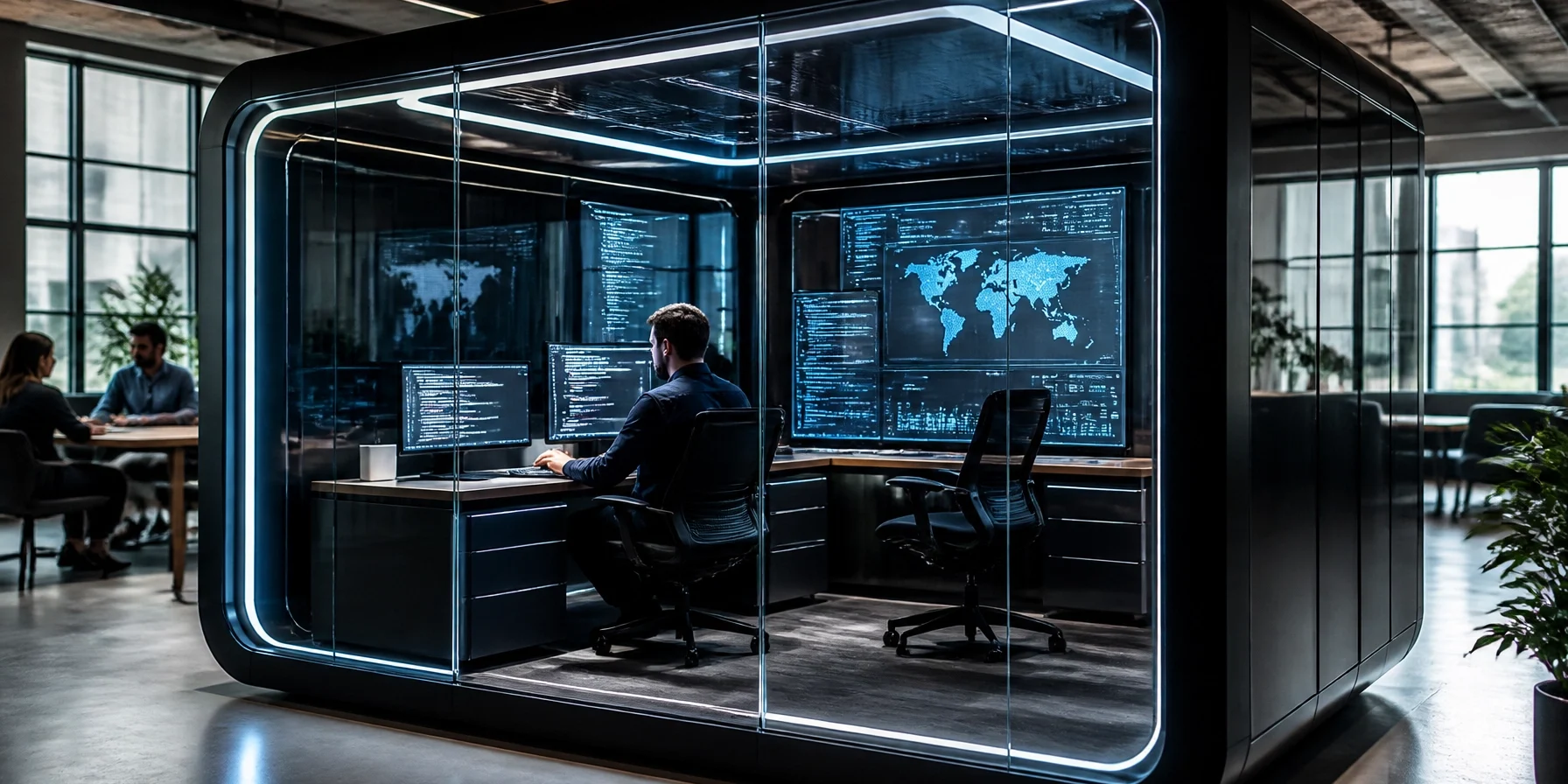
The traditional computer lab: once the hallowed sanctuary of buzzing fluorescent lights and rows of identical beige towers: is undergoing a quiet but definitive obsolescence. For decades, these spaces served as the primary entry point for technical education, but in the fast-evolving landscape of 2026, they are being outpaced by a more agile, modular, and mission-focused successor: the Pod.
At USA Entertainment Ventures LLC, we specialize in managing the intersections of business development and the emerging technological needs of industry leaders. We have observed a significant shift in how organizations, particularly those involved in DOD Skill Bridge recruitment, are re-evaluating their physical infrastructure. The consensus is becoming clear: if you are training the next generation of cybersecurity experts, logistics masterminds, or technical content creators, the static computer lab is no longer the gold standard.
The Decline of the Static Lab
The move away from traditional computer labs isn't merely a matter of aesthetic preference; it is a response to a fundamental mismatch between infrastructure and industry requirements. Research from the University of Chicago recently highlighted that traditional, once-a-year cybersecurity training in fixed environments shows almost no correlation with an employee’s actual ability to thwart real-world threats like phishing simulations.
Furthermore, IT leaders in higher education are reporting a steady decline in the demand for campus PCs. Students and professionals alike are increasingly bringing their own high-performance devices, yet they lack the specialized, secure, and collaborative physical spaces required for high-stakes technical work. The traditional lab is often a "nightmare for cybersecurity training" because it lacks the ability to safely isolate malware testing or simulate complex, live-fire network attacks without risking the entire local network.
Enter the Pod: The New Power Hub
If the computer lab was a library, the Pod is a mission control center. A "Pod" is a modular, self-contained workstation designed to provide a high-intensity, distraction-free environment for specialized tasks. These units are not just desks; they are integrated hubs that combine physical security with access to advanced virtual cyber ranges and cloud-based logistics software.

For cybersecurity professionals, Pods offer several critical advantages:
- Isolation and Safety: Unlike a shared lab where one compromised machine can infect another, Pods can be logically and physically segmented. This allows for "hands-on" malware analysis and penetration testing in a sandbox environment that mirrors real-world enterprise networks.
- Scenario-Based Realism: Modern cybersecurity is about incident response and threat hunting. Pods provide the immersive environment needed for "live-fire" exercises, where teams can work in shifts to monitor simulated Security Operations Centers (SOCs).
- Scalability: As business needs grow, organizations can deploy additional Pods in various locations: near military bases, in regional offices, or within community centers: rather than investing in massive, centralized lab facilities that often sit empty after hours.
Logistics and the Interdisciplinary Hub
The utility of the Pod extends far beyond code and firewalls. In the realm of logistics and supply chain management, the Pod serves as a high-speed command center. Veterans transitioning into business and operations roles find that the Pod mirrors the Tactical Operations Centers (TOCs) or command posts they managed during their service.

Logistics is no longer just about moving boxes; it is a data-driven science. Within a Pod, a logistics coordinator can manage transportation management systems (TMS), monitor real-time fleet data, and coordinate with international partners: all from a focused, high-bandwidth environment. The integration of data-focused coursework (such as SQL or Power BI) into these workspaces allows users to transition seamlessly from learning a tool to applying it in a professional mission-hub setting.
The Content Creation Angle: Technical Communication
As the digital economy matures, the demand for individuals who can both do the technical work and explain it has skyrocketed. This is where "Content Creation" enters the career pathway. Whether it is a technical writer creating a tutorial for a new cybersecurity protocol or a logistics expert producing a video walkthrough of a warehouse management system, the Pod provides the necessary production value.

A Pod can be equipped with professional-grade audio, lighting, and 4K cameras, allowing professionals to build a portfolio of demos and talks. This dual-use capability: training in a technical domain and then immediately documenting that expertise on camera: is a hallmark of the modern "power hub" model. At USA Entertainment Ventures LLC, we see this as a vital skill for anyone looking to excel in technical marketing or instructional design.
The Veteran Advantage and DOD Skill Bridge
One of the most compelling applications of the Pod infrastructure is in the DOD Skill Bridge recruitment program. Transitioning service members often face a "digital divide" when moving from highly structured military environments to the often-fragmented world of civilian tech training.
Pods offer a familiar "mission-oriented" physical space that bridges this gap. By placing these hubs in strategic locations, we can provide veterans with:
- Access to high-end virtual cyber ranges.
- A collaborative environment for team-based exercises.
- A professional setting for career coaching and mock interviews.
As noted by industry experts, veterans possess an innate understanding of security, procedure, and operational readiness. When you place a veteran in a Pod-based SOC simulation, they aren't just clicking through a slide deck; they are defending a network in an environment that respects their experience and challenges their intellect.

Actionable Takeaways for Organizations
For businesses looking to modernize their training or recruitment infrastructure, the shift from labs to Pods is not just a trend: it is a strategic necessity. Here are a few practical steps to consider:
- Evaluate Utilization: Look at your current training facilities. If your computer labs are under-used or rely on outdated hardware, consider transitioning to a modular Pod model that utilizes cloud-based virtual labs.
- Prioritize Realism: Ensure your training environments allow for safe, hands-on experimentation with malware and incident response. Theoretical knowledge is no longer enough to secure a modern enterprise.
- Invest in "Soft" Tech Skills: Encourage your technical staff to use their workspaces for content creation. Building a internal library of technical demos can drastically reduce the time needed to onboard new hires.
- Leverage Transition Programs: If you are struggling to find cybersecurity or logistics talent, look toward the DOD Skill Bridge program. Providing veterans with the right physical and virtual tools is one of the most effective ways to close the talent gap.
Conclusion: A Future-Focused Infrastructure
The era of the "one-size-fits-all" computer lab is drawing to a close. In its place, we are seeing the rise of specialized, agile hubs that prioritize safety, realism, and collaboration. Whether it's defending a network against a sophisticated cyber attack, optimizing a global supply chain, or producing high-impact technical content, the Pod is proving to be the essential infrastructure for the 21st-century professional.
At USA Entertainment Ventures LLC, we are committed to helping organizations navigate these changes. By adopting forward-looking strategies and investing in the right tools, businesses can ensure they are not just keeping up with the future, but actively shaping it for the better of their employees and the broader society.





