
Remember the computer lab? That windowless basement room filled with the smell of ozone and the rhythmic hum of thirty-odd beige towers? It was the cathedral of the 1990s: a place where we learned the high art of "Oregon Trail" and eventually, if we were lucky, how to format a floppy disk.
Fast forward to 2026, and those labs are looking less like a tech hub and more like a digital mausoleum. The world has moved on. We carry more processing power in our pockets than those entire rooms possessed. But as the generic "PC room" dies out, something far more specialized, modular, and, frankly: cooler is taking its place.
Welcome to the age of the Pod.
At USA Entertainment Ventures LLC, we’ve spent years tracking how the physical infrastructure of work dictates the quality of the workforce. From our vantage point in business management and consulting, it’s clear: the era of the row-based lab is over. If you want to launch a career in cybersecurity, logistics, or content creation today, you don’t need a desk in a row. You need a cockpit in a pod.
The Great Lab Extinction
The "computer lab" was built on a premise of scarcity: computers were expensive, so we had to put them all in one room and share them. Today, the problem isn't access to any computer; it’s access to the right environment.
Research from educational giants like the University of New Mexico suggests that static workstations are being phased out in favor of "active learning" spaces. Why? Because the modern economy doesn't reward you for sitting in a row and following instructions. It rewards you for collaborating, solving crises in real-time, and mastering high-spec, industry-specific hardware.

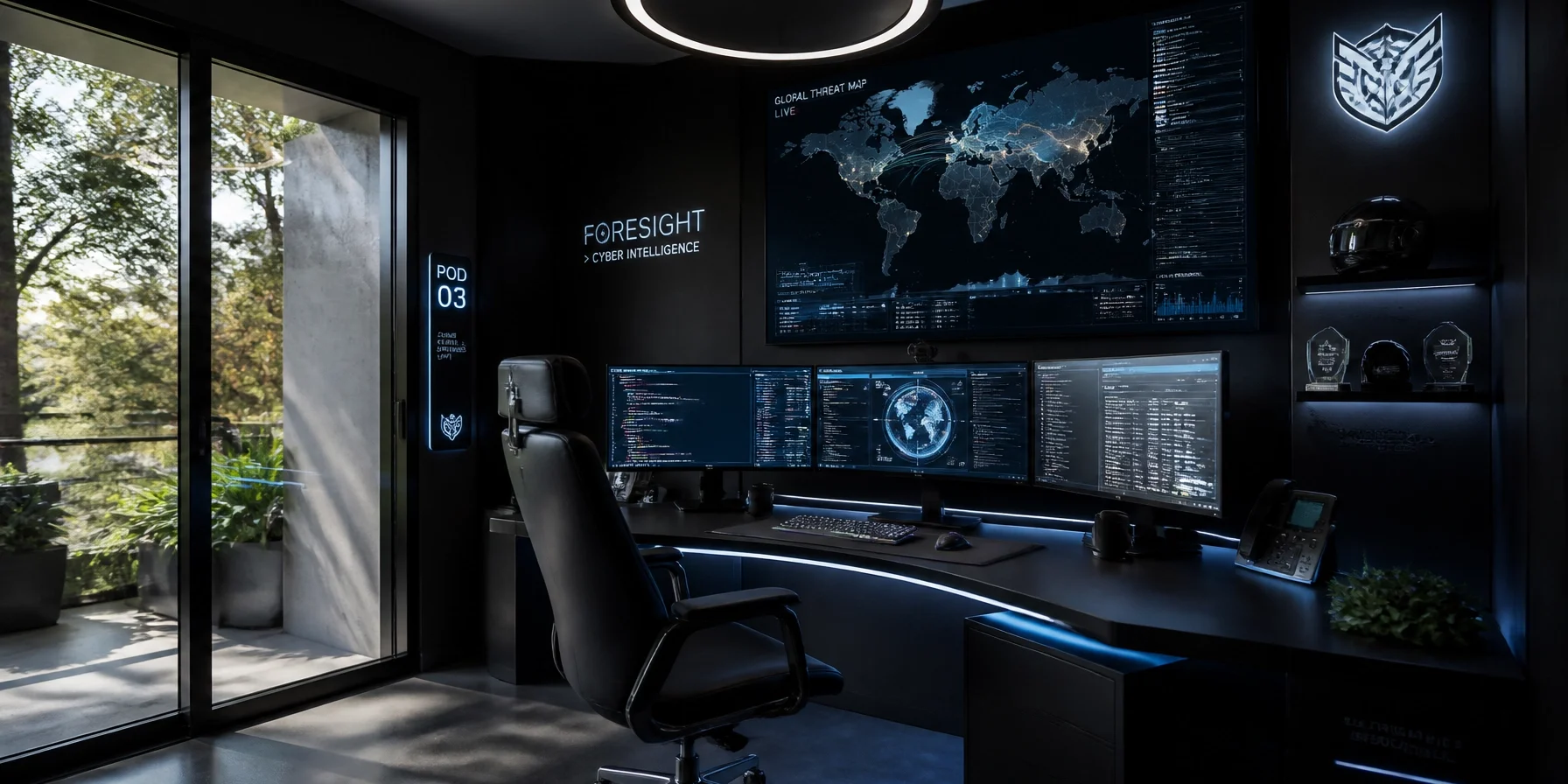
The Pod is the physical response to this shift. Unlike a lab, which is a room full of computers, a Pod is a modular, integrated environment designed to mimic a professional "War Room" or "Command Center." It is private, acoustically treated, and packed with the kind of multi-screen setups that make a standard laptop look like a child’s toy.
Cybersecurity: From the Classroom to the War Room
If you’re training for a career in cybersecurity, a generic computer lab is actually a liability. Real-world security isn’t practiced in an open-plan office where anyone can glance at your screen; it’s practiced in a Security Operations Center (SOC).
Modern cybersecurity pods are designed as mini-SOCs. They offer a "digital bunker" environment where trainees can engage in "Red Team vs. Blue Team" simulations. According to data from the global cybersecurity training market, the industry is projected to reach nearly $14 billion by 2030. That growth isn't coming from people learning to change their passwords; it's coming from high-level incident responders who need specialized infrastructure.
Why Pods win in Cyber:
- Air-Gapped Environments: You can run malware simulations in a pod without risking the entire building’s Wi-Fi.
- Acoustic Privacy: High-stakes "Capture the Flag" (CTF) competitions require intense communication. In a pod, your team can yell "We're being breached!" without the librarian shushing you.
- The Psychological Edge: Walking into a sleek, darkened pod with four glowing monitors changes your mindset. You aren't a student anymore; you’re a defender.
For those transitioning through the DOD SkillBridge recruitment program, this environment is particularly resonant. It mirrors the mission-oriented, high-stakes command centers found in military service, making the transition to civilian tech feel less like a "restart" and more like a "re-deployment."
Logistics: Mission Control for the Global Economy
Logistics is no longer just about trucks and clipboards. It is a data-science discipline. To manage a modern supply chain, you need to visualize global shipping routes, weather patterns, and "last-mile" delivery analytics all at once.

A Logistics Pod functions as a global mission control. Instead of one PC, you have a "dashboarding" environment. You might have one screen tracking a cargo ship in the Suez Canal, another managing a fleet of autonomous delivery drones in Denver, and a third running real-time AI simulations to predict port delays.
This is the reality of career opportunities in logistics today. By training in a pod, you aren't just learning software; you're learning how to handle the sensory overload of a real operations center.
The Content Creation "Micro-Studio"
The "Creator Economy" is often dismissed as a hobby until you realize it’s a multi-billion dollar industry that fuels modern marketing. But you can’t record a professional podcast or edit a 4K brand documentary in a noisy computer lab.
Content Creation Pods are the new micro-studios. They provide:
- Soundproofing: Essential for high-fidelity audio.
- Professional Optics: Integrated 4K cameras and lighting rigs that are ready to go the moment you sit down.
- Rendering Power: High-spec GPUs that can handle 3D modeling and VR content without crashing.

In these spaces, creators aren't just "blogging." They are building professional brands. Whether you’re a corporate communicator or an independent influencer, the pod provides the professional-grade polish that separates the amateurs from the experts.
Why the "Pod" Strategy is Good for Business
For organizations and educational institutions, the shift to pods isn't just about giving people fancy chairs. It’s a strategic business move.
- Modular Scalability: Unlike a lab, which requires massive construction to move or upgrade, pods are modular. Need more cyber capacity? Add two pods. Need to turn a logistics space into a media studio? Swap the hardware. It’s "Plug and Play" infrastructure.
- Increased Utilization: Computer labs often sit empty for 60% of the day. Because pods are private and specialized, they are used constantly: as focus rooms, private meeting spaces, or high-end workstations.
- Talent Attraction: In the race for next-generation talent, the environment is your biggest selling point. A candidate is much more likely to join a program that looks like the deck of the Starship Enterprise than one that looks like an insurance office from 1988.
The Verdict: The Lab is Dead, Long Live the Pod
As we move toward a future defined by AI, global logistics, and digital defense, our physical spaces must evolve. The "computer lab" was a 20th-century solution to a 20th-century problem. The Pod is the 21st-century launchpad.
Whether you are a veteran looking for your next mission via DOD SkillBridge or a business leader trying to modernize your workforce, the message is clear: stop building rows. Start building pods.
The future of work is specialized, modular, and focused. And frankly, it’s a lot more exciting than a basement full of beige computers.
Practical Steps for Implementation:
- Audit Your Space: Identify "dead zones" in your current office or campus that could be converted into high-impact pods.
- Target High-Growth Sectors: Focus your infrastructure investments on Cybersecurity and Logistics: the backbones of the 2026 economy.
- Think Modular: Prioritize furniture and tech that can be moved and reconfigured as industry needs change.
Ready to see how pods can transform your talent funnel? Explore our brand management and consulting services to learn more about the future of professional infrastructure.





