
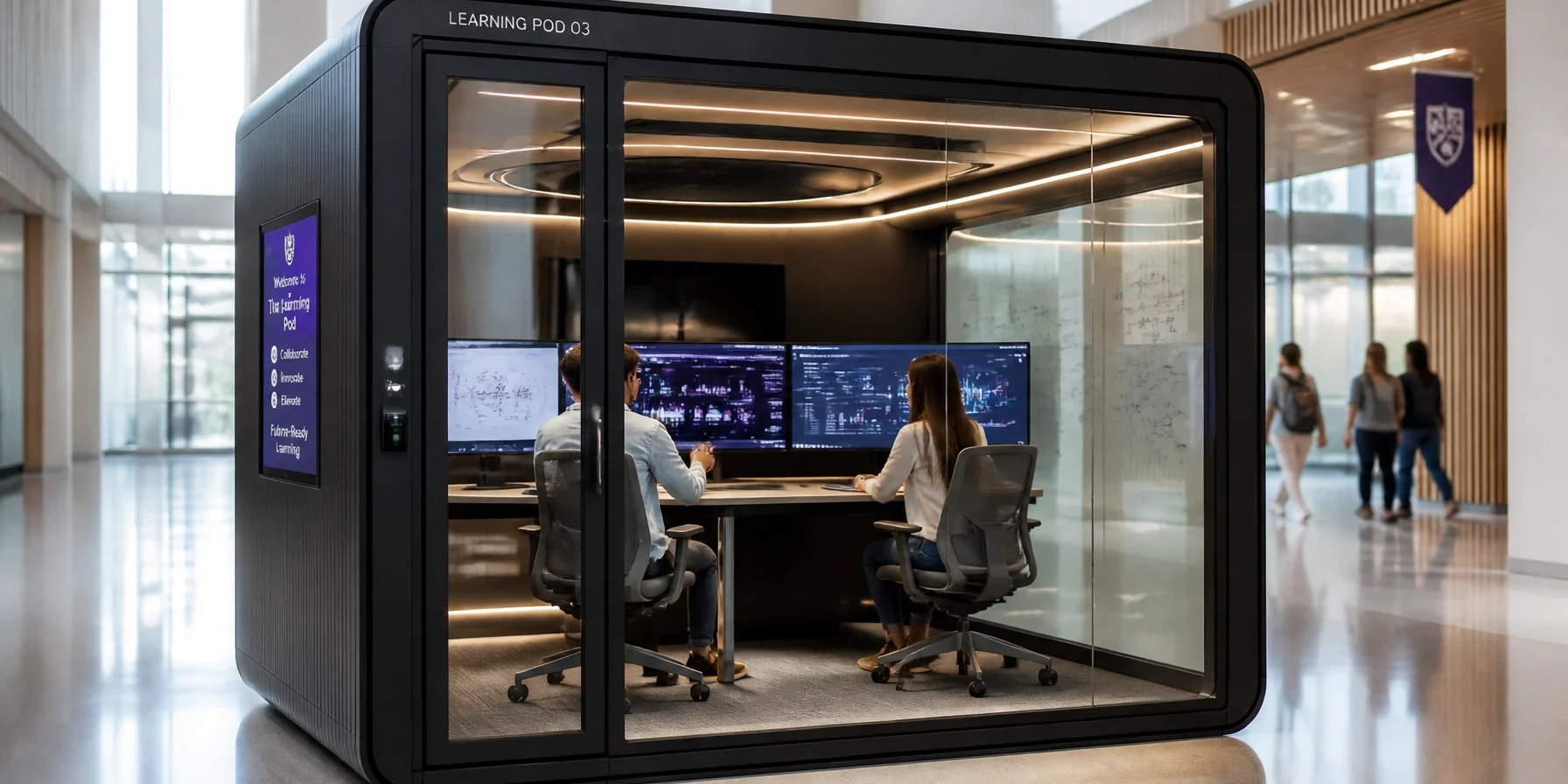
Remember the traditional computer lab? That windowless room smelling faintly of ozone and old floor wax, filled with rows of beige towers and tangled VGA cables? If that image brings back a wave of nostalgia: or perhaps a slight headache: you aren't alone. For decades, this was the peak of Physical Infrastructure in tech education. But just as the floppy disk gave way to the cloud, the static computer lab is being replaced by something much more agile, private, and powerful: Pods.
Today, educational institutions and corporate training centers are realizing that sticking forty students in a single room with identical, immobile workstations isn't just outdated: it’s a bottleneck. Enter the era of modular tech pods. These self-contained, high-tech environments are modernizing Tech Education by providing specialized "micro-climates" for learning.
The Problem with the "Great Room" Model
Traditional labs were built on the idea of centralized resources. You went to the computers because the computers couldn't come to you. However, this model faces three major hurdles in the modern era:
- Distraction: Large labs are loud. Between the keyboard clacking and the person next to you watching YouTube, focus is a rare commodity.
- Inflexibility: If you want to turn a standard lab into a cybersecurity sandbox, you usually have to shut down the whole room for a month of rewiring.
- Acoustic Nightmares: Have you ever tried to record a professional podcast or run a sensitive logistics simulation in a room with thirty other people? It’s impossible.
Modular pods solve these issues by being prefabricated, mobile, and acoustically isolated. According to industry data, modular construction is often 30–50% faster to deploy than traditional renovations, meaning schools can scale their infrastructure in weeks rather than semesters.

Why Pods are the Gold Standard for Tech Education
It’s not just about having a cool-looking glass box in the hallway. Pods represent a fundamental shift in how we approach Physical Infrastructure. They allow institutions to repurpose "dead zones": like wide hallways or underutilized lobbies: into high-performance hubs.
Research has shown that quiet, low-distraction spaces can lead to a 15–20% rise in test scores. By blocking out up to 30 dB of ambient noise, pods allow for the kind of deep work that high-level tech careers demand. But the real magic happens when you look at how these pods enable specific career pathways.
1. Cybersecurity: The "SOC-in-a-Box"
In the world of Cybersecurity, realism is everything. You can’t learn to hunt threats on a generic PC with a "Guest" login. Students need a Security Operations Center (SOC) environment.
Cybersecurity pods function as miniature, isolated sandboxes. They allow students to run high-stakes simulations: like Red Team vs. Blue Team exercises: without any risk to the institution’s main network. This "physical isolation" provides a layer of digital safety that traditional labs simply can't match. As USA Entertainment Ventures LLC focuses on managing complex talent pipelines, these pods provide the perfect environment for DOD Skill Bridge recruits to transition into high-level defense roles.

2. Logistics: Your Personal Mission Control
Modern Logistics is no longer about just moving boxes; it’s about managing data. Professionals in this field need to monitor global supply chains, transportation management systems (TMS), and real-time inventory tracking all at once.
Pods configured for logistics training often feature triple-monitor arrays that mirror a real-world mission control center. This "role realism" allows students to visualize the entire supply chain in a way that a single 15-inch laptop screen never could. It turns a classroom exercise into a high-fidelity operational experience, preparing them for the fast-paced world of global commerce.

3. Content Creation: From Consumer to Producer
The creator economy isn't a hobby; it’s a multi-billion-dollar industry. However, Content Creation requires specialized hardware: acoustic treatment, ring lights, boom microphones, and high-resolution cameras.
Traditional labs are too noisy and poorly lit for professional media production. Content pods, however, are "turn-key" studios. They provide a controlled environment where students can record webinars, edit 4K video, or host live streams without the echo of a nearby hallway. By providing this infrastructure, schools are giving students a direct path into digital marketing and media production careers.

The Future is Modular
At USA Entertainment Ventures LLC, we understand that managing the transition from "the way things were" to "the way things are going" is the key to business growth. Whether it’s through our DOD Skill Bridge recruitment efforts or our focus on physical infrastructure in a digital world, we see pods as the clear winner in the race to modernize education.
The shift from the "Great Room" lab to the "Specialized Pod" is more than just a design trend. It’s a response to the fact that tech careers are becoming more specialized, more data-intensive, and more collaborative. By investing in modular infrastructure, we aren't just buying furniture: we’re building the foundations for the next generation of cybersecurity experts, logistics masters, and digital creators.
So, the next time you see a sleek, glass-walled pod in a lobby, don't just think of it as a quiet place to sit. Think of it as the new front line of tech education. The beige towers may be gone, but the future of learning has never looked better.





