
Let’s take a quick trip down memory lane. Remember the "computer lab" in high school? It was usually a windowless room that smelled faintly of ozone and floor wax, filled with beige boxes that hummed like a swarm of angry bees. You went there to type a bibliography or, if you were lucky, play a pixelated version of Oregon Trail until you inevitably died of dysentery.
Fast forward to 2026, and the "lab" has evolved. But here’s the kicker: while the software has moved to the cloud and our phones have more processing power than the Apollo moon missions, the physical space where we learn and work matters more than ever.
In the tech world, we’ve spent a decade obsessing over "remote work" and "learn from anywhere." But we’ve hit a wall. You can’t learn high-stakes cybersecurity on a laggy home Wi-Fi connection while your neighbor mows the lawn. You can’t master industrial logistics from a kitchen table.
Enter the Pod.
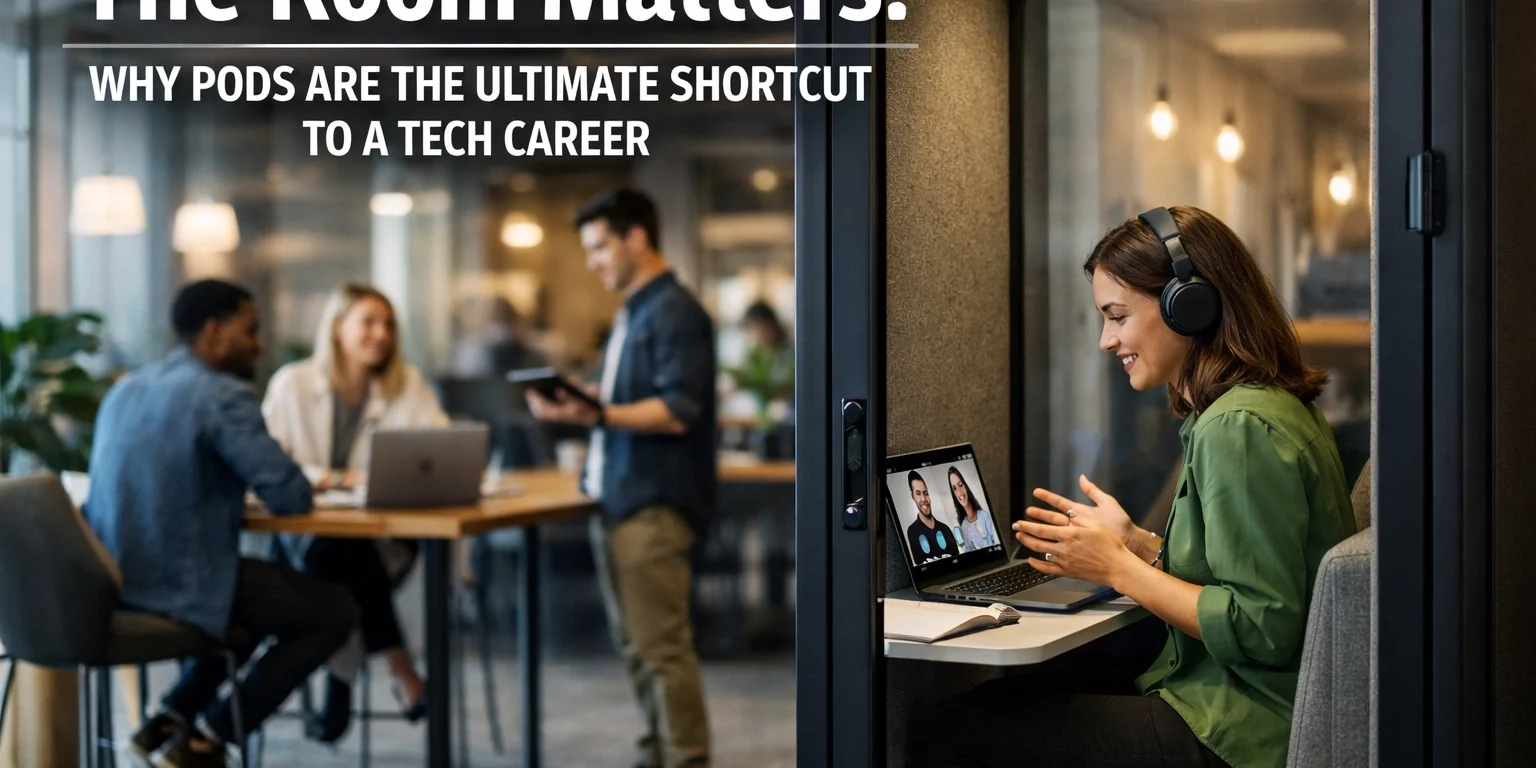
Pods are the new physical infrastructure: the high-tech, modular computer labs of the future. They are the ultimate shortcut to a tech career because they provide something a laptop and a YouTube tutorial simply can’t: the right room for the right job.
The Physicality of the Digital World
There’s a common misconception that "tech" is ethereal: that it’s just code floating in the ether. In reality, tech is intensely physical. It requires servers, high-speed fiber, low-latency environments, and, most importantly, a space designed for deep focus.
USA Entertainment Ventures LLC has been watching this shift closely. We’ve moved past the era of general-purpose spaces. If you want to break into a high-paying tech career today, you don’t just need a degree; you need "seat time" in a professional-grade environment. This is where the National Workforce Infrastructure rollout comes into play. According to the National Workforce Infrastructure Rollout report, the next two years will be defined by how quickly we can deploy these specialized Pods to train the next generation of specialists.

1. Cybersecurity: The Digital Front Lines
Let’s talk about Cybersecurity. It’s the "cool kid" of tech careers right now, and for good reason. The pay is astronomical, and the job security is basically ironclad. But you don’t become a cybersecurity analyst by reading a book. You become one by sitting in a "SOC" (Security Operations Center).
A Pod configured for cybersecurity isn't just a desk. It’s a localized hub with multi-monitor setups, secure encrypted lines, and the hardware necessary to run complex simulations without crashing a home router.
When you’re in a Pod, the environment mirrors the high-pressure reality of a data breach. It’s about muscle memory. By the time you land an interview, you’ve already spent hundreds of hours in a physical space that feels exactly like a Fortune 100 command center. That’s the shortcut. You aren't just telling them you can do the job; you’re showing them you’ve lived the job.
2. Logistics: Data in Motion
When people hear "logistics," they often think of warehouses and forklifts. That’s old-school thinking. Modern logistics is a tech-heavy field dominated by AI routing, real-time supply chain tracking, and automated inventory systems.
The "Logistics Pod" is the new training ground for this industry. Think of it as a flight simulator for the global economy. Inside these Pods, candidates learn to manage massive data sets and coordinate moving parts across continents.
Why does the room matter here? Because logistics is a team sport that requires hyper-connectivity. A Pod provides the centralized data hub needed to visualize these complex systems. Whether it’s managing Mobile Hwy Ads or coordinating the delivery of Pure Box Water, the ability to operate within a dedicated tech infrastructure is what separates the amateurs from the pros.

3. Content Creation: The New Economy
We are currently living in the "Creator Economy," but the bar for entry has moved. In 2015, you could film a video on a smartphone and call it a day. In 2026, content creation is an enterprise-level tech career.
Professional content creation: whether for marketing, training, or entertainment: requires specialized acoustics, high-speed rendering bays, and synchronized lighting environments. A Content Pod is a "studio-in-a-box."
For someone looking to pivot into digital media, a Pod acts as an accelerator. It removes the friction of "setting up." You walk in, the gear is calibrated, the software is updated, and you spend your time creating rather than troubleshooting. This professional-grade output is exactly what companies like Buy Sports Media are looking for when they scout for new talent.
Why "Learn from Home" is Failing the Tech Transition
Don’t get me wrong, I love pajamas as much as the next CEO. But there is a psychological component to "The Room." When you enter a dedicated Pod, your brain switches into "pro mode."
The "shortcut" isn't just the faster internet; it’s the lack of distractions and the presence of professional-grade tools. It’s the difference between practicing basketball in your driveway and practicing on a regulation court. Your game improves faster when the environment challenges you to be better.
Furthermore, these Pods are often situated within larger hubs of innovation. They provide a sense of community and networking that a Zoom call can never replicate. If you're looking for more info on how these environments are being integrated into the broader business landscape, check out our About Us page to see how we’re consulting on these very transitions.

The Economic Reality: Efficiency Wins
From a business consulting perspective, Pods make sense because they are efficient. For a company, it’s much cheaper to deploy a pre-fabricated, tech-ready Pod than it is to renovate an entire office building.
For the worker, it’s a shortcut because it lowers the barrier to entry. You don’t need to buy a $5,000 computer and a $200-a-month internet plan. You just need access to the Pod. This democratizes tech careers. It means a kid in a rural area or an underfunded urban district can have the same "room" as a developer in Silicon Valley.
How to Position Yourself for the Pod Revolution
If you’re looking to jumpstart your career, here’s the game plan:
- Identify your "Core": Are you a defender (Cybersecurity), a coordinator (Logistics), or a storyteller (Content Creation)?
- Seek the Infrastructure: Look for programs and employers that prioritize "Labs" and "Pods." If an employer tells you to "just use your laptop," they might not be invested in your high-level growth.
- Master the Tools: Don't just learn the software; learn the hardware. Know how a multi-monitor setup changes your workflow. Understand how low-latency connections affect your output.
- Stay Informed: The landscape is changing fast. Resources like our post-sitemap are great for tracking the latest trends in workforce development and business strategy.
Final Thoughts: It's Time to Step Inside
The digital revolution is coming home: or rather, it’s moving into a Pod near you. As we look toward 2027, the "shortcut" to a tech career isn't just a better coding bootcamp; it’s a better physical environment.
The Room Matters. It’s where focus happens, where skills are sharpened, and where the next generation of the American workforce is being built. Whether you’re interested in securing the grid or creating the next viral campaign, the Pod is your ticket to the front of the line.
At USA Entertainment Ventures LLC, we believe that the right tools in the right space create unstoppable momentum. So, stop trying to build a career on a shaky Wi-Fi connection. Find your Pod, step inside, and get to work. The future is waiting, and it’s got a much better seat than your couch.

For more insights on how we are shaping the future of business and entertainment, visit usaentertainmentventures.com.





