
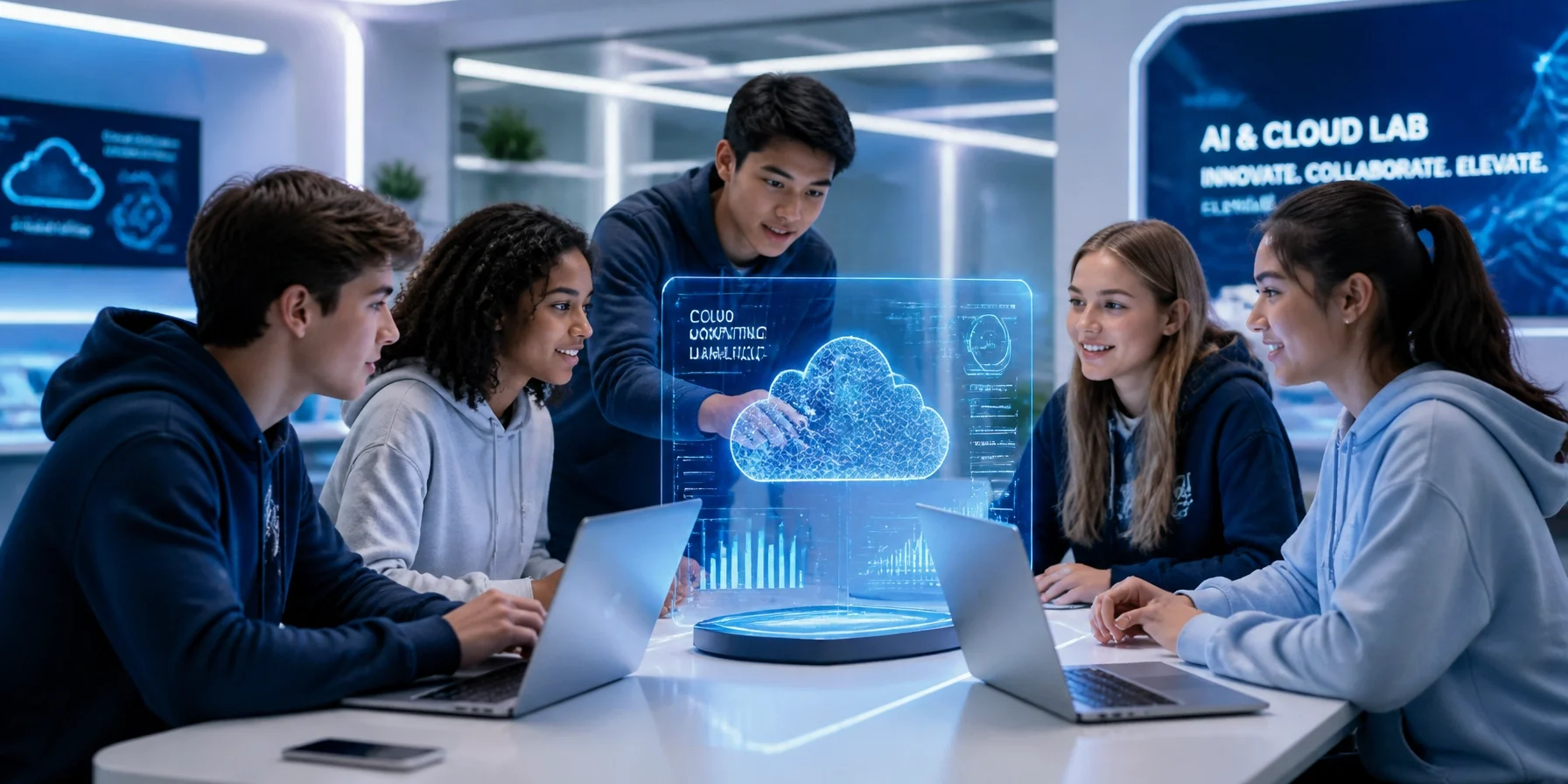
The global demand for expertise in Cloud, Artificial Intelligence (AI), and Data Analytics has reached a fever pitch. Organizations across every sector are racing to modernize their infrastructure, yet most find themselves stalled at the same hurdle: a critical shortage of qualified talent. Despite massive investments in recruitment and university partnerships, the "talent gap" persists.
The reality is that traditional methods of securing tech talent are no longer sufficient. We are witnessing a systemic failure where the speed of technological innovation has outpaced the speed of traditional academic delivery. To solve this, companies must look further upstream. The next-generation talent funnel doesn't start at the university career fair: it starts in the high school classroom.
Here are 10 reasons why your current tech talent pipeline is failing and why high school integration is the necessary solution.
1. The Speed of Innovation vs. Academic Lag
Technology moves at light speed, but university curricula often move at a glacial pace. By the time a four-year degree program incorporates the latest advancements in Large Language Models (LLMs) or specific Cloud Architecture frameworks, the industry has already moved on. According to recent industry analyses, academic lag is a primary driver of the skills gap. Students may graduate with theoretical knowledge but lack the "day-one" skills required to manage production-level code or live cloud environments.
2. The High Cost of the "Experience War"
Most organizations are engaged in a zero-sum "experience war." They focus exclusively on hiring senior engineers with 5–10 years of experience. This leads to astronomical salaries, aggressive poaching, and high turnover as candidates move for slightly higher offers. When everyone competes for the same small pool of senior talent, the cost per hire skyrockets while the overall talent pool remains stagnant.

3. AI is Breaking the Early-Career Ladder
AI is paradoxically both the solution and a new problem for talent development. Automation is now capable of performing 50% to 67% of tasks in traditional entry-level roles, such as market research and basic data entry. While this increases efficiency, it removes the very rungs junior professionals used to climb to gain experience. Without these "apprentice" roles, the pipeline for future leaders is being quietly destroyed.

4. Reactive Rather Than Proactive Hiring
Many companies suffer from reactive hiring: starting the search only after a vacancy exists. This often leads to rushed decisions and prolonged vacancies in specialized roles like cloud security or data science. A proactive strategy involves building a next-generation talent funnel that nurtures potential years before the role is even open.
5. Misalignment with Modern Industry Tools
Universities often prioritize computer science theory (like sorting algorithms) over practical tool proficiency (like GitHub workflows, AWS deployment, or SQL optimization). Industry leaders report that they need "tool users": practitioners who can contribute to projects immediately: rather than just "tool builders." By integrating with high schools, companies can introduce these specific tools through modular certifications and vocational tracks.
6. The "Experience" Catch-22
The tech industry is famous for entry-level job postings that require three years of experience. This paradox discourages talented young people from entering the field. By engaging with students in high school, companies can provide the internships and project-based learning that count as "experience," effectively solving the catch-22 before the student even enters the workforce full-time.
7. Ignoring the "Modular" Shift in Education
Traditional four-year degrees are no longer the only (or even the best) path for all tech roles. We are seeing a shift toward modular learning: short, intensive bursts of education focused on specific certifications. High schools are increasingly adopting modular pods for tech careers, allowing students to gain specialized skills in cybersecurity or AI analytics while still in their teens.
8. Lack of Pipeline Diversity
When companies wait until the university level to recruit, they have already missed the window to influence a diverse range of candidates. Access to high-level tech education is often a matter of geography and socio-economic status. By bringing tech pathways directly into public high schools, companies can tap into a much broader, more diverse talent pool, addressing both social equity and the labor shortage simultaneously.
9. Demographic Shifts and "Brain Drain"
With the "Silver Tsunami" of retirements taking place, decades of institutional knowledge are leaving the workforce. If the replacement pipeline isn't robust, organizations face catastrophic knowledge gaps. The sheer volume of unfilled roles: projected to cost billions in lost economic output: requires an aggressive expansion of the talent pool to include younger demographics.
10. Cultural Disconnect with Gen Z and Gen Alpha
Younger generations prioritize work that feels relevant and offers clear paths for growth. If a company isn't present in the educational ecosystem, it doesn't exist to these future workers. Engaging with high schools allows a brand to build loyalty and "mindshare" early, presenting tech careers as exciting and accessible rather than daunting and distant.
Why High Schools are the Strategic Fix
The move toward high school tech pipelines isn't just a philanthropic gesture; it is a business necessity. Engaging with students at the K-12 level allows for a more responsive and modular curriculum. High school programs can be updated annually to reflect the latest in AI and Cloud, ensuring that the talent arriving at your door is truly "current."
Moreover, high school pipelines reduce the long-term cost of hire. By developing talent internally through apprenticeships and dual-enrollment programs, you bypass the expensive bidding wars of the open market. You aren't just finding talent; you are manufacturing it to your exact specifications.
Actionable Steps for Leadership
To fix your pipeline, consider shifting from a "buying" talent strategy to a "building" talent strategy:
- Partner with Local School Districts: Offer industry-led modules in Cloud and Data Analytics.
- Invest in Modular Infrastructure: Support the development of specialized tech pods that provide students with professional-grade environments.
- Create "Bridge" Internships: Design short, impactful summer programs for high school juniors and seniors that feed directly into your recruitment pipeline.
- Use Data to Refine Your Strategy: Regularly audit your workforce data to identify where gaps are emerging. Many companies make critical mistakes with workforce strategy by ignoring these early indicators.

Looking Ahead: A Future-Proof Workforce
The companies that will dominate the 2030s are those that are building their talent funnels today. By reaching into high schools, you are not only securing your own operational future but also contributing to a more resilient and skilled society.
The transition from traditional academic pipelines to early-engagement funnels is already underway. The only question is whether your organization will be a leader in this shift or a laggard struggling to fill roles in an increasingly competitive market.

For more insights on how to modernize your approach to talent, explore our guide on the Next-Gen Talent Funnel or contact USA Entertainment Ventures LLC to discuss our management and recruitment consulting services.





