
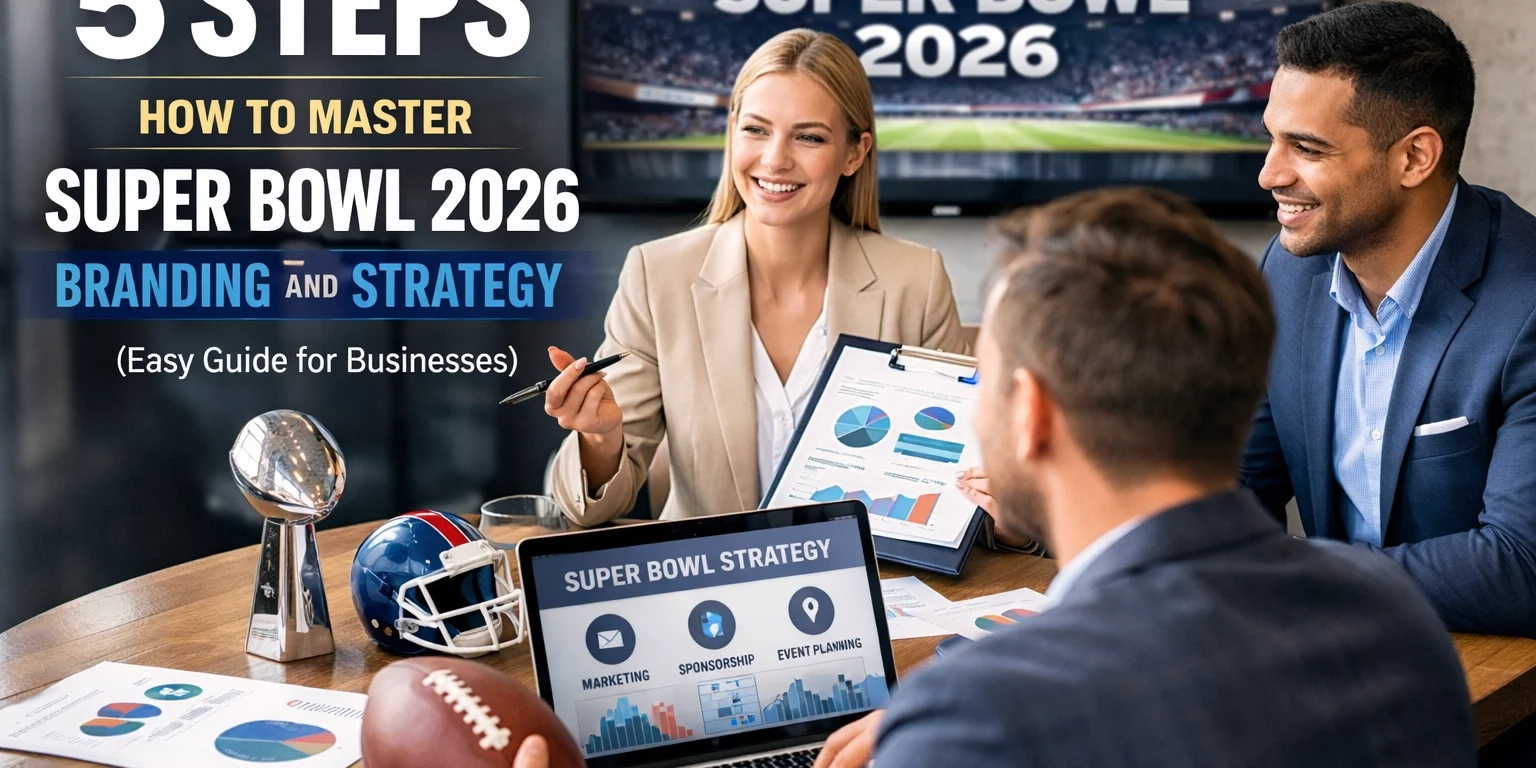
The Super Bowl is no longer just a football game; it is the ultimate global stage for commerce, culture, and connection. As we move into 2026, the landscape of sports media and advertising has evolved into a high-stakes digital and physical hybrid. For businesses looking to capture even a fraction of the lightning that strikes during this event, a standard "post-and-pray" social media strategy simply won't cut it.
At USA Entertainment Ventures LLC, we see the Super Bowl not as a four-hour window, but as a multi-week ecosystem. Whether you are a national brand or a growing enterprise looking to leverage the hype, mastering your branding and strategy requires a methodical, data-driven approach.
Below is our expert guide on how to master Super Bowl 2026 branding, grounded in the latest industry research and proven advertising frameworks.
1. Build a Three-Phase Campaign Timeline
One of the most common mistakes businesses make is putting 100% of their effort into a single day. Data from 2026 marketing cycles shows that brands that treat the Super Bowl as a month-long narrative see significantly higher returns. In fact, companies that began their campaigns at least four weeks in advance reported a 30% higher brand recall on game day compared to those who launched during the kickoff.
Phase 1: Pre-Game (The Build-Up)
Four to six weeks before the coin toss, your goal is to seed curiosity. This is where you use digital platforms to build anticipation. Use "The Super Bowl Playbook" strategy, which we often discuss in our Business Consulting services, to create teaser content that doesn't give everything away.
Phase 2: Game-Day (The Activation)
This is about real-time presence. You need a dedicated team ready to pivot based on what happens on the field. If a light goes out or a meme-worthy moment occurs, your brand needs to be part of that conversation immediately.
Phase 3: Post-Game (The Sustained ROI)
The game might end, but the "Super Bowl hangover" is a prime time for conversions. Re-target the audiences who engaged with your pre-game and game-day content with specific calls to action. Sustaining your messaging for two weeks post-game ensures you aren't forgotten as soon as the confetti is swept up.

2. Dominate Physical and Digital Spaces Strategically
In 2026, the barrier between the physical world and the digital world has completely dissolved. To master your branding, you must map your audience’s movement.
Think about the host city and major transit hubs. Strategic Out-of-Home (OOH) advertising should be placed where fans naturally gather: airports, transit hubs, and entertainment districts. However, OOH should not exist in a vacuum. It should be the "trigger" for digital engagement. For example, a billboard in a high-traffic district could include a QR code or an AR (Augmented Reality) trigger that unlocks exclusive content on TikTok or YouTube.
Speaking of digital, YouTube and TikTok are no longer "secondary" channels. They are primary engagement hubs. During the Super Bowl, fans are constantly looking at their "second screens" for analysis, highlights, and fan reactions. By using demand generation campaigns, you can place your brand directly alongside the content they are already seeking out.
To see how we integrate these multi-dimensional strategies, you can visit our agency page.
3. Customize for Hyper-Local Relevance
While the Super Bowl is a national event, its heart beats in the host city. Generic national campaigns often feel like "background noise" to the people actually attending the festivities. To truly stand out, your branding must reflect the local culture, landmarks, and traditions of the 2026 host location.
When a brand incorporates local landmarks or food traditions into its messaging, it stops being an "advertiser" and starts being a "host." This localized approach fosters a sense of authenticity that a standard corporate ad cannot replicate. Fans are more likely to engage with a brand that feels like it "gets" the city they are currently celebrating in.
The Power of Sports Media Strategy
Understanding how sports media operates is crucial for this step. Check out this insightful breakdown of sports media's advertising strategy to understand how the big players coordinate their local and national efforts:
https://www.youtube.com/watch?v=l6J-0zileKE
4. Invest in Authentic Celebrity Partnerships and Storytelling
The era of the "celebrity for the sake of a celebrity" is over. In 2026, viewers are highly attuned to authenticity. Research indicates that celebrity-backed advertisements achieved 3.2x higher recall rates compared to non-celebrity spots, but only when the celebrity was a natural fit for the brand's character.
Why Authenticity Matters:
- Trust: 67% of viewers reported trusting brands more when celebrities appeared in authentic, character-consistent roles.
- Shareability: Celebrity partnerships that prioritize storytelling and humor over hard-selling generated 3x more social shares.
- Connection: The most effective ads are those that connect through genuine human emotion or self-aware humor.
When selecting a partner for your Super Bowl strategy, ask yourself: Does this person actually embody our values? A misalignment here can actually hurt your brand's reputation. At USA Entertainment Ventures LLC, we help businesses navigate these high-stakes decisions through our consulting frameworks.

5. Maintain Consistent Visibility Through Frequency and Real-Time Response
Frequency is the engine of brand familiarity. You cannot rely on a single ad appearance to move the needle. Instead, your strategy should focus on a continuous presence. This doesn't mean you need to spend $7 million on five different TV spots; it means you need a "surround sound" approach.
Use digital re-targeting to ensure that someone who saw your OOH ad at the airport also sees your video on YouTube that evening and an engaging post on their social feed the next morning. This repeated, strategic exposure builds the mental "shelf space" required for a consumer to choose you over a competitor.
The "War Room" Approach
To master the real-time aspect, businesses should deploy response teams. These are not just social media managers; they are creative strategists who can capitalize on trending topics in seconds. This transforms passive viewers into active brand advocates who will share your content because it is relevant right now.
Implementing the Strategy for Your Business
Mastering the Super Bowl 2026 branding landscape requires a blend of traditional advertising wisdom and cutting-edge digital tactics. By following this five-step framework, phased timelines, omnichannel domination, hyper-local relevance, authentic storytelling, and high-frequency engagement, you position your business to win.
The transition from a "business that advertises" to a "brand that leads" happens in the preparation. As Dan Kost, CEO of USA Entertainment Ventures LLC, often emphasizes, success in this arena is about finding the intersection of entertainment and enterprise.
If you are ready to take your branding to the next level and want to ensure your strategy is backed by data and industry expertise, we invite you to reach out to our team. Whether you are looking for a full-scale agency partnership or specialized business consulting, we have the tools to help you navigate the complex world of sports media and high-impact events.
For more information on how we can help you achieve these goals, please visit our contact page or explore our showcase of past work.

Final Thoughts on 2026 Trends
Looking forward, the integration of AI-driven personalization and real-time data analytics will only become more vital. The brands that win in 2026 will be the ones that are not afraid to be human, be local, and be consistent. The Super Bowl is the ultimate "Playbook" for your year, start drafting your winning plays today.
Disclaimer: This guide is intended for informational purposes. For specific legal or financial advice regarding advertising contracts, please refer to our terms and conditions and disclaimer.





