
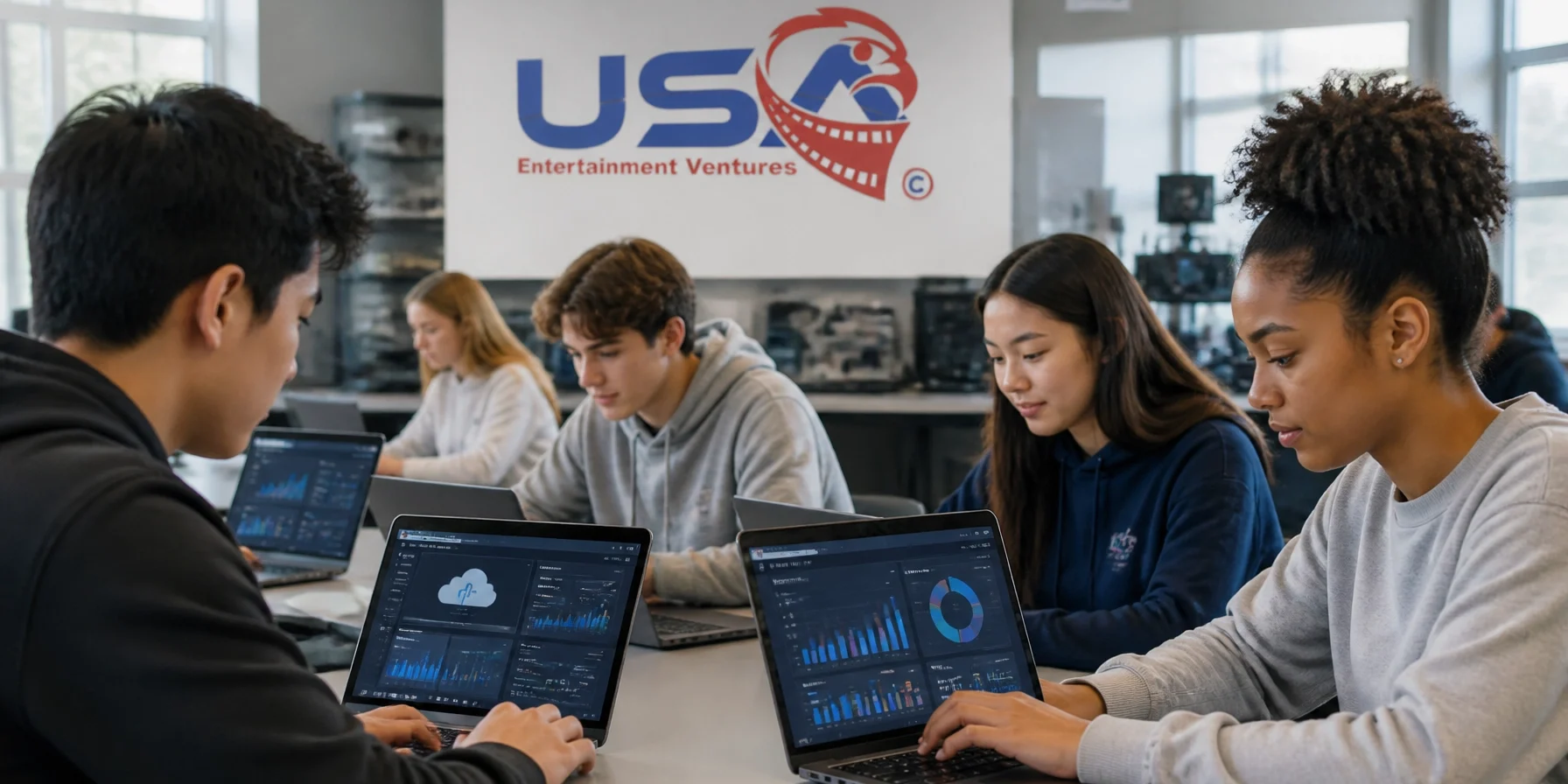
The global demand for specialized digital skills is no longer a future concern; it is a current operational reality. With over 200,000 vacancies in the EU alone specifically requiring advanced digital skills like Artificial Intelligence (AI) and data analytics, traditional recruitment methods are failing to keep pace. For tech leaders in Cloud, AI, and Data, waiting for talent to graduate from a four-year university is often too late.
The most forward-thinking organizations are now looking toward the "Next-Gen Talent Funnel": a strategic shift that places the starting line for recruitment within high school classrooms. By establishing a high school talent pipeline, businesses can mold skills to fit their specific tech stacks while fostering long-term loyalty.
According to McKinsey, a data-driven tech talent strategy is essential for pinpointing supply-demand imbalances. For companies like USA Entertainment Ventures LLC, which specializes in managing complex transitions and professional consulting, the logic is clear: the earlier you engage with potential talent, the more competitive your workforce becomes.
Why the High School Pipeline is Your Strategic Advantage
Building a pipeline at the secondary education level is more than just a community service project; it is a calculated business move. Research suggests that regions and companies that align resources with K-12 schools are significantly better positioned to meet future workforce needs.
Key Benefits Include:
- Early Access to Talent: You identify high-performers before they are on the radar of your competitors.
- Customized Skill Development: You have the opportunity to influence curriculum to match your specific needs in Cloud operations, Python, or SQL.
- Lower Risk Hiring: By the time a student reaches an entry-level role, you have 2–4 years of data on their performance and cultural fit.
Here are the five essential steps to building a robust, high school-based talent pipeline for your organization.
Step 1: Define Your Demand and Target Roles
Before reaching out to educators, you must define the specific technical roles you need to fill. A "tech job" is too broad. To create an effective pipeline, you need to identify the exact skill gaps within your Cloud or AI divisions.
Start by analyzing your projected 3- to 5-year demand for roles such as:
- Cloud Support Associates
- Junior Data Analysts
- ML Ops Assistants
Once these roles are identified, translate them into foundational skills that can be taught at the high school level, such as basic statistical thinking, data wrangling, or fundamental cloud architecture. This data-driven approach ensures that your pipeline produces candidates who are truly "future-ready."

Step 2: Build a Cross-Sector Coalition
You cannot build a pipeline in a vacuum. A successful initiative requires a "regional tech talent council" that brings together industry, government, and education.
At USA Entertainment Ventures LLC, we understand that managing these partnerships is the bedrock of organizational success. Your coalition should include:
- School District Leaders: To align the program with state education standards.
- Local Community Colleges: To create a "bridge" for students to earn dual-enrollment credits.
- Workforce Agencies: To help tap into regional funding or grants.
Aligning these stakeholders ensures that the pathway is sustainable and that students have a clear, multi-year route from a 9th-grade classroom to a professional tech role.
Step 3: Develop a Mentorship and Externship Program
Exposure is the strongest driver of student interest in tech. High school students often have the aptitude for AI or data analytics but lack the "social capital" to understand what a day in the life of a tech professional looks like.
Establish a program that includes:
- Job Shadowing: Half-day site visits where students observe real-world tech operations.
- Technical Mentorship: Pairing your senior engineers with high school juniors for monthly check-ins on project-based learning.
- Employer-Led Projects: Providing real-world datasets for classroom capstone projects.
As noted by industry experts, empowering educators with professional development "camps" can also help them better support these students. When teachers understand the current state of Cloud and AI, they become better recruiters for your pipeline.

Step 4: Integrate Stackable Industry Certifications
To make the pipeline valuable for students, it must result in tangible, industry-recognized credentials. A high school diploma paired with a Cloud or AI certification creates an immediate entry point into the workforce or an apprenticeship.
Focus on "stackable" credentials that students can earn during their 11th and 12th-grade years:
- AWS Cloud Practitioner or Google Cloud Digital Leader
- Python Institute (PCEP)
- CompTIA Data+
Integrating these certifications into the high school curriculum: often referred to as Career and Technical Education (CTE): ensures that students graduate with more than just theoretical knowledge. They possess the validated skills that your HR department actually requires for entry-level roles.
Step 5: Facilitate Smooth Transitions via Apprenticeships
The final step is the "bridge" between the classroom and the company. Many tech leaders find that traditional internships are too short-lived to provide real value. Instead, consider a structured apprenticeship or a "work-and-learn" model.
This is particularly relevant for those involved in DOD Skill Bridge recruitment or similar transitional programs. The goal is to move the student from a classroom setting into a junior role where they continue their education while contributing to real projects.
By offering stipends or paid projects during the summer after high school graduation, you reduce the financial barriers that often prevent underrepresented students from entering tech. This commitment to inclusive growth not only solves your talent shortage but also strengthens the local economic ecosystem.

Conclusion: Investing in the Future
Building a high school talent pipeline is a long-term investment, but the ROI is clear. Companies that engage early are able to bypass the "bidding wars" for college graduates and build a workforce that is natively skilled in their specific technologies.
As we look toward the future of Cloud, AI, and Data Analytics, the companies that succeed will be those that view education as a critical component of their supply chain. It is time to stop waiting for the talent to find you and start building the funnel that brings them to your door.
To learn more about how to manage your organization’s growth and talent strategies, visit our services page or explore our recent insights on building future-ready talent.





