
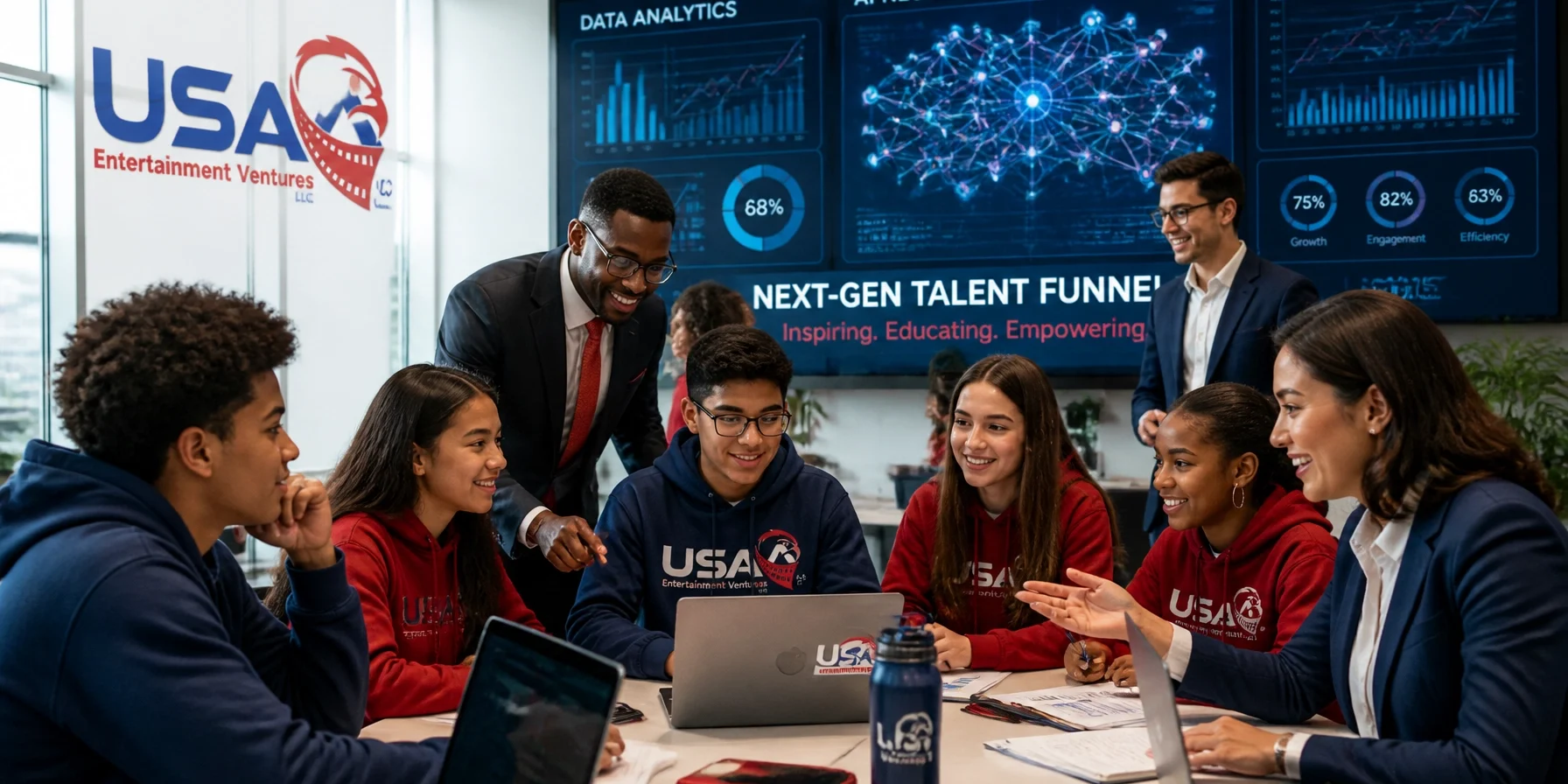
As we move deeper into 2026, the demand for specialized talent in Cloud Computing, Artificial Intelligence (AI), and Data Analytics has reached an all-time high. For many organizations, the traditional recruitment model is no longer sufficient to keep pace with the rapid evolution of these fields. Recent industry data suggests that the gap between open technical roles and qualified candidates could widen by an additional 15% by 2027 if current training and hiring methods remain stagnant.
The "talent shortage" frequently discussed in executive boardrooms is often not a lack of potential, but a failure of the funnel. Many companies are operating with a recruitment strategy designed for the previous decade: one that waits for talent to come to them. To secure a competitive advantage, organizations must shift their focus toward a Next-Gen Talent Funnel that begins long before a candidate ever sets foot on a university campus.
Here are the seven most common mistakes organizations make with their talent pipelines and how early outreach: specifically at the high school level: provides a strategic solution.
1. Starting the Funnel at University Instead of High School
The most pervasive mistake in modern recruitment is timing. Many organizations wait until students are attending university career fairs or nearing graduation before initiating contact. In high-growth sectors like AI and Cloud, this is often three years too late.
By age 15 or 16, motivated students are already specializing. They are building neural networks, deploying applications to the cloud, and exploring data analytics through independent projects and extracurricular clubs. If your organization is not present at this stage, you are competing for a smaller, pre-sorted pool of talent. Early outreach allows you to build brand affinity and career awareness while students are still forming their professional identities.
2. Treating High School Outreach as "Charity" Rather Than Strategy
Too often, high school engagement is siloed within Corporate Social Responsibility (CSR) or community giving departments. While philanthropic, this approach is often disconnected from the core hiring strategy, leading to sporadic, one-off events that fail to produce a measurable pipeline.
Effective early outreach must be viewed as a core business strategy. When engagement is structured as a pathway: moving from initial awareness to internships and eventually junior roles: it becomes a reliable source of "future-ready" talent. Transitioning from "charity" to "strategy" ensures that these programs are funded, measured, and optimized for long-term ROI.

3. Over-Indexing on Degrees Instead of Demonstrated Skills
In the fast-moving worlds of AI and Data Analytics, academic curricula often struggle to keep pace with industry tools. A high school student who has spent three years mastering Python and AWS via modular learning environments may possess more practical, job-ready skills than a university graduate with a purely theoretical background.
Organizations that focus strictly on four-year degrees as a barrier to entry are screening out some of the most innovative and self-driven talent available. A skills-first approach allows you to identify high-potential candidates during their high school years, providing them with the certifications and real-world experience needed to integrate into your workforce immediately. For more on how physical environments are changing to support this, see our exploration of why modular pods are the new hotspot for cyber careers.
4. Using Vague, Jargon-Heavy Role Descriptions
Gen Z and the emerging Gen Alpha are highly discerning about how they spend their time. Recruitment materials filled with corporate jargon and vague "synergy" buzzwords often fail to resonate. These descriptions can make AI and cloud careers seem opaque or unattainable to younger students.
To attract early talent, role descriptions must be clear, purpose-driven, and technical enough to be credible without being alienating. Explaining exactly what a Data Analyst does on a day-to-day basis: and the impact their work has on the world: is far more effective than a list of generic corporate responsibilities.
5. Failing to Communicate a Compelling Digital Identity
For a generation that has grown up online, an employer's digital footprint is their primary resume. Students interested in tech will look for engineering blogs, GitHub activity, and evidence of a culture that values innovation. If your digital presence is purely marketing-driven or generic, technically sophisticated students will likely look elsewhere.
A strong employer brand for the Next-Gen Talent Funnel should showcase real work. Highlighting current AI projects, open-source contributions, or even the metrics that your executives track daily provides a window into the professional life of your organization.

6. Ignoring Soft-Skill Development in Technical Outreach
A common mistake in technical outreach is focusing exclusively on "hard" skills like coding or data modeling. While technical proficiency is the foundation, employers consistently report that communication, collaboration, and problem-solving are the biggest gaps in entry-level hires.
By incorporating soft-skill mentorship into early outreach programs, organizations can develop more well-rounded candidates. A student who can explain a complex AI model to a non-technical stakeholder is a far more valuable future asset than one who can only write the code. Balancing these skills early ensures that your pipeline produces not just technicians, but future leaders.
7. Measuring the Wrong Funnel Metrics
Many talent acquisition teams evaluate success based on the "first touch": where a candidate first heard of the company. However, research into recruitment funnels shows that successful hires are usually the result of multiple touchpoints over several years.
If you only measure the final application, you miss the impact of the high school guest lecture, the mid-summer workshop, or the monthly newsletter. Organizations must adopt a multi-touch attribution model to understand which early outreach activities are truly driving long-term conversion. For a deeper look at this, read our guide on 7 mistakes you’re making with workforce strategy and how data fixes them.
The Path Forward: Building the Bridge
The macro-economic landscape makes these changes urgent. With birth rates having declined significantly between 1960 and 1975, the total pool of workers in many age brackets is structurally smaller than in previous generations. We are no longer in an era where companies can simply wait for talent to appear; they must actively participate in its creation.

Building a robust bridge between high school and a professional career requires a commitment to consistency. According to recent studies, organizations that utilize proactive sourcing and relationship management report offer acceptance rates as high as 98%, compared to the industry average of 89%.
By fixing these seven mistakes and engaging with talent early, your organization can move from a state of talent scarcity to one of talent abundance. The future of Cloud, AI, and Data Analytics is being built in high school classrooms today. The question is whether your brand is there to help build it.
For a quick overview of these concepts, check out The Next Generation Talent Funnel Explained in Under 3 Minutes.





