
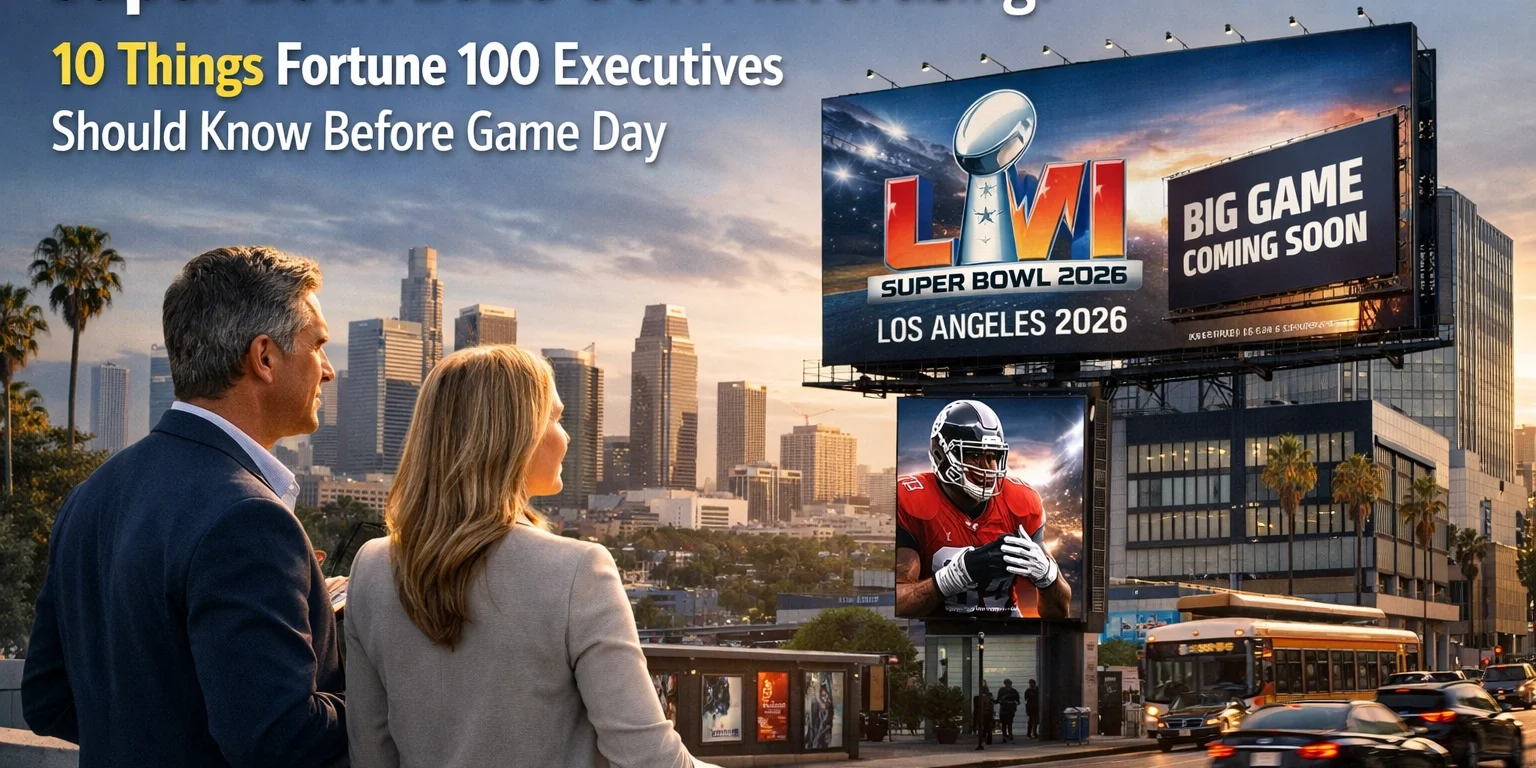
The conversation around Super Bowl advertising has shifted dramatically over the past decade. While television spots continue to command premium prices: reaching $8 million for a single 30-second slot: a growing number of Fortune 100 brands are reconsidering their approach to Big Game marketing. The question isn't whether to advertise during Super Bowl 2026, but rather how to maximize impact across the entire fan experience ecosystem.
Out-of-home (OOH) advertising has emerged as a strategic cornerstone for brands seeking sustained visibility and measurable engagement beyond the broadcast window. With Super Bowl 2026 approaching, executives need to understand how digital OOH networks, particularly platforms like Sporttron Digital Network, are redefining what it means to "own the environment" during America's biggest sporting event.
1. The Economics Tell a Compelling Story
The financial mathematics behind OOH advertising warrant serious consideration. Industry analysis reveals that the same $8 million budget allocated for a single 30-second Super Bowl TV spot could maintain a high-visibility OOH wallscape on Interstate 95 in Miami for approximately 4.7 years. This stark comparison highlights a fundamental shift in how brands can deploy capital for sustained market presence rather than fleeting moments during commercial breaks.
For Fortune 100 companies managing marketing budgets at scale, this represents an opportunity to reallocate resources toward platforms that deliver continuous impressions across extended timelines. The Super Bowl happens in a single evening; the fan experience begins weeks before kickoff and extends well beyond the final whistle.

2. Digital Fatigue is Driving Audiences Back to Physical Spaces
Recent advertising performance data indicates a notable trend: audiences experiencing digital fatigue are more receptive to out-of-home messages in physical environments. While social media feeds overflow with content and streaming platforms introduce increasingly intrusive ad formats, OOH advertising provides a respite: a moment of engagement in the real world that feels less invasive and more contextually relevant.
This phenomenon becomes particularly pronounced during major sporting events when fans actively seek immersive experiences. They want to be part of the atmosphere, the energy, the communal celebration. Brands that meet them in these physical spaces with thoughtfully designed OOH campaigns create associations that digital advertising struggles to replicate.
3. Sporttron Digital Network Offers Strategic Environmental Control
The Sporttron Digital Network represents a evolution in how brands can dominate the visual landscape surrounding major sporting events. Unlike traditional static billboards, these digital platforms enable dynamic content delivery, real-time messaging adjustments, and coordinated campaigns across multiple venues simultaneously.
For executives planning Super Bowl 2026 strategies, understanding the capabilities of digital OOH networks is essential. These platforms can display different creative content throughout the day, respond to game developments, and coordinate messaging with other marketing channels to create a truly integrated campaign experience.
4. Multi-Platform Integration is No Longer Optional
Recent Super Bowl advertising trends demonstrate that successful brands develop campaigns designed to perform across television, streaming platforms, social media, and physical environments over extended periods. The most effective strategies recognize that fans consume content through multiple touchpoints simultaneously: they're at the stadium or viewing party while scrolling their phones, sharing reactions on social platforms, and engaging with brands across various channels.
OOH advertising functions as the anchor point in this multi-platform ecosystem. A compelling digital billboard near the venue can spark social media conversations, drive mobile engagement, and reinforce messages that fans encounter through other channels. The physical presence creates a shared reference point that digital campaigns can amplify.

5. Location Strategy Matters More Than Ever
Not all OOH placements deliver equal value during Super Bowl week. Strategic location selection requires understanding fan movement patterns, traffic flows, venue proximity, and dwell time opportunities. Fortune 100 executives should demand detailed analytics about placement locations, including vehicle traffic counts, pedestrian flows, visibility indexes, and audience demographics.
The most valuable OOH inventory typically includes highway approaches to the stadium, airport corridors where out-of-town fans arrive, hotel district concentrations, and popular entertainment zones where fans gather throughout the week. Securing premium locations requires early commitment and strategic relationships with OOH network operators.
6. Measurement Capabilities Have Advanced Significantly
Historical criticisms of OOH advertising often centered on measurement challenges: how do you quantify impressions and track engagement with physical advertising? Modern digital OOH networks have largely resolved these concerns through mobile device tracking, computer vision technology, and integration with location analytics platforms.
Executives can now receive detailed reports about impression counts, audience demographics, dwell times, and even mobile device follow-through to digital properties. These measurement capabilities enable OOH campaigns to be evaluated with the same rigor as digital advertising channels, providing the accountability that Fortune 100 companies require for major marketing investments.
7. Creative Execution Requirements Differ from Broadcast
Designing effective OOH creative requires different considerations than television spot production. Messages must communicate instantly: audiences viewing digital billboards typically have seconds to absorb content. Text should be minimal, visuals must be bold and immediately comprehensible, and brand identity needs to be unmistakable.
For Super Bowl campaigns, this means creative teams should develop OOH-specific assets rather than repurposing television commercial frames. The most successful campaigns leverage the unique characteristics of OOH environments: large-scale impact, ambient presence, and the ability to become part of the physical experience rather than an interruption to consumed content.

8. Early Commitment Secures Premium Inventory
The OOH advertising market for Super Bowl 2026 operates on fundamentally different timelines than television spot purchases. Premium digital network inventory in strategic locations typically gets reserved 12-18 months before the event. Fortune 100 companies accustomed to negotiating television buys closer to game day need to adjust their planning cycles to secure optimal OOH placements.
This extended lead time requirement actually provides strategic advantages: brands can develop more thoughtful creative campaigns, coordinate OOH placement with broader marketing initiatives, and negotiate favorable terms before competitive pressure intensifies. The companies that secure prime locations early gain significant advantages over competitors entering the market late.
9. Integration with Activation Events Amplifies Impact
OOH advertising delivers maximum value when integrated with experiential marketing activations, fan events, and sponsorship programs. A digital billboard becomes far more powerful when it directs audiences to a nearby brand experience, coordinates messaging with a sponsored fan festival, or creates visual continuity between physical advertising and event presence.
Fortune 100 executives should approach OOH advertising as one component of a comprehensive presence strategy rather than an isolated tactic. The brands that dominate Super Bowl environments successfully layer OOH visibility with multiple touchpoints that create an immersive brand experience throughout the week.
10. The Fan Journey Extends Far Beyond Game Day
Perhaps the most critical insight for executives planning Super Bowl 2026 campaigns is recognizing that the fan experience begins well before kickoff and extends significantly after the game concludes. Fans arrive in host cities days early, they explore the local area, they attend related events, and they create lasting memories throughout the week.
OOH advertising captures this extended journey in ways that game day television spots cannot. A prominent digital billboard becomes part of hundreds of fan selfies, social media posts, and shared memories. It creates repeated exposures as fans travel between their hotels and the stadium multiple times. It builds brand associations with the excitement and anticipation that characterize Super Bowl week rather than just the three-hour game window.
The strategic landscape for Super Bowl advertising continues to evolve as brands seek more sustained, measurable, and cost-effective approaches to capturing attention during America's biggest sporting event. Out-of-home advertising: particularly through advanced digital networks like Sporttron: offers Fortune 100 companies an opportunity to own the physical environment, create lasting impressions, and build brand associations that extend far beyond a single television commercial.
For executives planning Super Bowl 2026 campaigns, the decision framework should extend beyond simply calculating cost-per-impression metrics. The question becomes: how can your brand become part of the total fan experience? How can you create presence that fans encounter repeatedly throughout their journey? How can you leverage physical environments to anchor multi-platform campaigns that drive meaningful engagement?
The answers increasingly point toward strategic OOH investments that complement rather than replace traditional advertising channels. The brands that recognize this shift and commit early to securing premium digital OOH inventory will find themselves with significant competitive advantages when game week arrives.
Learn more about strategic marketing approaches for major sporting events and how USA Entertainment Ventures LLC helps Fortune 100 companies navigate complex advertising landscapes.





