
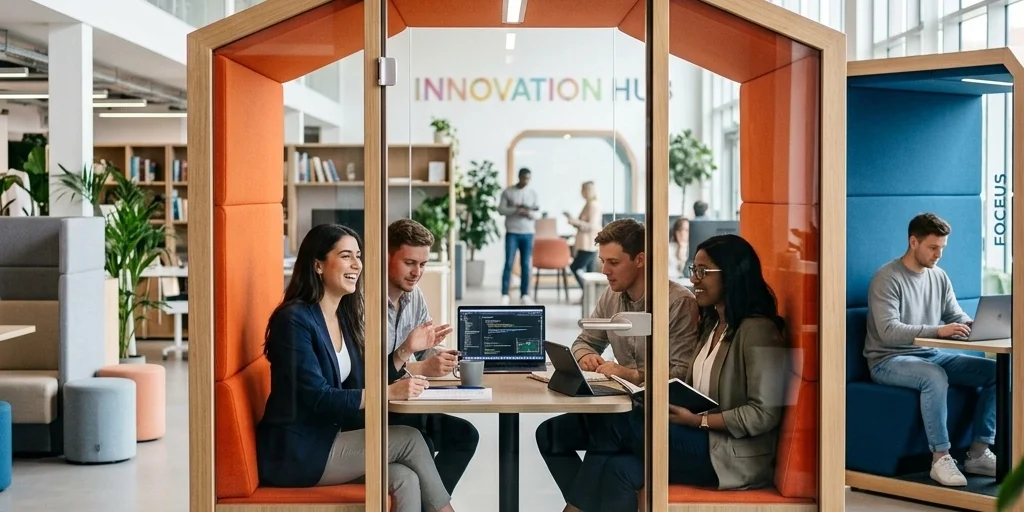
If you close your eyes and think of a "computer lab," what do you see? If it’s a room full of beige towers, tangled grey wires, and the faint scent of stale ozone and floor wax, you’re not alone. For decades, the computer lab was the high-tech heart of every school and office building. It was where you went to learn how to type or, if you were lucky, play Oregon Trail without dying of dysentery.
But let’s be real: it’s April of 2026. Those dusty labs are increasingly looking like digital mausoleums. The workforce has moved on, and the infrastructure is finally catching up. Enter the "Pod."
At USA Entertainment Ventures LLC, we’ve spent a lot of time looking at how business consulting and infrastructure intersect. What we’re seeing is a total revolution in how people learn and work. The generic, "one-size-fits-none" computer lab is being gutted and replaced by specialized, modular, and, frankly: way cooler Pods.
Here are the top 10 ways Pods are kicking the dusty computer lab to the curb and paving the way for the next-gen workforce.
1. Real-World Workflow Simulation
The old computer lab was designed for "computing" in the most general sense. You sat at a desk, opened a browser, and… that was it. In contrast, Pod environments are built to mirror the actual professional workflows people encounter in the wild.
If you are training for a career in high-stakes environments, you don’t need a generic desktop; you need a high-fidelity simulation. Pods replicate the exact physical and digital toolsets used by pros. Whether it’s the specific layout of a logistics hub or the tension of a security operations center, Pods allow learners to bridge the gap between "I read about this" and "I can do this" before they even step foot in a corporate office.
2. Specialized Career Pathways: The Cybersecurity Fortress
Cybersecurity isn't something you can effectively learn on a shared public network with 40 other people trying to print homework assignments. It requires isolation. Modern Cybersecurity Pods come equipped with isolated servers and sandboxed environments where talent can practice defending against "live" threats without nuking the entire building’s Wi-Fi.
This specialized infrastructure is why companies are looking to Pod-based training to fill the massive talent gap in the industry. It’s a controlled, high-performance environment that turns a student into a defender in record time.

3. The Logistics Revolution
Logistics isn't just about driving trucks; it’s about managing complex, multi-layered data streams in real-time. A traditional computer lab with a single 15-inch monitor just doesn't cut it.
Logistics Pods are designed with multi-monitor setups and integrated shipping software that mimics the dashboard of a global supply chain manager. By training in a Pod, a worker becomes fluent in the language of logistics: tracking, routing, and inventory management: using the same equipment they’ll see at a major shipping firm. If you’re curious about how this fits into the broader media and news landscape of the industry, checking out sources like ZooMedia News can show you just how fast these sectors are moving.
4. Content Creation: From Lab to Studio
The "Next-Gen Workforce" is obsessed with content, and for good reason: it’s the currency of the modern economy. But you can’t record a professional podcast or edit a 4K marketing video in a room with 30 other people clicking mice.
Content Creation Pods are specialized mini-studios. They offer acoustic treatment, professional-grade audio interfaces, and the processing power required for high-end rendering. This transforms the learning environment from a passive classroom into a creative engine. It’s about giving people the tools to actually produce, not just consume.
5. Dramatic Cost Savings
Here is the part that makes CFOs drool. Maintaining a sprawling, 50-seat computer lab is an expensive nightmare. You’re paying for the real estate, the massive cooling bills, and the constant IT overhead of keeping 50 aging machines alive.
Research shows that institutions implementing Pod-based infrastructure see cost savings of 50 to 75 percent. Why? Because Pods are "purpose-built." Instead of over-provisioning generic hardware that sits idle half the time, Pods deploy exactly what is needed for a specific task. You aren't paying for what you don't use, and that efficiency is a game-changer for business consulting and educational budgets alike.
6. Enhanced Collaboration (The "Antidote" to Isolation)
The old-school lab was a lonely place. You sat in a row, stared at a screen, and were told to "keep your eyes on your own work." That is the exact opposite of how the modern workforce functions.
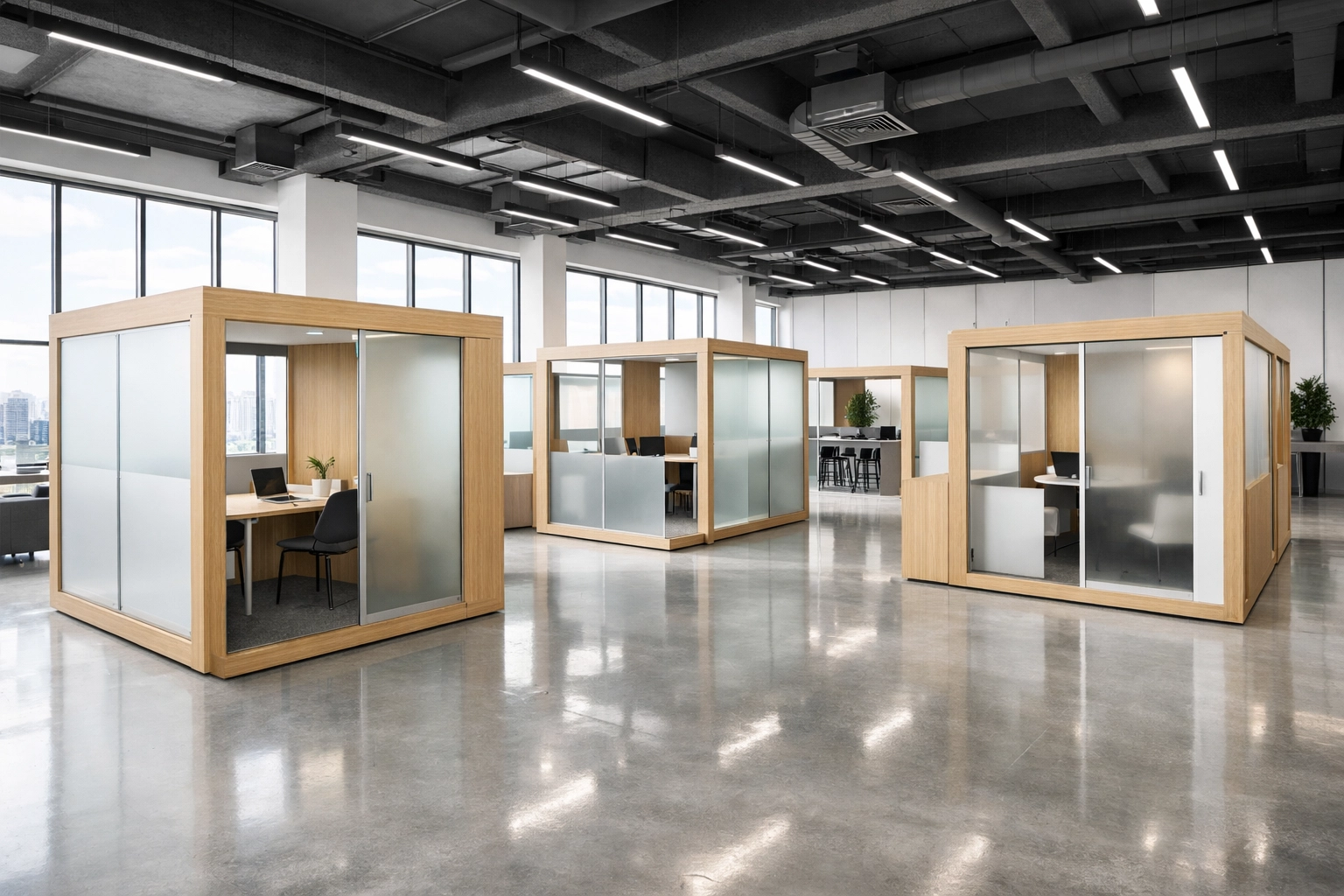
Pods are designed for interaction. The physical arrangement encourages student-to-student and student-to-teacher engagement. When you’re in a Pod, you’re in a team. This collaborative structure reflects the reality of modern business: where problem-solving is a team sport, not a solo marathon.
7. Modularity and Portability
The biggest weakness of the traditional lab was that it was anchored to the floor. If you wanted to move the lab, you needed a sledgehammer and a construction crew.
Pods are modular. They can be deployed to community centers, high schools, or corporate branch offices in a matter of days, not months. This portability allows organizations to bring the training to the people, rather than forcing the people to commute to a central "hub." For a company like USA Entertainment Ventures LLC, this kind of agility is exactly what we preach in our business consulting sessions.
8. Scalability Without the Headache
Want to expand your training program to three new cities? In the old days, that meant three new leases and three new build-outs. With Pods, you just ship more units.
As long as there is a solid internet connection, a Pod provides world-class training capabilities anywhere. This is democratizing access to high-tech careers for rural and low-income communities. You no longer need to live in a tech hub to get tech-hub-level training.

9. Multi-Device Integration
We live in a "second screen" world. If you’re working on a project, you probably have a smartphone, a tablet, and a laptop all running simultaneously.
Dusty computer labs usually hate outside devices. They want you locked into their 2018-era desktop. Pods embrace the ecosystem. They are designed to support tablets, smartphones, and secondary screens, reflecting how professionals actually work. This integration ensures that the transition from training to the job is seamless.
10. Rapid Response to Market Changes
The economy moves fast. If there is a sudden surge in demand for cybersecurity experts in the Midwest, we can’t wait three years for a university to build a new wing.
Businesses can respond to workforce demands in weeks by deploying specialized Pods. This "just-in-time" infrastructure ensures that the workforce stays relevant. Whether it's through Sports Media or logistics, the ability to pivot physical infrastructure is the ultimate competitive advantage in 2026.
The Hybrid Reality
Now, we aren't saying you should take a flamethrower to every traditional lab just yet. There’s still a place for basic, general-purpose computing. However, the high-value, career-focused training is moving to the Pod.
The most successful organizations are taking a hybrid approach: using smaller traditional labs for basic digital literacy and deploying specialized Pods for advanced pathways in cybersecurity, logistics, and media production.
As Dan Kost, CEO of USA Entertainment Ventures LLC, often says, "Efficiency isn't just about doing things faster; it's about doing the right things in the right environment." The Pod is that environment.

Why This Matters for You
If you’re a business leader, an educator, or someone looking to break into a new career, the physical space where you work matters. The "dusty lab" era was about access to a computer. The "Pod" era is about access to a career.
By focusing on specialized, modular, and collaborative infrastructure, we aren't just changing the furniture; we're changing the trajectory of the workforce. It’s time to stop settling for the beige boxes of the past and start stepping into the Pods of the future.
For more insights into how infrastructure is shaping the future of business and entertainment, keep an eye on our category sitemap or reach out to us directly. The future is modular( don't get left in the dust.)





