
As we approach Super Bowl LX in February 2026, the landscape of sports marketing is undergoing a seismic shift. For business owners and marketing executives, the "Big Game" is no longer just a four-hour television window; it has evolved into a multi-week, cross-platform marathon. At USA Entertainment Ventures LLC, we see this as the ultimate opportunity for businesses to scale by leveraging the power of sports media.
Dan Kost, CEO of USA Entertainment Ventures LLC, has often noted that the modern Super Bowl strategy is about more than just a 30-second commercial. It is about creating a presence where the conversation is happening: on mobile devices, social feeds, and digital streaming platforms. To win in 2026, brands must adopt a comprehensive three-phase approach that prioritizes agility and sustained engagement over traditional, high-cost isolation.
The Modern Shift: Beyond the Television Screen
The traditional model of Super Bowl advertising was simple: pay millions for a TV spot and hope for the best. However, current data suggests that the audience has diversified. Viewers are increasingly experiencing the game through short-form video and influencer content across social platforms rather than traditional broadcast alone.
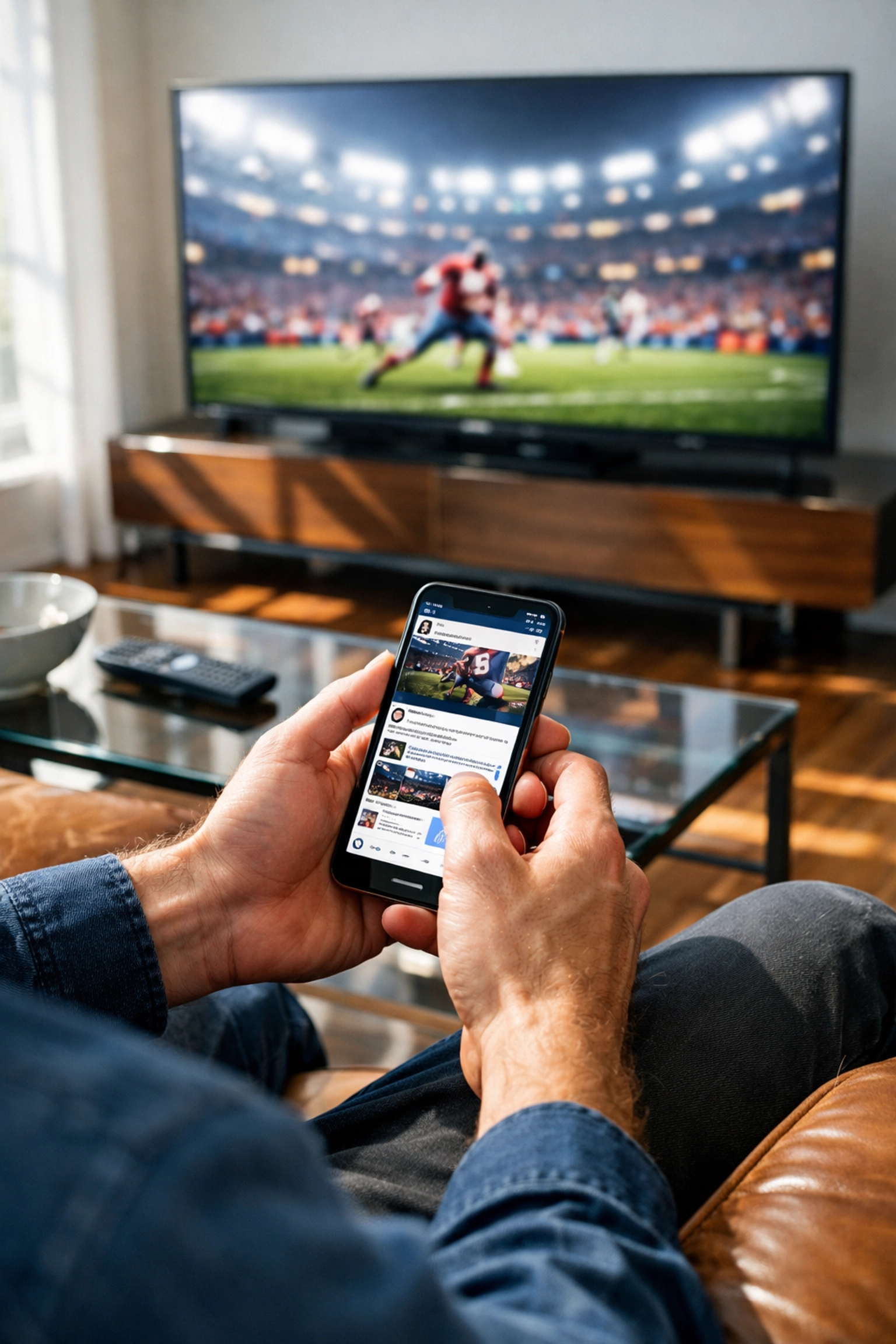
By 2026, the integration of "second-screen" viewing: where fans watch the game on TV while engaging with content on their phones: will be the standard. This means your business needs a strategy that hits YouTube, TikTok, and Meta ecosystems simultaneously. According to industry research, successful campaigns now use platform-specific tactics tailored to distinct audiences and algorithms, rather than a one-size-fits-all video.
Phase 1: The Pre-Game Hype (January 15 – February 7)
The Super Bowl doesn't start on kickoff; it starts weeks in advance. This is the "Hype Phase," and it is crucial for building awareness and establishing retargeting pools.
During this period, businesses should focus on:
- Lowering Costs: By launching campaigns on Meta and Google in mid-January, brands can capitalize on lower Cost-Per-Clicks (CPCs) before the market becomes saturated in early February.
- Audience Segmentation: Create content tailored to both hardcore sports fans and casual audiences. While one group cares about stats and rivalries, the other is interested in the halftime show, the commercials, and the social experience.
- Video Content: This is the time to release "teaser" content. As noted in The Super Bowl Playbook, a strong pre-game video strategy can set the tone for the entire campaign.
For more insights on how to structure these initial media buys, you can explore our resources on 360 Sports Media.
Phase 2: Game Day Execution (February 8, 2026)
On the day of the event, visibility and engagement reach their peak. However, so does the cost. For businesses that aren't spending $7 million on a national TV spot, the strategy must be one of "surgical precision."
Game day requires a "war room" mentality. Marketing teams should have standby ad sets ready for various outcomes of the game. Is it a blowout? Is there a controversial call? Is there a viral moment in the stands? Real-time optimization allows brands to pivot their messaging to stay relevant to the live conversation.
Data shows that maintaining active campaigns during peak attention periods on Game Day yields the highest engagement, despite rising costs. This is where user-generated content (UGC) and real-time social media management become your most valuable assets.

Phase 3: The Post-Game Saturation (February 9 – February 15)
Many brands make the mistake of turning off their ads the moment the trophy is lifted. This is a missed opportunity. The week following the Super Bowl sees a massive spike in searches for highlights, viral moments, and commercial rankings.
This is the "Saturation Phase." By aggressively retargeting audiences who engaged with your content during the previous two phases, you can convert "hype" into "sales." Retargeting efficiency on platforms like Meta has been reported to reach up to 70% CPLC (Cost Per Landing Page Click) when combined with a strong post-game follow-up strategy.
The Power of Video: YouTube and TikTok
Video is the undisputed king of sports media. In 2026, YouTube and TikTok will be the primary drivers of Super Bowl commentary.
YouTube view campaigns that focus on contextual targeting: placing ads around NFL content and Super Bowl analysis: have achieved 56–64% view rates when started three weeks in advance. Meanwhile, TikTok provides a platform for influencer-driven content that feels authentic rather than corporate.
To understand the impact of high-level sports media production, take a look at this overview of sports media advertising strategy:
https://www.youtube.com/watch?v=l6J-0zileKE
This video highlights how visual storytelling can be used to capture the energy of the event and translate it into brand equity.
Why Business Consulting Matters in Sports Media
Navigating the complexities of a Super Bowl-scale marketing campaign is no small feat. This is where professional business consulting becomes vital. At USA Entertainment Ventures LLC, we help companies simplify the process.
Our approach is grounded in data and a clear understanding of the entertainment industry. We focus on:
- Strategic Allocation: Ensuring your budget is spent where the eyeballs actually are.
- Brand Alignment: Making sure your message resonates with the core values of American sports culture.
- Technological Integration: Utilizing the latest in ad-tech to ensure your campaigns are seen by the right people at the right time.

Actionable Takeaways for Your 2026 Strategy
To scale your business using the 2026 Super Bowl as a catalyst, consider these practical steps:
- Start Early: Do not wait until February. Your digital footprint should be expanding by mid-January to build the necessary data for retargeting.
- Focus on Short-Form: Invest in high-quality, short-form video that works without sound, as many users will be browsing social media in loud, social environments.
- Leverage Influencers: Partner with sports personalities or content creators who already have the trust of your target demographic.
- Analyze and Adapt: Use real-time analytics to see which ads are performing and be prepared to shift your budget to the winning creative instantly.
The Future of Growth
The Super Bowl is more than just a game; it’s a reflection of where our culture and commerce intersect. As we look toward 2026, the opportunities for business growth through sports media are greater than ever. By moving away from the "one big moment" mentality and adopting a sustained, multi-platform strategy, your business can achieve a level of scale that lasts long after the final whistle.
The trends we see today: increased mobile engagement, the rise of influencer authority, and the demand for real-time interaction: are only going to accelerate. Those who prepare now will be the ones who lead the market in the years to come.
For more information on how to position your brand for success in the entertainment and sports sectors, visit our portfolio or check out our latest updates at USA Entertainment Ventures LLC.