
Remember the traditional computer lab? That windowless room smelling faintly of ozone and lukewarm coffee, where rows of beige towers sat like silent gargoyles under flickering fluorescent lights? If you’re a Millennial or Gen X-er, that was the pinnacle of high-tech education. You went there to type a paper, play Oregon Trail, or: if you were feeling particularly rebellious: search for cheats for Doom.
But the world changed, and those labs didn’t. In an era where everyone carries a supercomputer in their pocket, the "general-purpose computer lab" has become about as relevant as a floppy disk. Enter the "Pod." It isn’t just a fancy name for a cubicle; it’s a fundamental reimagining of physical infrastructure. Pods are the new computer labs, and they are becoming the definitive ticket for anyone looking to break into content creation, cybersecurity, or logistics.
The Death of the Beige Box
The generic computer lab failed because it tried to be everything to everyone and ended up being nothing to anyone. It offered standardized hardware and generic software, leaving students and professionals to figure out the real-world application on their own. As Dan Kost, CEO of USA Entertainment Ventures LLC, often notes, the gap between "learning a tool" and "executing a career" is where most people get lost.
Modern physical infrastructure needs to be purpose-built. We are moving away from the era of "computing" and into the era of "producing." Today’s workforce demands environments that mirror actual workplace demands. Employers consistently report that while new graduates might have the theoretical knowledge, they lack the "muscle memory" of working in a professional ecosystem. This is where the pod comes in.

What Exactly is a Pod?
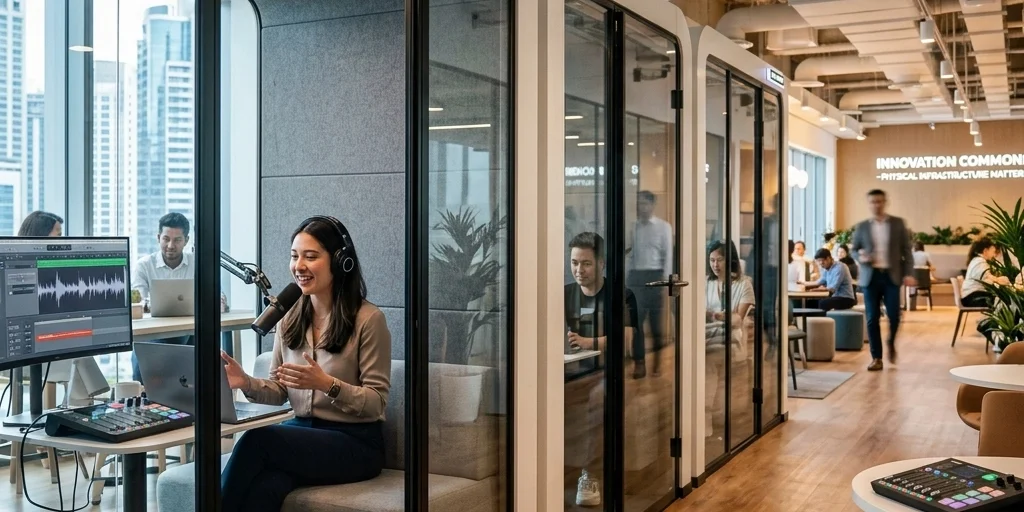
In the context of modern business consulting and infrastructure, a Pod is a modular, specialized, and collaborative workspace. It’s not just a desk; it’s an integrated hub of technology and ergonomic design tailored to a specific career pathway. Unlike the rigid, bolted-down labs of the past, pods are flexible. They can be rearranged, upgraded, and scaled without needing a complete architectural overhaul.
Research into current educational and corporate trends suggests that institutions implementing pod-based infrastructure report cost savings of 50 to 75 percent compared to maintaining traditional labs. Why? Because you aren't paying for 30 machines that sit idle for 20 hours a day. You are investing in high-utilization, specialized hubs that drive specific outcomes.
Pathway #1: Content Creation: The New Digital Frontier
Content creation is no longer just a hobby for people with too much time on their hands; it’s a multi-billion dollar industry and a vital part of modern business consulting. Whether it’s podcasting, video production, or live streaming, the barrier to entry has traditionally been the cost and complexity of the physical setup.
A Content Creation Pod solves this by integrating:
- Professional-grade audio interfaces and microphones.
- Acoustic treatment that doesn't look like a 1970s recording studio.
- High-end video editing workstations.
- Streaming-ready lighting and backdrops.
By providing this infrastructure, organizations allow individuals to move from "learning how to use a camera" to "producing a weekly show." The pod mirrors the workflow of a professional production house. When you step into a pod, you aren't just sitting at a computer; you’re entering a studio. This shift in physical environment triggers a shift in mindset. You become a creator, not just a student.
Pathway #2: Cybersecurity: The Command Center Experience
If content creation is about expression, cybersecurity is about defense. You can’t learn how to defend a network while sitting in a generic computer lab with restricted permissions and a "no-food" sign on the door. You need a sandbox. You need a "Threat Room."
Cybersecurity pods are designed as miniature command centers. They often feature multi-monitor setups, dedicated servers for ethical hacking simulations, and collaborative whiteboarding areas. These pods allow teams to engage in Red Team vs. Blue Team exercises in an environment that feels like a real-world Security Operations Center (SOC).
The physical layout itself encourages collaboration: something the old "rows of desks" model actively discouraged. In the world of cyber defense, communication is just as important as coding. Pods facilitate this by creating a shared physical space where data visualization is front and center.
Pathway #3: Logistics: Managing the Physical World Digitally
Logistics is often the unsung hero of the modern economy. It’s the "how things get from A to B" in a world that expects everything to be delivered yesterday. Logistics pods are the intersection of physical infrastructure and big data.
These pods aren't just for looking at spreadsheets. They are equipped with tracking software, real-time supply chain visualization tools, and communication hubs that connect to field operations. For someone entering a career opportunity in logistics, training in a pod environment provides a realistic simulation of managing a global supply chain. It’s about understanding the flow of goods through the flow of data.

Why Modular Infrastructure Wins
One of the biggest headaches for any CEO or facility manager is "future-proofing." Technology moves fast. The "state-of-the-art" lab you built in 2024 is a paperweight by 2028. Pods solve this through modularity.
Because pods are built as self-contained units, you can swap out the internal hardware or software without tearing down walls. If you need more content creation space and fewer logistics hubs, you can pivot your physical layout in a weekend, not a quarter. This agility is a cornerstone of the USA Entertainment Ventures LLC philosophy: stay lean, stay fast, and focus on what actually works.
The Psychology of the Pod
There’s a psychological component to physical infrastructure that shouldn't be ignored. The "cubicle farm" is known to stifle creativity and increase stress. In contrast, pods are designed for engagement. They provide a sense of ownership.
When a student or an employee enters a specialized pod, they are being told, "Your work here is specific and valuable." It’s an investment in their success. Research shows that specialized, purpose-built environments see significantly higher user engagement and better learning outcomes than general-purpose facilities. It’s the difference between practicing piano in a crowded gym versus a dedicated music room. The environment dictates the effort.

Bridging the Gap Between Learning and Earning
The ultimate goal of any educational or professional development infrastructure should be to bridge the gap between learning and earning. The "New Computer Lab" isn't a place to learn how to use Windows; it’s a place to learn how to launch a brand.
For those interested in high-stakes branding, the pod is where the rubber meets the road. It’s where you take the theory and turn it into a tangible asset. It’s where the "ventures" in USA Entertainment Ventures LLC actually happen.
Actionable Takeaways for Your Organization
If you are looking to update your physical infrastructure, consider these steps:
- Identify the Pathway: Don't build a generic room. Decide if you need a Content Pod, a Cyber Pod, or a Logistics Pod.
- Focus on Workflow, Not Just Gear: A fast computer is useless if the microphone is 10 feet away and the lighting is terrible. Design for the entire production process.
- Embrace Modularity: Choose furniture and tech stacks that can be easily moved or upgraded.
- Prioritize Collaboration: Ensure the physical layout allows for team interaction. The days of the "siloed worker" are over.
Looking Toward 2027 and Beyond
As we move toward the end of the decade, the distinction between the physical and digital worlds will continue to blur. Our workspaces need to reflect that. The Pod is more than just a trend; it’s a necessary evolution for any organization that wants to remain competitive in content creation and high-tech industries.
The "computer lab" is dead. Long live the Pod. It’s your ticket to the creator economy, your fortress in cybersecurity, and your control tower in logistics. If you’re still sitting in a row of beige boxes, it’s time to look for a better seat.
For more insights into how we’re reshaping the world of entertainment and business consulting, feel free to check out our about page or reach out to us directly. The future is being built one pod at a time( don't get left behind in the lab.)





