
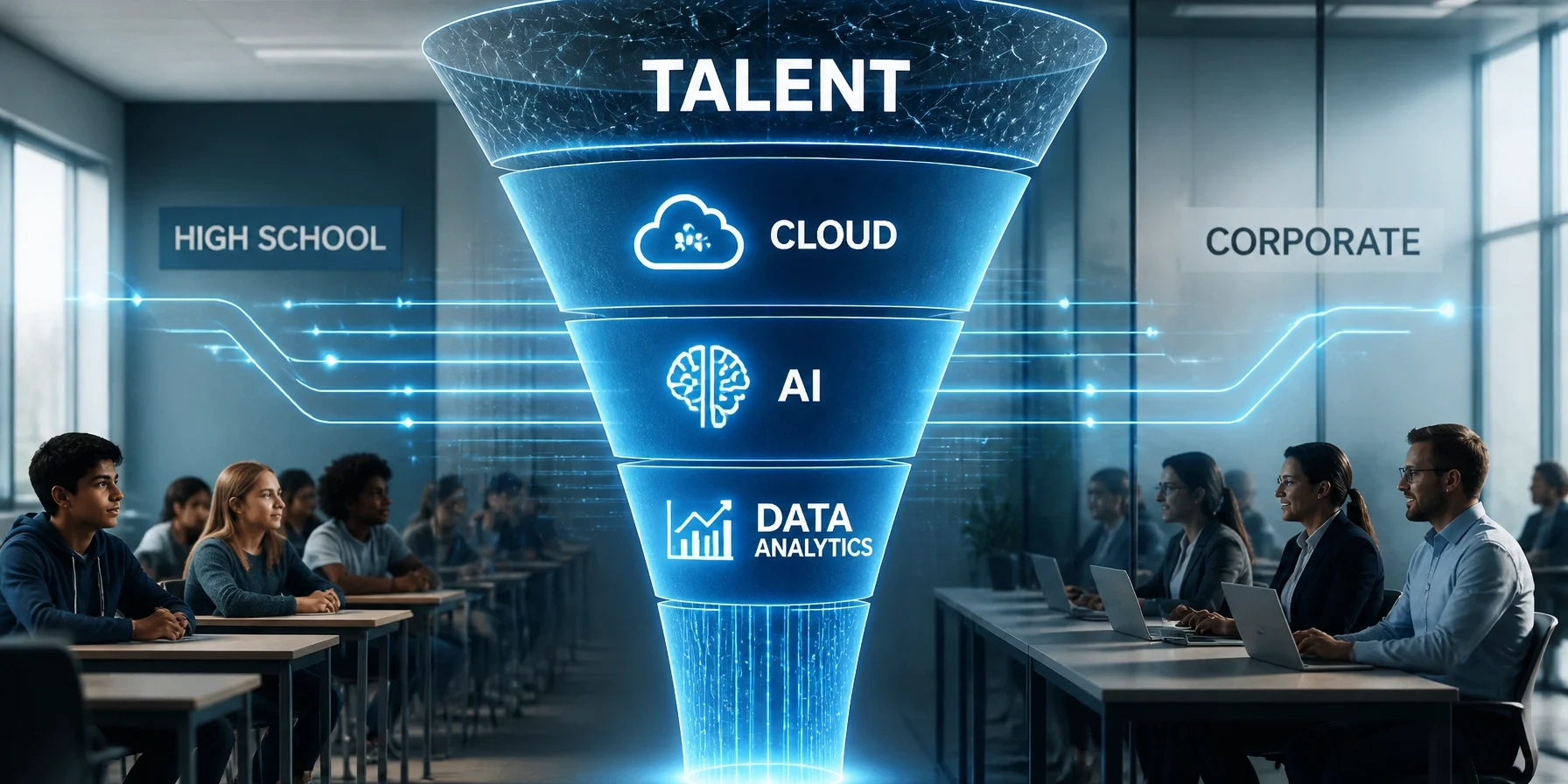
In the rapidly evolving landscape of modern enterprise, the competition for specialized talent has reached an unprecedented level of intensity. For industries anchored in Cloud Computing, Artificial Intelligence (AI), and Data Analytics, the traditional recruitment models: often characterized by waiting for university graduates to enter the job market: are becoming increasingly insufficient. To maintain a competitive edge, forward-thinking organizations are shifting their gaze further upstream.
The "Next-Gen Talent Funnel" is no longer just a conceptual framework; it is a strategic necessity. It represents a structured, data-driven pipeline that begins as early as high school and follows candidates through their educational journey into professional roles. By engaging with talent years before they reach the traditional workforce, companies can secure a pipeline of skilled, loyal, and culturally aligned professionals. This guide explores why early engagement in high schools is the cornerstone of future business success and how organizations can implement these funnels effectively.
The Paradigm Shift: Why High School is the New Frontier
The global demand for digital literacy is skyrocketing. According to recent industry analyses, the "talent gap" in technical fields is expected to widen significantly by 2030 if current trends persist. Waiting for the university system to produce enough specialized candidates is a reactive strategy that often leads to high acquisition costs and fierce bidding wars over a limited pool of talent.
Engaging with students at the high school level allows companies to identify high-potential individuals before they are "on the radar" of the broader market. This is particularly critical in the realms of Cloud, AI, and Data Analytics. These fields require a foundation of logic, mathematics, and technical curiosity that is often sparked in the mid-to-late teens.

1. Identifying Early Aptitude
High school students are increasingly self-taught through online platforms, coding bootcamps, and open-source contributions. By monitoring GitHub repositories, robotics competitions, and hackathons, companies can find talent that possesses the raw skills and passion necessary for success in AI and Cloud sectors.
2. Cultivating Specialized Skill Sets
When a company engages with high schools, they have the opportunity to influence curriculum and provide resources that align with their specific tech stacks. Providing "cloud sandboxes" or micro-credentials in AI allows students to gain proficiency in the exact tools your organization uses, drastically reducing future onboarding times.
3. Strengthening the Employer Brand
Brand loyalty starts early. A student who receives mentorship or educational support from a company in 11th grade is far more likely to view that company as an employer of choice five years later. This early exposure builds a sense of community and shared purpose that cannot be replicated through a standard recruitment advertisement.
Building the Funnel: Data-Driven and AI-Powered
A modern talent funnel is not merely about "outreach"; it is about intelligence. To manage a pipeline that spans several years, organizations must leverage the very technologies they are hiring for: Data Analytics and AI.

At USA Entertainment Ventures LLC, the focus is on managing these complex lifecycles. Our human resources divisions emphasize the importance of data-driven decision-making in talent acquisition. By using predictive analytics, companies can forecast candidate success and retention based on early engagement patterns.
The Role of AI in Recruitment
AI-powered assessment platforms are revolutionizing how we identify potential. Rather than relying on static resumes or GPAs, these tools evaluate problem-solving capabilities and technical aptitude through gamified challenges and real-world simulations.
- Efficiency: Some studies indicate that AI-driven recruitment can reduce time-to-hire by up to 50%.
- Fairness: When designed ethically, AI can help remove human bias, focusing purely on skill and potential rather than educational pedigree or geography.
- Scale: Managing a high school funnel involves thousands of touchpoints. AI automates communication and tracking, ensuring no high-potential student falls through the cracks.
Mentorship and The Human Connection
While data and AI provide the structure, mentorship provides the soul of the Next-Gen Talent Funnel. Pairing seasoned professionals with students creates a "leadership lab" within your current organization.

Mentorship serves a dual purpose:
- Student Growth: Students receive guidance on career paths, technical hurdles, and professional etiquette, making them more "job-ready" by the time they graduate.
- Internal Development: Your current Cloud and AI leads develop essential soft skills: such as communication, coaching, and project scoping: while serving as mentors. This has been shown to increase engagement and retention among existing senior staff.
As part of our consulting services, we often highlight that a robust talent funnel also serves as a corporate social responsibility (CSR) initiative. By investing in local high schools, companies contribute to closing the digital divide and fostering economic growth in their communities.
The Business Case: ROI and Long-Term Value
Investing in high schoolers may seem like a "long game," but the return on investment (ROI) is substantial.
Reduced Recruitment Costs
The cost of hiring a mid-level AI engineer through a headhunter can exceed 20-30% of their annual salary. In contrast, the cost of maintaining a high school engagement program is relatively low when spread across the volume of potential hires it generates over time.
Higher Retention Rates
Candidates who grow up within your ecosystem are statistically more likely to stay longer. They understand the company culture, they are proficient in the specific tech stack, and they feel a sense of loyalty to the organization that invested in their early development.
Innovation and Fresh Perspectives
Gen Z and the upcoming Gen Alpha bring a "mobile-first," "AI-native" perspective that can spark innovation. Students working on capstone projects using your company’s anonymized data can often find creative solutions or build internal tools that provide immediate value to the business.
Bridging the Gap: From School to Career
The transition from education to the professional world can be jarring. This is where programs like DOD SkillBridge recruitment serve as a powerful metaphor and practical tool. Just as SkillBridge helps veterans transition their immense skills into the private sector, the Next-Gen Talent Funnel acts as a bridge for students.

At USA Entertainment Ventures LLC, we understand that talent acquisition is not a single event: it is a continuous journey. Whether it is managing talent pipelines for the entertainment industry or facilitating government and DOD transitions, the principle remains the same: identify talent early, nurture it consistently, and provide a clear path to success.
Actionable Steps for Your Organization
- Define Your Needs: What specific skills in Cloud, AI, or Data will you need in five years?
- Partner with Local Schools: Don't just donate hardware; offer curriculum support, guest speakers, and mentorship programs.
- Implement Tracking: Use a CRM or specialized recruitment platform to track student engagement from high school through college.
- Offer Micro-Internships: Create short, project-based experiences (1–2 weeks) during school breaks to give students a taste of your corporate culture.
- Measure and Iterate: Use data analytics to see which engagement types (e.g., hackathons vs. classroom visits) lead to the highest-quality hires later on.
Conclusion: Future-Proofing Your Workforce
The talent funnel of the future is being built today in high school classrooms across the country. Companies that ignore this early-stage talent pool risk being left behind in the race for digital supremacy. By integrating Data Analytics and AI into your recruitment strategy and fostering genuine human connections through mentorship, you can create a sustainable, high-performing workforce that is ready for the challenges of tomorrow.
The choice is clear: you can wait for the talent to find you, or you can go to the talent and help them find their future.





