
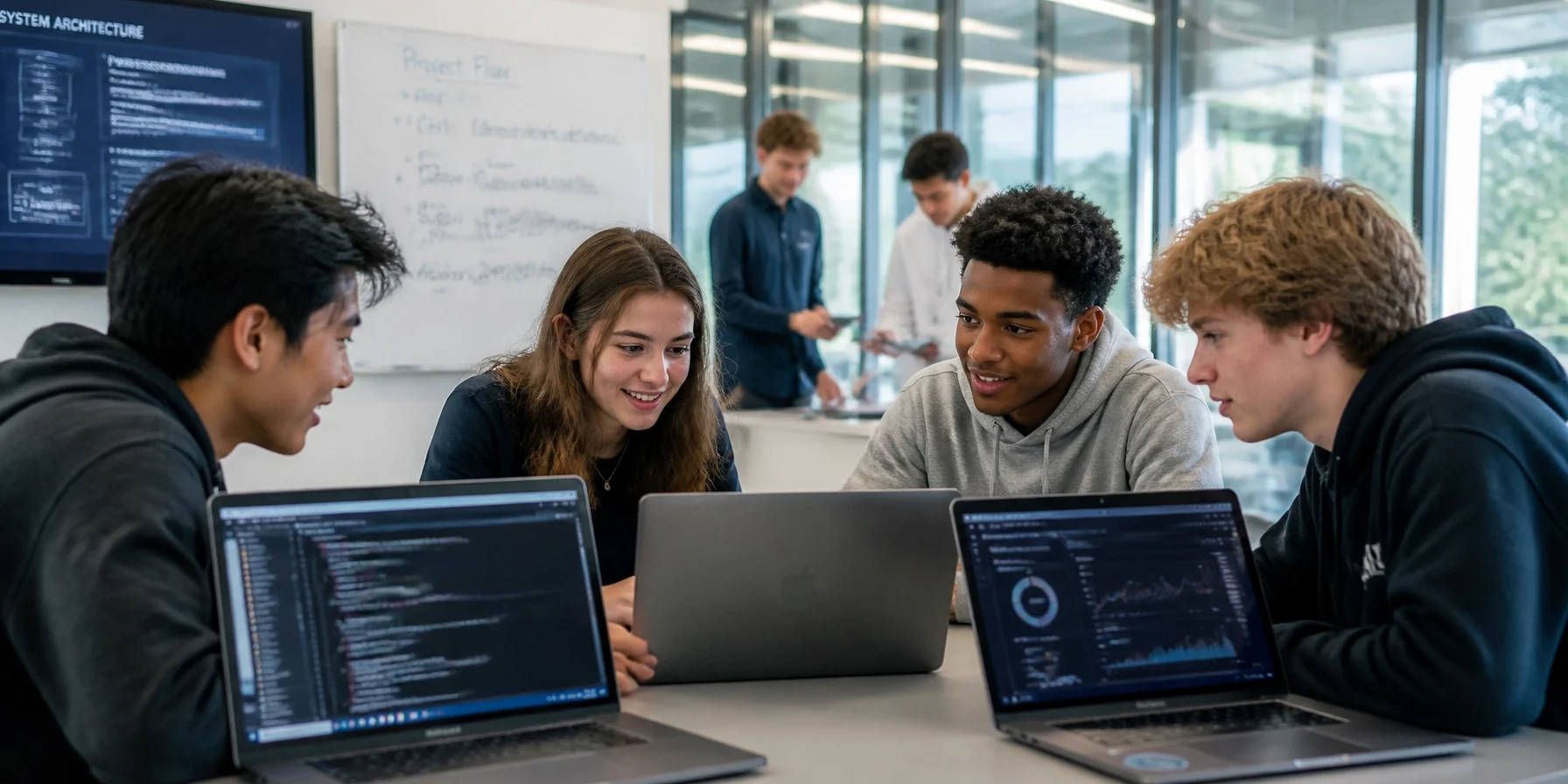
The global business landscape is currently navigating a period of unprecedented technological acceleration. As Artificial Intelligence (AI), Cloud computing, and Data Analytics transition from emerging trends to core operational requirements, the demand for skilled professionals has outpaced the supply of traditional talent pools. For organizations aiming to maintain a competitive edge, the traditional recruitment model: waiting for university graduates to enter the market: is no longer sufficient.
To secure the future of innovation, forward-thinking companies are shifting their focus upstream. Building a "Next-Gen Talent Funnel" means engaging with potential talent as early as high school. By establishing these connections early, businesses can shape the skills, loyalty, and technical proficiency of their future workforce long before they enter the professional market.
At USA Entertainment Ventures LLC, we understand that managing complex organizational divisions and recruitment pipelines: much like our work with DOD SkillBridge recruitment: requires a strategic, long-term vision. This guide explores why high school recruitment is the new frontier for tech talent and how your organization can build a sustainable pipeline for the future.
The Urgency of the Talent Gap
The necessity of early talent engagement is rooted in a stark mathematical reality. According to the U.S. Department of Labor, there is a projected shortfall of approximately one million STEM professionals over the next decade. This gap is particularly pronounced in specialized sectors such as Cloud architecture and AI development.
Expert analysis suggests that the industry-wide reliance on the same limited pool of mid-to-senior-level engineers is driving up costs and slowing down project timelines. Dan Schawbel, founder of Millennial Branding, notes that “In today's economy, students have to start building their careers in high school.” For employers, this is not just a philanthropic endeavor; it is a strategic imperative to "build brand awareness early, fill up their talent pipelines and remain competitive in their marketplace."
Why the Status Quo is Failing
- Late-Stage Competition: By the time a student reaches their junior or senior year of college, they are already being recruited by every major tech firm.
- Skill Mismatch: Traditional academic curricula often lag behind the rapid evolution of cloud platforms and AI frameworks.
- High Onboarding Costs: Recruiting seasoned professionals requires significant financial investment in both salary and headhunter fees.

The Pillar of the Next-Gen Funnel: Cloud, AI, and Data
A successful talent funnel focuses on the skills that will define the next decade. While general computer science knowledge is valuable, a "Next-Gen" funnel prioritizes three specific areas:
1. Cloud Computing
The cloud is the foundation of modern digital business. High school students who are introduced to the basics of AWS, Azure, or Google Cloud early on develop a native understanding of infrastructure that is difficult to replicate later in life. By the time they graduate, these "cloud-native" individuals can manage environments that previously required years of specialized training.
2. Artificial Intelligence and Machine Learning
AI is no longer a niche field; it is a horizontal layer across all business functions. Introducing students to prompt engineering, basic model training, and AI ethics allows them to enter the workforce with a productivity advantage. They don't just use tools; they understand the logic behind them.
3. Data Analytics
Data is the "new oil," but it is useless without the ability to refine it. Teaching students how to interpret datasets and visualize trends ensures that your future hires are data-driven decision-makers.
Strategic Benefits of High School Recruitment
Investing in a high school talent funnel offers several tangible benefits that go beyond simple staffing needs.
Shaping Technical Proficiency
High school students are often described as "digital natives," but their professional technical skills are a blank slate. This provides a unique opportunity for companies to guide their development and align them with specific company processes and technologies. According to Moore Staffing, hiring younger individuals brings "fresh energy" and an "eagerness to learn" that boosts overall morale and productivity.
Diversity and Inclusion
Reaching out to a diverse range of high schools and Career and Technical Education (CTE) programs allows firms to tap into talent that might not follow traditional university paths. Research shows that 83% of young workers cite diversity, equity, and inclusion as a key consideration in choosing an employer. By starting early, your organization can demonstrate its commitment to these values in a practical, impactful way.
Cost Efficiency
Building a pipeline is significantly more cost-effective than constant external hiring. Estimates suggest that employers can save upwards of $20,000 per year by hiring high school graduates into entry-level or pre-apprenticeship roles, where they can handle routine tasks like monitoring or support while senior engineers focus on high-value architecture.

How to Build Your Next-Gen Talent Funnel
Transitioning to this model requires a structured approach. It is not enough to simply post a job opening; you must create an ecosystem of engagement.
Step 1: Partner with Local Schools and CTE Programs
Collaborating with high schools allows your company to influence curriculum development. By providing guest speakers, equipment, or software licenses, you ensure that what students are learning is relevant to your needs. This "pre-apprenticeship" model is a proven method for developing specialized skills.
Step 2: Establish High School Internships
Real-world experience is the most effective teacher. According to a survey by Internships.com, 89% of employers believe that high school internships give students a competitive advantage for future roles. For the company, these internships serve as a "long-term interview," allowing you to assess cultural fit and technical aptitude over several months or years.
Step 3: Offer Mentorship Programs
Mentorship is the bridge between classroom learning and professional application. Assigning a senior engineer to mentor a high school student not only aids the student's growth but also helps the mentor develop leadership and communication skills. It fosters a culture of teaching within your organization.
Step 4: Create Pathways to Full-Time Employment
The funnel should lead somewhere. Whether it is a "learn while you earn" program where the company pays for further education while the student works part-time, or a direct-hire path for specialized technical roles, the outcome must be clear. This transparency builds long-term loyalty.
The Role of Management in Talent Strategy
Building these funnels is a complex task that falls under broader organizational management. At USA Entertainment Ventures LLC, we specialize in the "Managing" aspect of business: whether that is coordinating between divisions or streamlining recruitment efforts. Just as we assist in career opportunities through our various divisions, we encourage businesses to view talent as their most critical asset to manage.
The same principles applied to the DOD SkillBridge recruitment: identifying a specific talent pool and creating a bridge to the private sector: apply to high school students. The goal is to reduce friction in the transition from education to employment.

Looking Ahead: A Furture-Proof Workforce
The speed of change in the tech sector shows no signs of slowing. In five years, the "entry-level" skills of today will be the "baseline" requirements for almost every role. Organizations that wait for the market to solve their talent needs will likely find themselves at a disadvantage, paying premiums for a scarce resource.
By building a Next-Gen Talent Funnel today, you are not just hiring employees; you are cultivating a culture of continuous learning and innovation. You are ensuring that your organization has the "native" talent needed to navigate the complexities of an AI-driven, cloud-based world.
The transition to early recruitment is more than a trend; it is a evolution of business strategy. As Spherion notes, young workers bring "fresh ideas, a passion for learning, and a strong work ethic." Tapping into this energy early is the surest way to succeed in the decade to come.
For more information on how we manage talent pipelines and business divisions, visit our services page or contact us to learn how we can help your organization prepare for the future.





