
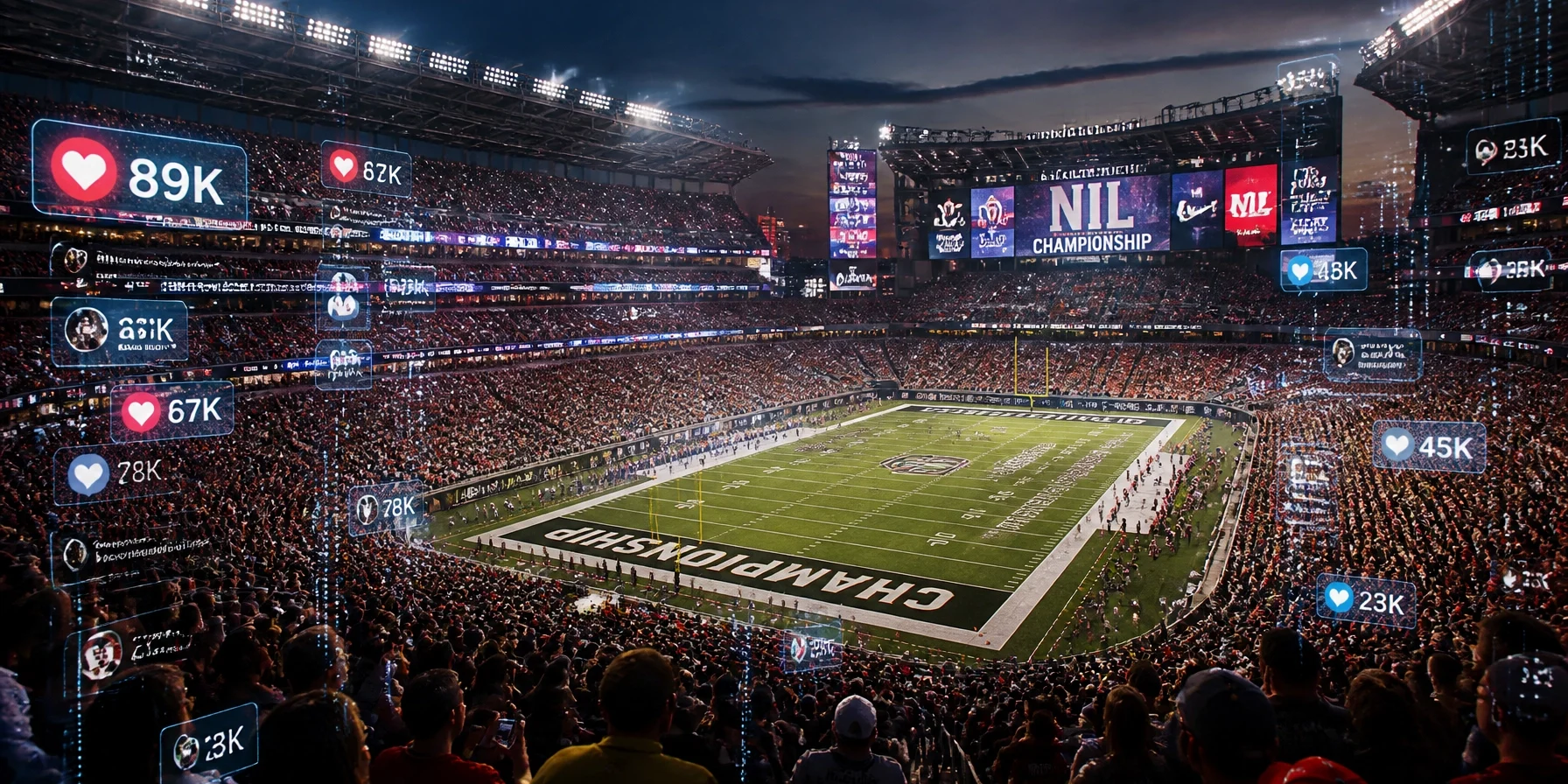
In the high-stakes arena of Super Bowl advertising, the traditional playbook is undergoing a radical transformation. For decades, Fortune 100 brands have relied on the "Big Game" formula: a multimillion-dollar 30-second spot, a singular A-list celebrity, and a massive, one-day media spike. However, as we look toward the 2026 season, a new force is redefining how market leaders capture attention and drive ROI: the Name, Image, and Likeness (NIL) revolution.
This shift is not merely a trend; it is a fundamental restructuring of influence. Today’s consumers, particularly Gen Z and Gen Alpha, increasingly prioritize authenticity over polished corporate messaging. For a Fortune 100 brand, the challenge is no longer just about reaching 100 million people: it is about engaging them through the voices they trust most. This guide explores how sophisticated NIL platforms are providing the infrastructure for brands to bridge the gap between traditional advertising and decentralized, athlete-driven influence.
The ROI Problem: Beyond the $7 Million Spot
While a Super Bowl commercial remains a prestigious hallmark of brand dominance, the financial landscape is evolving. With the cost of a 30-second spot hovering around $7 million: before creative and talent fees: brands are under intense pressure to prove long-term value. Industry data suggests that while these spots generate high immediate awareness, they often lack the "long tail" of engagement necessary to sustain a month-long campaign.

Recent findings indicate that brands allocating at least 20% of their total Super Bowl campaign budget to NIL and creator-driven extensions tend to outperform those relying solely on linear television. The reason is rooted in data: NIL activations provide a 74% lower customer acquisition cost (CAC) compared to traditional celebrity endorsements. Furthermore, peer-to-peer networks of athletes sharing products with their communities have shown a 10.8x higher retention rate.
As noted by industry experts at USA Entertainment Ventures LLC, the "moment" of the Super Bowl must be captured across every screen. By leveraging a diverse roster of athletes, brands can move from a single moment of attention to a sustained narrative that begins weeks before kickoff and continues long after the trophy is raised.
The Infrastructure of Influence: Essential NIL Platforms
To manage thousands of athlete partnerships with the precision required by a Fortune 100 legal and marketing team, professional NIL platforms have become essential. These platforms act as the "sponsorship stack," replacing manual outreach with centralized governance, compliance, and measurement.
- NIL Club: Currently serving over 650,000 college athletes, this platform allows brands to execute "Direct-to-Athlete" models where athletes become genuine advocates.
- Opendorse & INFLCR: These industry stalwarts provide the discovery filters: based on school, demographics, and engagement rates: that allow procurement teams to identify the perfect "brand-fit" scores.
- MOGL & MarketPryce: These marketplaces facilitate the "tiered swarm" strategy, enabling brands to activate hundreds of localized influencers simultaneously.
These platforms are the engines that allow a brand to transition from a "one-and-done" celebrity deal to a sophisticated, data-driven roster. According to a 2024–25 NIL endorsement report, tech brands have already increased their NIL deal volume by 29%, reflecting a strategic move toward these scalable, digital-first campaigns.
The "Tiered Swarm" Strategy: A New Super Bowl Model
The most successful Fortune 100 brands are moving away from the "one big celebrity" model in favor of a tiered approach. This "swarm" strategy ensures that the brand’s message is reinforced at every level of the sports ecosystem.
- Tier 1 (The Heroes): A small group of national pro athletes or high-profile college stars for high-budget creative and television spots.
- Tier 2 (The Influencers): Dozens of high-engagement college stars aligned with key regions or demographic segments.
- Tier 3 (The Grassroots): Hundreds or thousands of student-athletes who provide hyper-local amplification and "campus-level" buzz.

This model allows a beverage brand, for example, to use a national TV spot for brand equity while simultaneously having 500 athletes post real-time "watch party" content on Instagram and TikTok during the game. This multi-layered approach ensures the brand owns the "second screen": the smartphone: where the majority of fans are interacting during the broadcast.
Bridging the Gap: Authenticity at Scale
The core of the NIL revolution is authenticity. A student-athlete’s recommendation often carries more weight with their followers than a scripted commercial. As influence shifts, it is vital to tap into these authentic voices to define culture for the next generation.
The following video highlights how veteran precision and modern technology come together to dominate the sports marketing arena:
https://www.youtube.com/watch?v=l6J-0zileKE
In the video, it is emphasized that "moments define your brand." With access to over 20,000 authentic voices and proprietary digital networks, brands can now access ribbon boards, jumbotrons, and high-touch concession platforms in over 780 venues nationwide. This integrated approach: combining traditional out-of-home (OOH) media with cutting-edge NIL strategy: is what USA Entertainment Ventures LLC refers to as "bridging the gap."
Actionable Steps for Fortune 100 Success in 2026
To succeed at the 2026 Super Bowl, brands must begin their planning cycles now. The complexity of managing large-scale NIL rosters requires advanced lead times and a shift in internal mindsets.
- Define Brand-Fit Metrics: Move beyond follower counts. Use NIL platforms to analyze audience demographics and sentiment to ensure athletes align with your corporate values.
- Allocate Significant Budget: View NIL not as a "leftover" experimental line item, but as a core pillar of the campaign (20%+ of the total spend).
- Empower Creative Freedom: Provide athletes with brand guardrails but allow them to use their own voice. Content that feels "native" to an athlete’s channel outperforms rigid, corporate-scripted posts by 3-4x in engagement.
- Integrate Predictive Modeling: Utilize agency partners like USA Entertainment Ventures to prove ROI through fan sentiment analysis and predictive modeling from day one.

Conclusion: The Future of Sports Marketing
The Super Bowl will always be a cultural phenomenon, but the way brands participate in that phenomenon is changing. By 2026, real-time NIL content: live reactions, watch parties, and behind-the-scenes commentary: will be a standard requirement for any serious advertiser.
The NIL revolution represents a move toward a more democratic and representative marketing ecosystem. It allows Fortune 100 brands to not just talk at their audience, but to participate with them through the voices they admire. As we look toward the future, those who embrace these technology platforms and the "swarm" strategy will be the ones who truly own the arena.
For brands looking to dominate the 2026 landscape, the time to align your vision with unmatched expertise is now. Explore our showcase of success or contact us today to begin your consultation.





