
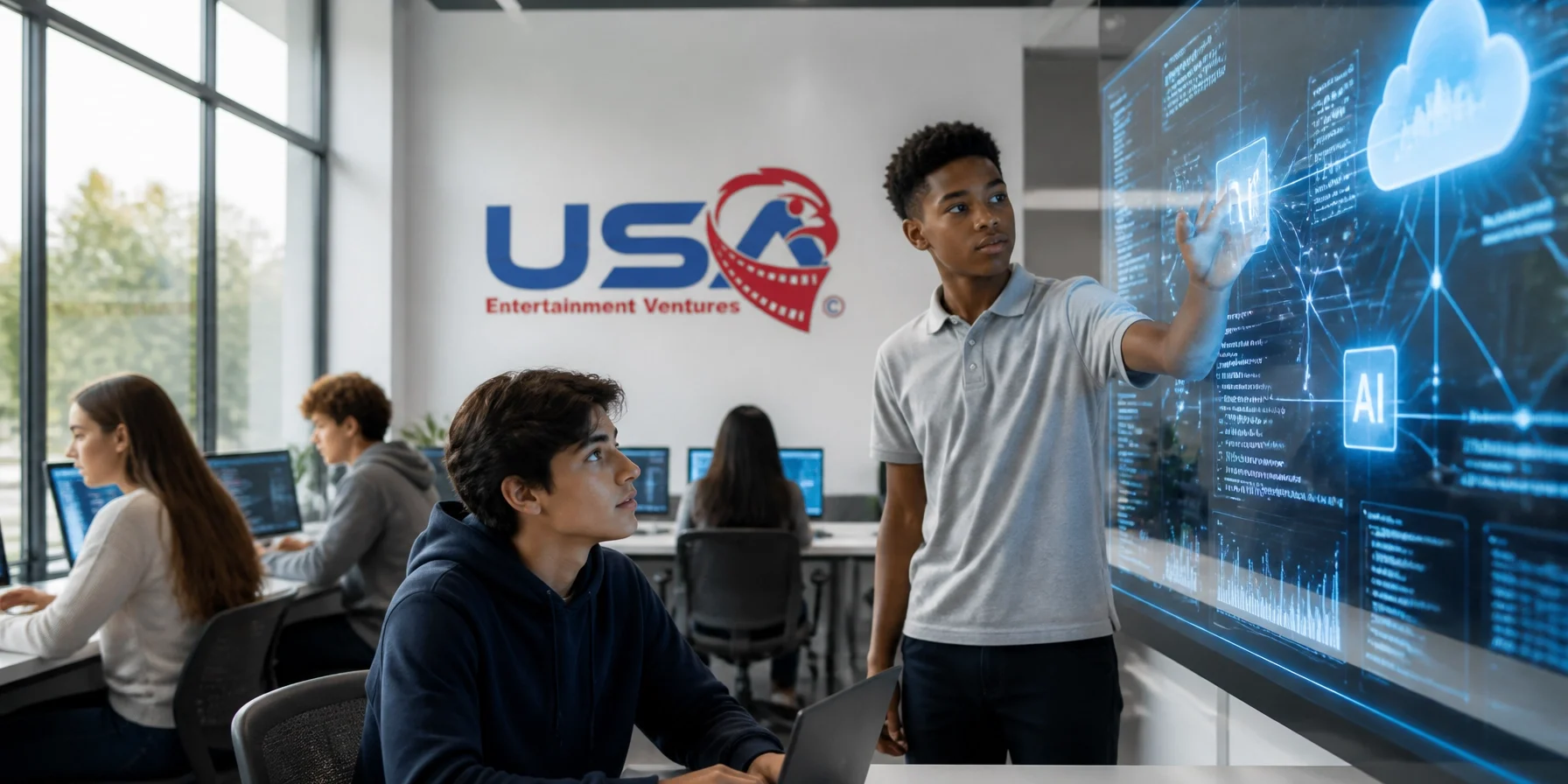
The traditional model of corporate recruitment: waiting for university graduates to enter the job market with ready-made skills: is no longer sufficient to meet the demands of the modern digital economy. As we move further into 2026, the gap between the demand for specialized technical talent and the available supply is widening. To secure a competitive advantage, forward-thinking organizations are shifting their focus "upstream," engaging with potential talent as early as high school.
Building a next-generation talent pipeline is not merely an educational philanthropic effort; it is a critical business strategy. By establishing a presence in secondary education today, companies can cultivate a workforce tailored to the nuances of Cloud computing, Artificial Intelligence (AI), and Data Analytics. This proactive approach ensures a steady flow of skilled professionals who are already aligned with industry standards long before they formally enter the workforce.
The 2026 Reality: A Looming Talent Deficit
The scale of the technical talent shortage is significant. Global investment in AI and cloud infrastructure is projected to reach approximately $1.5 trillion by the end of 2025, a trend that is accelerating the need for skilled operators, architects, and analysts into 2026. According to recent industry insights from Glocomms, roles such as AI/ML Engineer, Cloud Architect, and Cybersecurity Analyst are among the fastest-growing careers this year.
Furthermore, professionals with AI expertise now command a premium, earning an average of 56% more than their peers without these skills. This high cost of acquisition makes the traditional "search and hire" method increasingly expensive and unsustainable. Data center operators and cloud providers are particularly vulnerable; over half of current operators report difficulty in attracting and retaining qualified staff, facing a structural shortage of hundreds of thousands of candidates globally.
To address this, organizations must rethink their workforce strategy by identifying talent potential earlier and nurturing it through structured, industry-aligned pathways.
Why High School is the New Front Line
The decision to target high schools is grounded in the speed of technological evolution. Skills in AI-exposed roles are currently evolving 66% faster than in traditional sectors. By the time a student reaches the third year of a traditional four-year university degree, the foundational technologies they studied in their first year may already be obsolete.
Engaging students at the high school level allows companies to:
- Introduce Industry-Standard Tools Early: Exposure to Python, SQL, and cloud fundamentals (compute, storage, and networking) in grades 9 through 12 creates a base level of "technical literacy" that can be built upon rapidly.
- Foster a Lifelong Learning Mindset: In a rapidly shifting landscape, the ability to learn and adapt is as valuable as any specific coding language.
- Bridge the Diversity Gap: Early outreach provides an opportunity to recruit from underrepresented groups, expanding the total talent pool and fostering a more inclusive industry culture.

The Blueprint for a Next-Gen Talent Funnel
Creating an effective pipeline requires more than just a guest lecture at a local school. It necessitates a structured Next-Generation Talent Funnel that integrates education with real-world application.
1. Foundational Quantitative Literacy (Grades 9–10)
At this stage, the focus should be on data storytelling and basic logic. Students should be introduced to algebra and probability within the context of real-world data sets. For example, instead of solving abstract equations, students might use data visualization tools to analyze community environmental trends or school operational data. This grounds technical concepts in tangible outcomes.
2. Specialized Cloud and AI Foundations (Grades 11–12)
By the time students reach their final years of high school, the curriculum should pivot toward specialized tracks. This includes:
- Cloud Fundamentals: Understanding core services and security basics through hands-on labs provided by major cloud platforms.
- Applied Machine Learning: Moving beyond theory to use AutoML tools for simple prediction problems, while also addressing the ethical implications and potential biases in AI.
- Professional Skills: Developing critical thinking and problem-solving abilities: traits that account for nearly 60% of the in-demand skills in modern data center environments.
Implementing Modular Infrastructure: The Role of 'Pods'
One of the primary barriers to implementing high-tech education in traditional high schools is the lack of physical infrastructure. Traditional computer labs are often static, outdated, and difficult to maintain.
The industry is seeing a shift toward modular pods: self-contained, high-performance environments that can be deployed quickly and updated easily. These pods serve as specialized hubs for cyber careers, providing students with the high-performance computing power necessary to run cloud simulations and AI model training without requiring a complete overhaul of school facilities.

The Strategic Role of Industry Partnerships
Building this pipeline is a collaborative effort. Schools districts often lack the technical expertise to design curricula that match the pace of the industry, while companies lack the pedagogical framework to teach adolescents effectively.
Successful models often involve:
- Co-Developed Curricula: Advisory boards consisting of industry experts and educators ensure that coursework remains relevant to current labor-market needs.
- Mentorship and Work-Based Learning: Programs that pair high school seniors with industry professionals provide students with a "preview" of their future careers. This is particularly effective in high-stakes industries like defense and government, where the DOD Skill Bridge recruitment models can be adapted to help students transition from specialized high school tracks into professional or military technical roles.
- Short-Term Bootcamps: As noted by the World Economic Forum, targeted 16-week programs can be highly effective alternatives to multi-year degrees for entry-level technical roles.
Measuring Success: Metrics That Matter
To ensure the sustainability of a talent pipeline, organizations must track specific outcomes. By 2026, the success of these programs should be measured by:
- Credential Completion: The number of students graduating high school with industry-recognized certifications in cloud fundamentals or data analytics.
- Work-Based Participation: The percentage of students engaged in internships or apprenticeships before graduation.
- Post-Secondary Alignment: The rate at which students transition from high school programs into technical university degrees or advanced Fortune 100 workforce strategies.

Conclusion: A Future-Focused Investment
The shift toward early-stage talent cultivation is an acknowledgement that the "wait and see" approach to recruitment is no longer viable. The complexity of Cloud, AI, and Data Analytics requires a depth of understanding that is best fostered through long-term exposure and incremental learning.
By investing in high school talent today, businesses do more than fill future vacancies; they contribute to a more robust, skilled, and resilient economic ecosystem. The companies that will lead the industry in the 2030s are those that are in the classrooms today, guiding the next generation of experts through the complexities of the digital age.
For organizations looking to navigate this transition, the path forward involves clear strategy, modular infrastructure, and a commitment to mentorship. The talent is there; the responsibility of the industry is to build the funnel that lets them succeed.





