
In the current global economy, the traditional methods of talent acquisition are no longer sufficient to sustain long-term growth. Executive leadership teams at the helm of Fortune 100 organizations have shifted their focus from "hiring for today" to "architecting the workforce of tomorrow." This transition isn't merely a trend; it is a calculated response to a widening skills gap and a rapidly evolving digital landscape.
At USA Entertainment Ventures LLC, we recognize that managing this transition requires a robust framework grounded in data, modern education models, and media literacy. As an anchor for "Future Ready" schools and a leader in executive management, we have identified that the most successful workforce strategies share a common DNA: they treat the talent pipeline as a strategic asset, moving beyond HR checklists to sophisticated data-driven ecosystems.
The Analytics Backbone: Dashboards as the Executive North Star
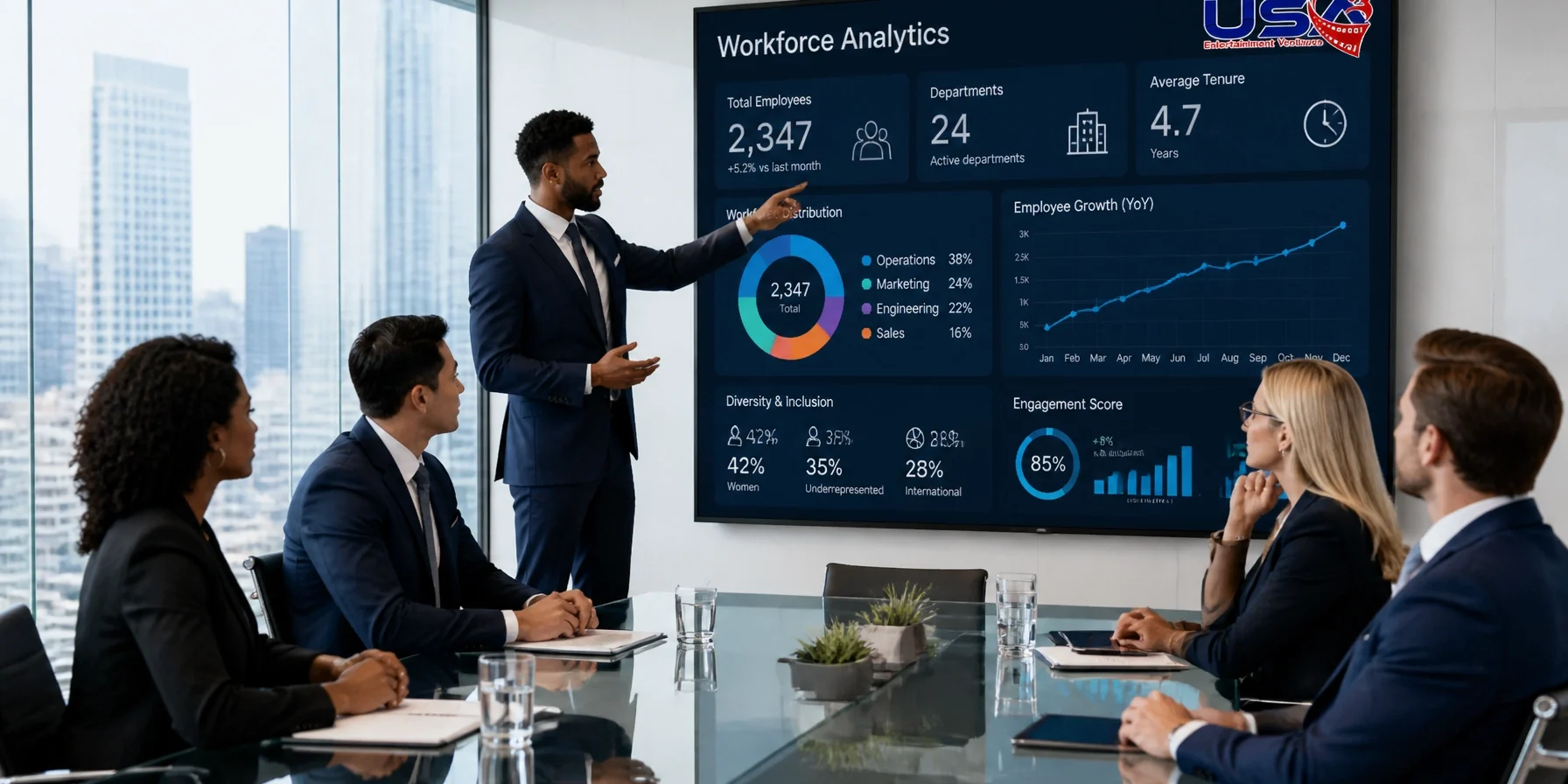
The cornerstone of any Fortune 100 workforce strategy is a centralized, high-fidelity data analytics dashboard. Executives can no longer afford to make talent decisions based on intuition or legacy practices. Data analytics allows leadership to visualize the entire lifecycle of talent, from the earliest stages of the education pipeline to high-level executive recruitment.
Moving from Intuition to Evidence-Based Leadership
Strategic workforce planning involves a rigorous, five-step cycle: assessing demand, assessing supply, identifying gaps, designing interventions, and monitoring execution. By utilizing a centralized dashboard, executives can track:
- Skills Inventories: Identifying which roles are currently over-indexed and where critical skill shortages will emerge in 3–5 years.
- Pipeline Health: Monitoring the flow of students from "Future Ready" programs into internships and early-career roles.
- Diversity and Equity Metrics: Ensuring that talent development is inclusive and representative of the broader market.
According to research from Fortune, the "Best Companies to Work For" are those that invest heavily in people analytics to predict retention and agility. For executive leadership, these dashboards serve as the "North Star," providing the clarity needed to align human capital with financial objectives.

NIL Education: Beyond Athletics to Modern Entrepreneurship
One of the most significant shifts in the modern workforce is the emergence of the "creator economy." In the educational sector, this is most visible through the rise of Name, Image, and Likeness (NIL) rights. While often associated with collegiate athletics, the principles of NIL are becoming a core competency for the broader workforce.
Preparing Students as Personal Brands
NIL education teaches students the fundamentals of contract law, intellectual property, and personal brand management. In a world where employees are often expected to be ambassadors for their organizations, these skills are invaluable. Fortune 100 companies are increasingly looking for "NIL-literate" talent: individuals who understand the value of their digital footprint and can manage it with professional rigor.
USA Entertainment Ventures LLC advocates for the integration of NIL literacy into standard career development. When students learn to manage their own "brand" early on, they enter the workforce with a heightened sense of professional responsibility and financial literacy. This prepares them for various divisions within a company, from marketing and communications to the specialized requirements of DOD skill bridge recruitment.
Media Literacy: The Shield Against Disinformation
In an era of rapid information exchange, media literacy has transitioned from a "soft skill" to a critical executive and employee competency. For the Fortune 100, a single incident of brand misalignment or misinformation can have staggering financial and reputational consequences.
Protecting the Brand and the Pipeline
Media literacy involves the critical evaluation of information sources, understanding the mechanics of algorithms, and recognizing how narratives shape stakeholder perception. From an executive perspective, fostering a media-literate workforce is a form of risk management.
Leadership must ensure that employees at every level: from entry-level creators to senior managers: understand:
- Digital Citizenship: The ethical use of social media and online platforms.
- Brand Safety: How individual digital actions reflect on the corporate entity.
- Data Privacy: Protecting proprietary information in an increasingly public digital world.
By embedding media literacy into the talent pipeline, organizations create a culture of digital safety and discernment that protects both the individual and the enterprise.

Becoming an Anchor for 'Future Ready' Schools
The gap between classroom learning and corporate needs is often cited as a primary challenge for business growth. To bridge this gap, forward-thinking organizations are positioning themselves as "anchors" for "Future Ready" schools. This involves a deep partnership between industry leaders and educational institutions to co-design curricula that meet future market demands.
Bridging the Gap Between K-12 and the Fortune 100
A "Future Ready" school framework focuses on competencies such as data literacy, AI ethics, entrepreneurship, and media literacy. When a company like USA Entertainment Ventures LLC acts as an anchor, it provides:
- Contextual Learning: Providing real-world projects that allow students to apply classroom concepts to actual business challenges.
- Mentorship and Pathways: Establishing clear routes from vocational or high school programs into professional roles, including specialized sectors like the DOD skill bridge.
- Teacher Externships: Offering educators the opportunity to spend time within corporate environments to ensure their teaching remains aligned with current industry standards.
This level of collaboration ensures that the talent entering the workforce is not just qualified on paper but "Future Ready" in practice. It transforms the local school system into a bespoke talent incubator for the region's largest employers.

Conclusion: The Executive Call to Action
The transition to a data-driven, media-literate, and future-ready workforce is not a passive process. It requires executive leadership to take proactive steps in redefining how they identify and cultivate talent. The Fortune 100 strategies that succeed are those that view education and workforce development as two sides of the same coin.
By investing in centralized analytics, supporting NIL and media literacy, and acting as an anchor for the next generation of schools, companies can ensure their long-term viability in an increasingly complex market. We encourage leadership teams to evaluate their current frameworks and consider how these proven strategies can be integrated into their own organizational DNA.
For those looking to lead in the new economy, the message is clear: the future belongs to those who build it today.





