
In the contemporary landscape of organizational growth, the traditional boundaries of talent development are rapidly expanding. As digital transformation accelerates, the ability to navigate, analyze, and ethically contribute to the media ecosystem has shifted from a niche skill to a foundational executive requirement. At USA Entertainment Ventures LLC, we recognize that "Future Ready" institutions: whether they are corporate entities or educational environments: must anchor their strategy in media literacy to remain competitive and resilient.
Integrating media literacy into your talent development strategy is no longer just about understanding social media trends. It is about building a robust framework where data analytics, Name, Image, and Likeness (NIL) education, and critical thinking converge to drive measurable outcomes. This post explores how executives can lead this integration, positioning their organizations at the forefront of workforce innovation.
The Executive Mandate: Defining Media Literacy in 2026
For today’s leaders, media literacy is a core leadership competency. It encompasses the strategic and risk-aware use of digital channels, the ability to identify misinformation, and a deep understanding of how platform algorithms shape public perception. In a world where a single viral narrative can impact market valuation, executives must be equipped to analyze information quality and bias before making high-stakes decisions.
According to industry research, organizations that prioritize digital fluency and media literacy see a significant reduction in susceptibility to reputational fraud and misinformation-led crises. This is particularly relevant for those involved in DOD SkillBridge recruitment, where the transition of service members into the private sector requires a high degree of information literacy and adaptability to new media environments.
Key Competencies for the Media-Literate Leader:
- Strategic Evaluation: The ability to judge the credibility of sources and identify underlying biases in market reports and media coverage.
- Reputation Management: Understanding the mechanics of crisis amplification and how to manage narratives across decentralized platforms.
- Digital Fluency: Comfort with interpreting audience sentiment and engagement metrics to guide brand strategy.
Leveraging Data Analytics Dashboards for Talent Insights
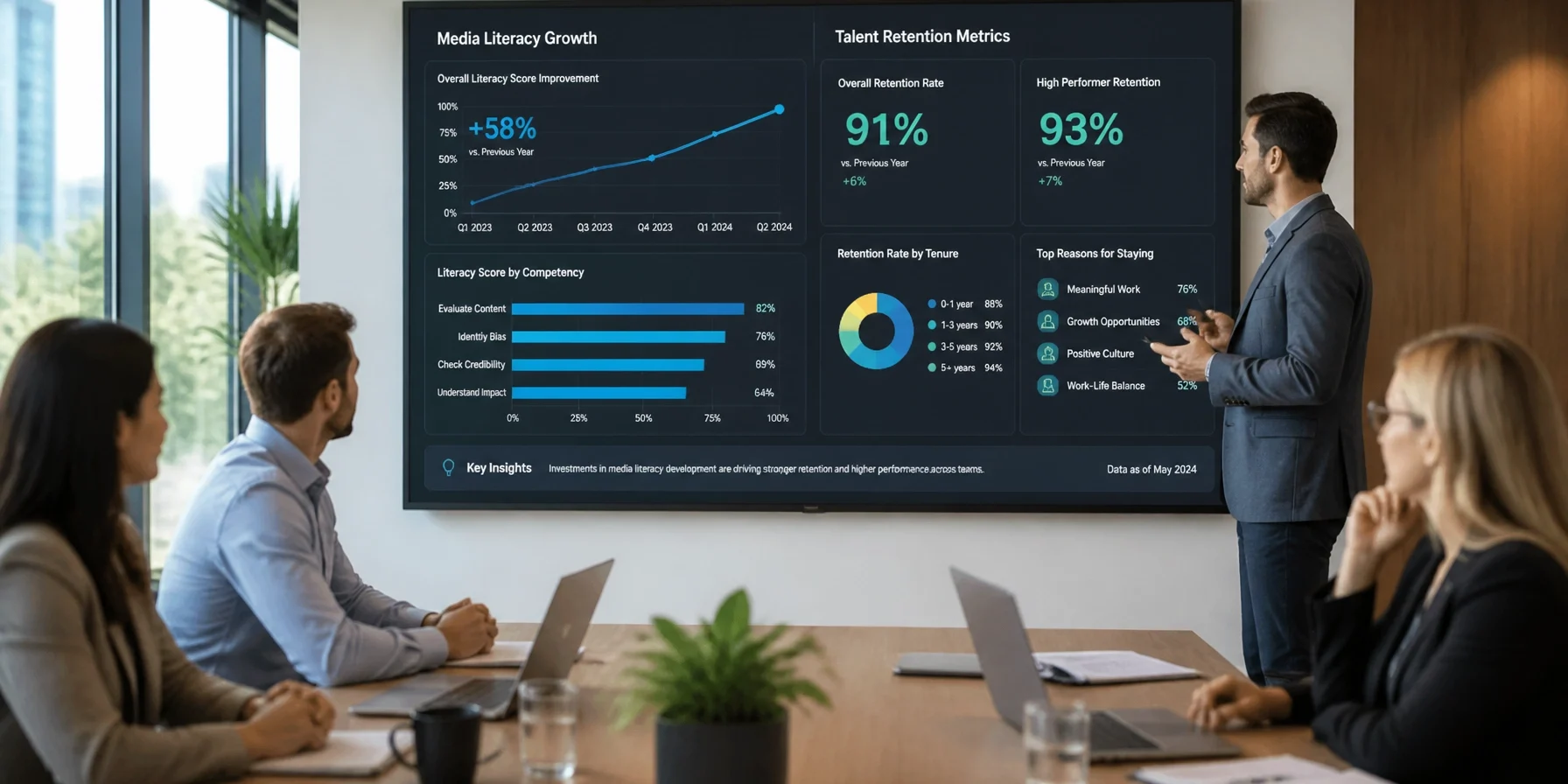
A successful talent development strategy is only as strong as the data that supports it. Integrating media literacy requires moving beyond qualitative assessments toward a data-driven approach. Modern data analytics dashboards provide the transparency needed to measure the efficacy of literacy programs and their impact on talent retention and performance.

By utilizing centralized dashboards, executives can track key performance indicators (KPIs) such as:
- Media Sentiment Analysis: How the organization’s talent is perceived across digital channels.
- Engagement Velocity: The speed and quality of interaction between the organization and its prospective talent pool.
- Literacy Proficiency Scores: Quantitative metrics derived from internal training modules that assess an employee's ability to navigate complex media landscapes.
These insights allow leaders to pivot their strategies in real-time. For instance, if data reveals a gap in media-risk awareness among mid-level management, the talent development team can immediately deploy targeted education modules. This proactive stance ensures the workforce is not just reactive but prepared for the future.
NIL Education: A New Pillar of Talent Development
The rise of Name, Image, and Likeness (NIL) has fundamentally changed how we view individual branding, particularly within educational and sports-adjacent ecosystems. For schools and organizations striving to be "Future Ready," NIL education is a critical component of media literacy. It teaches students and young professionals how to manage their personal brands as valuable assets while protecting their legal and ethical interests.
At USA Entertainment Ventures LLC, we advocate for NIL education that goes beyond monetization. It is about empowering individuals to understand contracts, evaluate sponsorship offers with a critical eye, and recognize the long-term implications of their digital footprint. When students are media-literate, they can distinguish between authentic opportunities and predatory deals that might harm their academic or professional futures.
Benefits of NIL Integration:
- Informed Decision-Making: Students learn to analyze the intent and reliability of brands and agents.
- Authentic Brand Building: Encourages the creation of coherent personal brands that align with long-term career goals.
- Risk Mitigation: Reduces vulnerability to scams and reputational damage through increased skepticism toward unrealistic advertising.
For more on how these shifts are impacting modern infrastructure, explore why modular pods are replacing traditional computer labs to support these high-tech, media-centric learning environments.
Positioning as an Anchor for 'Future Ready' Schools
Educational institutions are the primary training grounds for the next generation of the workforce. By adopting a "Future Ready" model, schools can serve as anchors for their communities, bridging the gap between academic learning and corporate expectations. This model prioritizes the integration of media literacy and data-driven learning into the core curriculum.

"Future Ready" schools move away from static learning models toward modular, tech-enabled spaces. These environments are designed to facilitate collaborative projects, such as digital branding campaigns or social media sentiment analysis, where media literacy is practiced in a real-world context. As an industry leader, USA Entertainment Ventures LLC supports these institutions by providing the consulting and recruitment frameworks necessary to align educational outcomes with market demands.
The transition to this model involves several strategic steps:
- Curriculum Audit: Identifying where media literacy and data analytics can be embedded into existing subjects.
- Infrastructure Upgrades: Moving toward modular, flexible spaces that support digital collaboration.
- Corporate Partnerships: Establishing links between schools and business development entities to ensure the skills being taught are those being sought by recruiters.
Actionable Takeaways for Executives
To successfully integrate media literacy into your talent development strategy, consider the following practical steps:
- Update Your Competency Model: Explicitly include media literacy and digital risk management in your leadership and recruitment criteria.
- Invest in Specialized Training: Develop or partner with experts to provide NIL and media literacy workshops that use real-world case studies of misinformation and reputational crises.
- Deploy Analytics Tools: Utilize data dashboards to monitor the "digital health" of your talent pool and the effectiveness of your training programs.
- Foster a Culture of Critical Inquiry: Encourage employees at all levels to question sources and verify information before acting.

Conclusion: Leading the Future-Ready Evolution
The integration of media literacy with talent development is not a temporary trend; it is a fundamental shift in how we prepare individuals for the complexities of the modern world. By positioning your organization as a champion of media literacy and data-driven strategy, you are doing more than just improving internal efficiency. You are contributing to a more informed, resilient, and "Future Ready" society.
At USA Entertainment Ventures LLC, we are committed to helping organizations and educational institutions navigate this evolution. Whether through strategic management or specialized recruitment, our goal is to ensure that tomorrow’s leaders are equipped with the tools they need to succeed in a media-saturated environment. The future belongs to those who can see through the noise and act with clarity.





