
If you close your eyes and think of a "computer lab," what do you see? Probably a dimly lit room with rows of beige desks, a tangled Medusa of Ethernet cables, and that distinct, nostalgic smell of ozone and old dust. It’s a vibe: just not a good one for 2026.
At USA Entertainment Ventures LLC, we spend a lot of time thinking about how people work and learn. Whether we are managing DOD SkillBridge recruitment or consulting on business development, one thing is clear: the physical environment dictates the output. The traditional computer lab is a relic of a time when the internet was dial-up and "the cloud" was something that ruined your picnic.
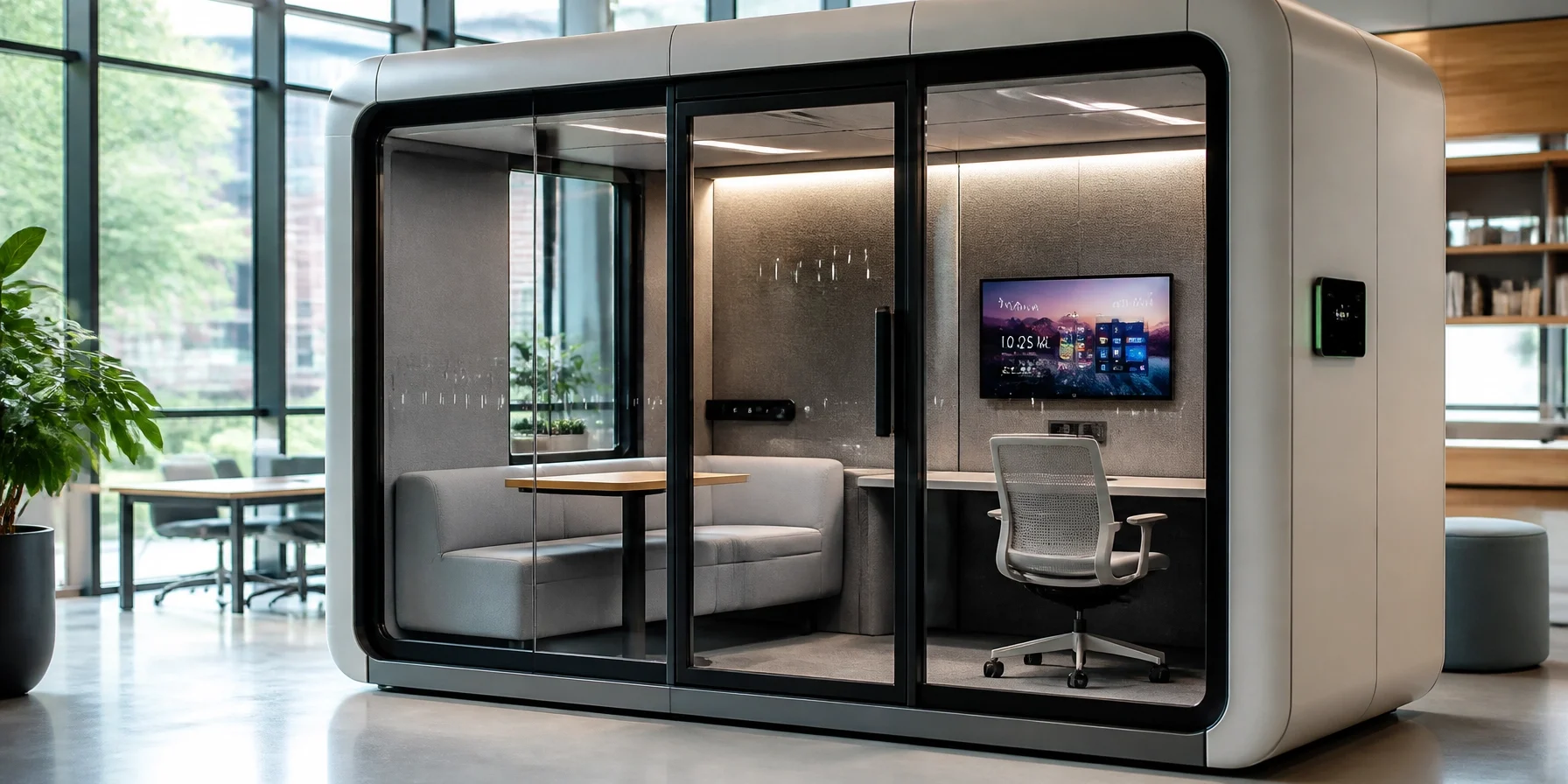
The future isn't a row of desks; it’s the Pod. Modular, flexible, and surprisingly stylish, computer pods are transforming how we train for high-stakes careers in logistics, cybersecurity, and content creation. Here are ten reasons your current lab strategy is failing: and why the pod life is the only way forward.
1. The "Tetris" Problem: Fixed Layouts Are Failing
Traditional labs are built into the bones of a building. Once those desks are bolted down and the floor is wired, you’re stuck. If you need to switch from a lecture-style setup to a collaborative "war room" for a cybersecurity simulation, you’re out of luck.
Modular pods, however, are the ultimate game of Tetris. They can be rearranged, expanded, or moved entirely. According to recent industry observations, the ability to reconfigure space in hours rather than months is a top priority for institutions that need to stay agile. At USA Entertainment Ventures, we call this "future-proofing." If your room can't change, your strategy can't grow.
2. Construction is a Slow-Motion Train Wreck
Need more computer stations? In a traditional lab, that means calling a contractor, getting permits, dealing with drywall dust for three weeks, and probably blowing your budget on unexpected electrical issues.
Pods arrive pre-fabricated. It’s essentially "plug and play" on a structural level. You can stand up a whole new training wing in a weekend without a single hammer being swung. For businesses looking for specialized digital services, speed is the only currency that matters.
3. Acoustic Chaos vs. The Cone of Silence
Ever tried to focus on a complex logistics algorithm while the person next to you is loudly troubleshooting their audio driver? Traditional labs are acoustic nightmares: sound bounces off those hard walls and tile floors like a pinball.
Pods are designed with acoustic integrity. They provide a "sanctuary of focus," which is scientifically proven to lower stress and improve information retention. When you’re training for high-level business consulting, concentration isn't just a luxury; it’s a requirement.
4. The Budget Trap: Renovation vs. Scalability
Traditional construction has a nasty habit of "scope creep." A $20k lab update quickly becomes a $50k structural overhaul. Pods offer cost certainty. You know exactly what each unit costs, and you only buy what you need today. If your program grows, you buy another pod. If it shrinks, you can even sell them. It’s an asset, not an expense buried in the floorboards.
5. Logistics: Training for the Real Move

The logistics industry has moved far beyond forklifts and clipboards. We’re talking about Warehouse Management Systems (WMS) and Transportation Management Systems (TMS) that require serious computing power and specialized environments.
Training a logistics coordinator in a generic lab is like teaching a pilot to fly in a Honda Civic. Pods allow for the creation of "simulated hubs" where students can manage real-time data flows in a space that mimics a modern logistics command center.
6. Cybersecurity: Building the SOC of Tomorrow

If you’re training the next generation of cyber-defenders, you need a Security Operations Center (SOC) vibe. A row of desks in a classroom doesn't feel like "the front lines."
Modular pods can be configured into high-security clusters, complete with the dual-monitor setups and localized networking needed for ethical hacking or threat hunting. In our work with DOD recruitment, we see how much the environment impacts a recruit's mindset. When the room feels professional, the work becomes professional.
7. Content Creation: The Sound of Quality

The "Content Creator" is no longer just a teenager in a bedroom; it’s a legitimate career pathway in marketing, corporate training, and digital media. However, you can’t record a high-quality podcast or a training video in a traditional computer lab. The background noise of thirty cooling fans and the fluorescent hum will ruin the audio every time.
Pods provide the soundproofing and lighting control necessary for professional-grade content. They are effectively "mini-studios" that can be dropped into any office.
8. Sustainability is More Than a Buzzword
Traditional renovations create an incredible amount of waste. Drywall, old wiring, and carpet scraps all end up in a landfill. Modular pods are built with precision in factory settings, minimizing waste. Furthermore, they are reusable. When you’re done with a pod, you don't "demolish" it: you move it. This circular economy approach is a core value we advocate for in our business consulting practices.
9. Specialized Tech Needs Room to Breathe
Have you ever tried to set up a VR (Virtual Reality) rig in a standard computer lab? You’ll likely hit a desk or trip over a classmate within thirty seconds. Modern tech like VR, AR, and AI-heavy workstations require specific spatial considerations. Pods can be customized for these specific footprints, providing the "room to breathe" that high-end hardware requires.
10. Real-World Readiness: The Psychological Edge

At the end of the day, the biggest reason your lab strategy isn't working is psychological. If students or trainees feel like they are in a "classroom," they act like students. If they feel like they are in a high-tech "innovation pod," they act like professionals.
By shifting to a pod-based infrastructure, you are signaling that the training is modern, relevant, and valuable. It bridges the gap between "learning about a job" and "doing the job."
Career Pathways: Where Does the Pod Take You?
The physical shift to pods isn't just about aesthetics; it's about the career trajectories we support at USA Entertainment Ventures. Here is how pod-based training translates to the real world:
- Logistics & Supply Chain: Mastery of WMS and TMS software within a dedicated pod prepares you for roles as a Logistics Coordinator or Operations Analyst. You learn to manage the "flow" of goods in a controlled, high-tech environment.
- Cybersecurity: Starting as a Help Desk or Junior SOC Analyst, the experience of working in an enclosed, high-concentration pod mirrors the real-world SOC environments of major corporations and government agencies.
- Content Creation: Learning to produce, edit, and stream from a sound-controlled pod gives you the technical edge needed for Technical Writing, Digital Marketing, or Educational Content Development.
The Bottom Line
Your computer lab shouldn't be a storage room for old hardware; it should be a launchpad for new careers. Whether you are looking to optimize your business services or join our network of industry leaders, the infrastructure you choose today will define your success tomorrow.
Stop building rooms. Start planting pods.





