
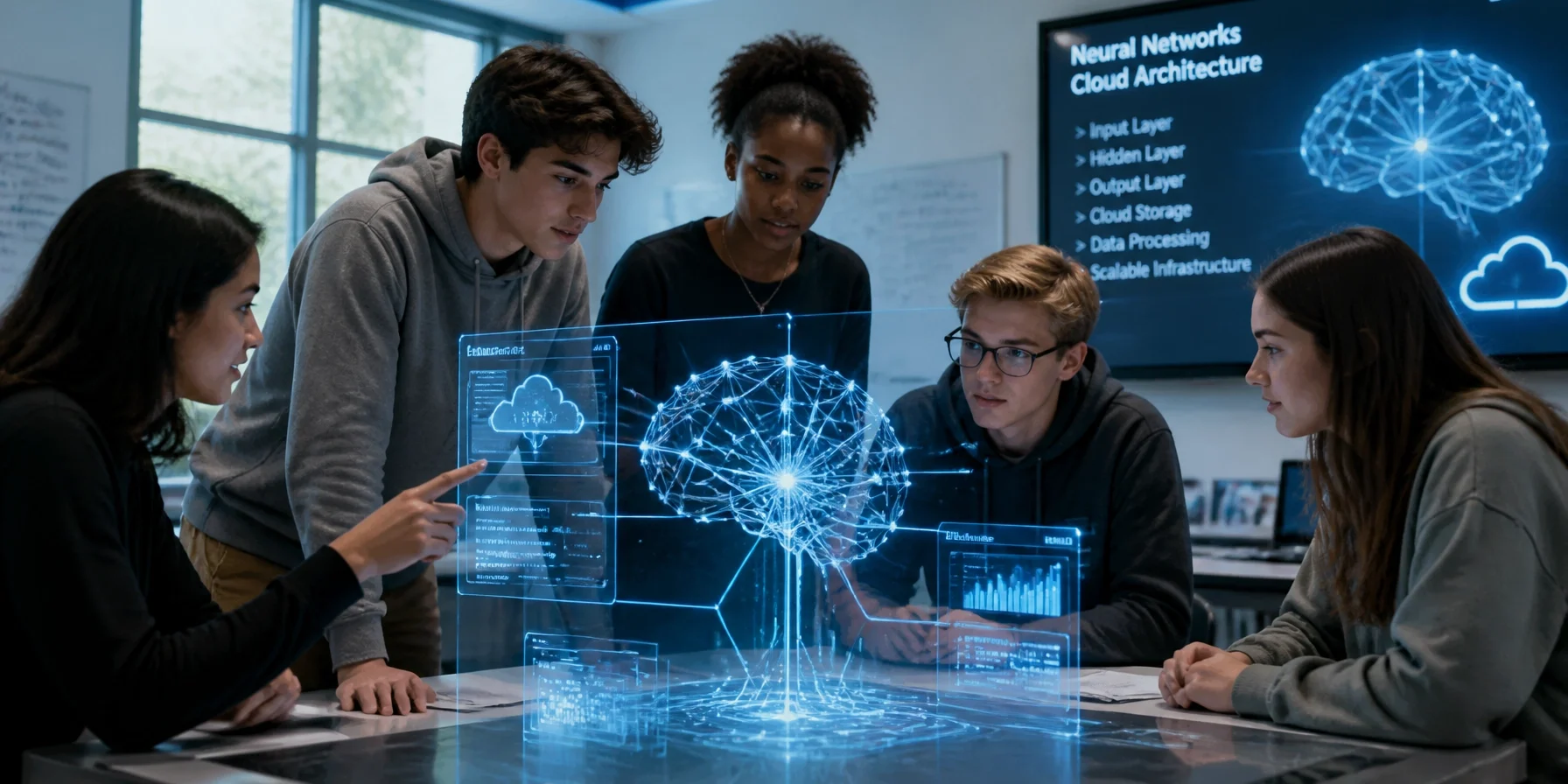
The global demand for skilled professionals in Cloud Computing, Artificial Intelligence (AI), and Data Analytics has reached an unprecedented peak. As digital transformation accelerates, the traditional "wait-and-hire" approach: relying solely on university graduates or experienced lateral hires: is no longer sufficient to maintain a competitive edge. To secure the future of innovation, forward-thinking organizations are shifting their gaze further upstream.
The most effective strategy for sustainable growth in the tech sector is not found in the final stages of a professional career, but in the foundational years of high school. By engaging students early, companies can cultivate a "Next-Generation Talent Funnel" that ensures a steady stream of prepared, motivated, and technically proficient individuals. At USA Entertainment Ventures LLC, we recognize that managing the transition from education to high-level technical roles is a critical component of modern business consulting and human capital development.
The Looming Skills Gap in Cloud and AI
The urgency for this early-stage intervention is grounded in stark economic and educational data. According to recent industry reports, the gap between the demand for AI skills and the available talent pool is widening. Businesses are struggling to fill roles that require a sophisticated understanding of cloud architecture and data-driven decision-making.
Research indicates that students who engage with AI-enhanced learning platforms early in their academic careers outperform their peers by 15% to 35% on technical assessments. Furthermore, these students report engagement levels up to ten times higher than those in traditional, passive learning environments. When organizations wait until the post-secondary level to introduce these concepts, they miss the window where student curiosity and career-pathing are most malleable.
The problem is not merely a lack of interest, but a lack of exposure. Without structured pathways from high schools to technical careers, many potential innovators are lost to attrition or alternative fields before they even realize their potential in the technology sector.
Why High School Engagement is the Strategic Answer
Building a talent funnel within the K-12 system is not just an act of corporate social responsibility; it is a calculated business move. The benefits of this approach are multi-faceted, addressing retention, performance, and long-term recruitment costs.
1. Increased Retention and Completion Rates
Schools that implement AI-powered personalized learning report a 12% increase in student attendance and a 15% reduction in dropout rates. For a corporation, this means the "leaks" in the talent pipeline are patched at the source. Students who are introduced to cloud and data concepts through interactive, project-based learning are 70% more likely to complete their courses compared to those in traditional settings.
2. Higher Quality of Technical Proficiency
Early exposure allows for the development of "muscle memory" in technical skills. By the time a student enters a professional environment or a specialized recruitment program, such as the DOD SkillBridge recruitment tracks managed by our divisions, they already possess the foundational logic required for advanced AI and data analytics.
3. Broadening the Diversity of the Talent Pool
AI tools, including real-time translation and adaptive learning paths, help bridge educational disparities. By bringing these technologies into high schools, companies can reach marginalized populations and multilingual learners, effectively expanding the diversity and size of the future workforce.

Components of a Successful High School Talent Pipeline
To build a funnel that actually produces results, organizations must look beyond occasional guest speaking roles. A robust program requires integration, mentorship, and practical application.
Integrated Curriculum Support
Rather than asking schools to add "one more thing" to their schedules, businesses should partner with educators to integrate Cloud and AI concepts into existing STEM curricula. This involves providing access to real-world datasets, cloud credits for student projects, and curriculum modules that mirror current industry challenges.
Hands-on Labs and Simulations
Theoretical knowledge is insufficient in the fast-paced world of business development. Effective funnels utilize AI-powered active learning, which has been shown to generate 10 times more engagement than traditional lectures. By providing students with sandboxed environments to build neural networks or manage virtual cloud clusters, companies foster a sense of ownership and technical mastery.
Professional Mentorship
The human element remains irreplaceable. When high school students are paired with industry professionals, they gain a clearer vision of their future. Surveys show that 74% of learners report greater motivation when their learning is personalized and supported by experts who can contextualize the data.

Linking High School to Professional Growth: The DOD SkillBridge Parallel
At USA Entertainment Ventures LLC, we often look at the success of the DOD SkillBridge program as a model for talent transition. The SkillBridge initiative allows service members to gain valuable civilian work experience during their last 180 days of service. This model of "on-the-job training" before formal employment is exactly what the high school-to-career funnel should emulate.
Just as the DOD SkillBridge recruitment process bridges the gap between military service and technical careers, a high school talent funnel bridges the gap between general education and specialized industry needs. Organizations should view high school seniors not as "future prospects," but as "active participants" who can enter specialized internship or apprenticeship tracks immediately upon graduation.
Implementation Strategies for Business Leaders
For executives and HR directors looking to implement these strategies, the transition should be viewed as a long-term investment.
- Identify Local Partners: Start with schools in the communities where your offices or data centers are located.
- Standardize Technical Requirements: Clearly define the "entry-level" skills required for your Cloud and AI roles so that educators can align their teaching goals with your hiring needs.
- Leverage Existing Management Expertise: Utilize firms like USA Entertainment Ventures LLC to manage these complex pipelines. Managing a division that spans education, military recruitment, and technical consulting requires a specialized set of oversight skills.
- Adopt "Future-Focused" Language: Shift the internal company culture to value early-stage talent development. Projecting current trends into the future suggests that the companies winning the "talent war" in 2030 are the ones visiting high schools in 2026.

Conclusion: A Responsible and Profitable Path Forward
The development of a next-generation talent funnel for Cloud, AI, and Data Analytics is an essential evolution in corporate strategy. By engaging with high school students today, businesses do more than just fill future job openings; they foster a more resilient, skilled, and diverse society.
The evidence is clear: early engagement leads to better academic outcomes, higher retention, and a workforce that is ready to tackle the complexities of the digital age from day one. As we look toward a future defined by rapid technological shifts, the most successful organizations will be those that view education as the first, and most important, stage of their recruitment funnel.
For more information on how we manage these transitions and support DOD SkillBridge recruitment, visit our services page.





