
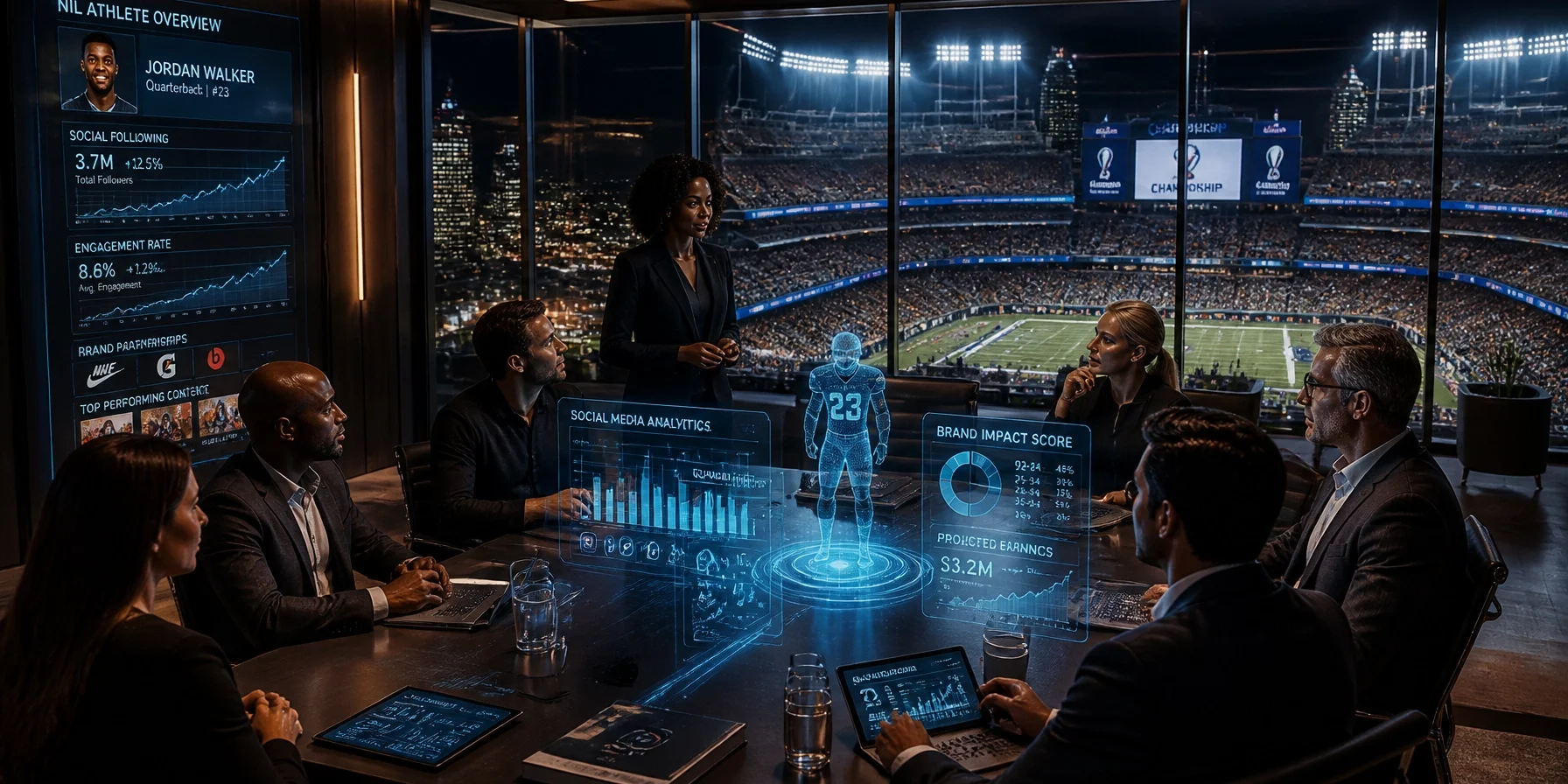
As the countdown to Super Bowl 2026 begins, the landscape of sports marketing is undergoing its most radical transformation in decades. For over half a century, the 30-second television spot was the undisputed crown jewel of advertising: a $7 million to $8 million investment that promised national visibility and cultural immortality. However, as we approach 2026, a new consensus is emerging among Fortune 100 CMOs: visibility is no longer synonymous with engagement.
The traditional 30-second ad is not necessarily "dead," but its role has shifted from being the entire campaign to acting as a mere anchor in a much larger, more dynamic ecosystem. In its place, Name, Image, and Likeness (NIL) platforms are rising as the strategic priority for brands seeking authentic connections with a fragmented audience.
The High Cost of Silence: The 30-Second Dilemma
In 2026, the price tag for a national Super Bowl spot has reached unprecedented heights, with some units reportedly clearing the $8 million mark. While the reach of the Super Bowl remains unparalleled: drawing over 100 million viewers: the nature of that attention has changed. Research indicates that over 70% of viewers now engage with a "second screen" during the broadcast. This means that while a brand’s multi-million dollar masterpiece plays on the 75-inch screen, the consumer’s eyes are often locked on their smartphone, scrolling through TikTok, Instagram, or X (formerly Twitter).
This shift in behavior has created a "relevance gap." Traditional commercials, no matter how high the production value, are increasingly perceived as interruptions rather than invitations. Fortune 100 brands, which once relied solely on these monolithic media buys, are now recognizing that a single, polished message cannot compete with the ongoing, authentic dialogue happening on social platforms.

The NIL Revolution: Bridging the Gap at the Super Bowl
The emergence of NIL (Name, Image, and Likeness) rights has provided brands with a powerful tool to bridge this gap. By partnering directly with athletes: particularly the student-athletes who define culture for the next generation: brands can tap into established, trusting communities.
As highlighted in our latest industry analysis, the transition from "buying time" to "building relationships" is critical. At USA Entertainment Ventures LLC, we have observed that the most successful Super Bowl 2026 campaigns are those that leverage our NIL platform to tap into over 20,000 authentic voices. These athletes do not just appear in ads; they create content that resonates because it is native to the platforms where the audience actually lives.
Watch: The NIL Revolution – Bridging the Gap at the Super Bowl
Why Fortune 100s are Pivoting
The move toward NIL platforms for Super Bowl 2026 is driven by three primary factors: authenticity, scalability, and data-driven ROI.
1. Authenticity Over Artifice
Modern consumers, particularly Gen Z and Millennials, possess a highly tuned "authenticity filter." They are significantly more likely to trust a recommendation from an athlete they follow and admire than a celebrity-endorsed corporate commercial. NIL athletes offer a level of relatability that a high-budget production often lacks. When a college quarterback shares his genuine game-day routine on TikTok, it feels like a conversation, not a sales pitch.
2. Scalable Reach and Localization
A national 30-second spot is a "one-size-fits-all" solution. In contrast, NIL allows Fortune 100 brands to execute hyper-local or demographic-specific strategies. A brand can partner with fifty different athletes across different regions, tailoring the message to specific fan bases. This creates a "content engine" that generates thousands of unique touchpoints rather than a single, static broadcast moment.
3. Predictive ROI and Fan Sentiment
Traditional TV measurement has always been somewhat of an imprecise science, often relying on delayed ratings and broad sentiment analysis. Modern NIL platforms, however, utilize predictive modeling to prove ROI before a single dollar is spent. By analyzing fan sentiment and historical engagement data, brands can project the impact of their NIL partnerships with surgical precision.

The Strategic Blueprint for Super Bowl 2026
For Fortune 100 brands, the goal is no longer to "win" the 30-second ad race. The goal is to own the entire sports ecosystem. This requires a transition toward integrated management and consulting strategies that look beyond the final whistle.
From Pre-Game Tease to Post-Game Engagement
The most effective 2026 strategies treat the Super Bowl as a launchpad. NIL partners are deployed weeks in advance to build anticipation through "behind-the-scenes" content and interactive challenges. During the game, these same athletes lead the second-screen conversation, hosting live watch-along streams or reacting in real-time to the game's biggest moments.
Integrating "Out-of-Home" and Digital
The revolution isn't just happening on screens. To truly dominate the arena, brands are integrating their digital NIL efforts with physical activations. This includes everything from digital ribbon boards and jumbotrons at over 780 venues nationwide to high-touch concession platforms that turn a brand into a tangible fan experience. At USA Entertainment Ventures LLC, our media and distribution divisions ensure that the brand message is ubiquitous: from the billboard on the highway to the cup holder in the stadium.
Management: The Invisible Engine of Success
Navigating the complexities of thousands of NIL deals, compliance regulations, and multi-channel distribution requires more than just a creative agency: it requires veteran management. Managing these transitions is a core competency at USA Entertainment Ventures LLC.
Our expertise extends beyond sports marketing into professional human resources and recruitment. For example, our involvement in the DOD Skill Bridge recruitment program underscores our commitment to structured, professional management and talent placement. Whether we are managing the career transition of a military veteran or the NIL portfolio of a rising star athlete, the principle remains the same: professional management leads to professional results.
Practical Takeaways for the Forward-Looking CMO
For brands looking to innovate before Super Bowl 2026, we suggest the following actionable steps:
- Shift the Budget Mix: Reallocate a portion of the traditional TV budget into a diversified NIL portfolio. This provides a safety net of guaranteed engagement if the TV spot fails to "go viral."
- Prioritize Platform-Native Creative: Stop repurposing TV commercials for social media. Invest in content that is designed specifically for the vertical, fast-paced nature of TikTok and Reels.
- Leverage Predictive Data: Use advanced analytics to identify athletes whose fan bases align most closely with your target customer demographics.
- Focus on the Ecosystem: Ensure your NIL strategy is supported by out-of-home (OOH) and physical fan engagement platforms to create a holistic brand experience.
Conclusion: The Future of Brand Engagement
As we look toward Super Bowl 2026 and beyond, it is clear that the brands that thrive will be those that embrace the decentralized nature of modern influence. The 30-second ad may remain a prestigious tradition, but the NIL revolution is where the real connection happens.
By bridging the gap between national visibility and authentic, athlete-driven storytelling, Fortune 100 brands can ensure they are not just seen, but heard. The opportunity for growth is immense, and the tools to measure and scale that growth are more sophisticated than ever.
It is time to move beyond the whistle and dominate the arena of the future.
For expert consulting on NIL strategies, media management, and talent recruitment, visit USA Entertainment Ventures LLC.





