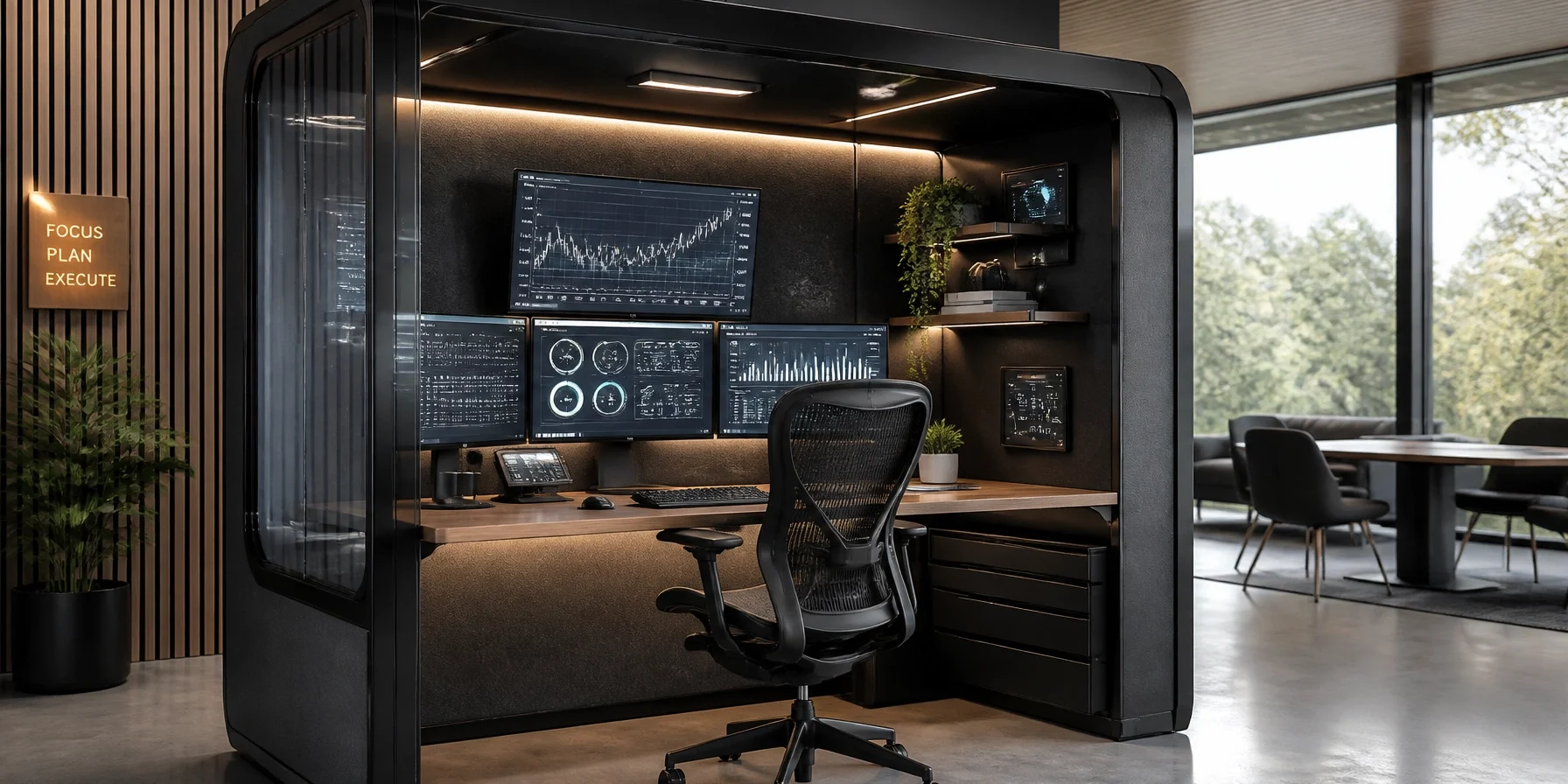
If you close your eyes and think of a "computer lab," you probably see it: rows of identical, dust-caked beige towers, monitors that weighed more than a small child, and that faint, unmistakable smell of ozone and industrial carpet cleaner. For decades, this was the peak of educational infrastructure. But in 2026, the traditional computer lab isn’t just showing its age, it’s actively holding back the next generation of the workforce.
The world has shifted from general-purpose computing to hyper-specialized, role-based training. Enter the "Pod." While the term might sound like something out of a sci-fi film where humanity lives in vats, in the context of infrastructure, pods are the nimble, high-performance successors to the static lab. They are winning the race for modern infrastructure because they don't just provide a seat; they provide a career environment.
At USA Entertainment Ventures LLC, we see this transition daily. Whether we are managing DOD SkillBridge recruitment or designing workforce strategies, the demand for modularity is undeniable.
The Death of the Beige Row: Why Labs Failed
The traditional lab was built on a "one-size-fits-all" philosophy. Every student or trainee sat at the same hardware, running the same software, regardless of whether they were learning to type or trying to crack a cryptographic hash.
According to research from EdTech Magazine, institutions are rapidly moving away from these models due to the rise of Bring Your Own Device (BYOD) and the sheer cost of maintaining hardware that becomes obsolete every three years. When everyone has a laptop in their bag, a room full of generic desktops becomes a very expensive graveyard of wasted space.
Pods solve this by specializing. Instead of a room with 30 mediocre PCs, a modern facility might have 10 high-performance pods designed specifically for logistics, cybersecurity, or media production. It’s about quality over quantity, and in the current economy, quality is the only currency that matters.
Logistics: Simulating the Global Engine

Logistics isn't just about moving boxes; it’s about managing data at scale. A traditional computer lab can teach you how to use Excel, but it can’t teach you how to manage a high-velocity fulfillment center.
Modular pods in logistics training are equipped with the actual tools of the trade: dual-screen setups for Warehouse Management Systems (WMS), integrated RFID scanners, and label printers. These "Logistics Pods" act as digital twins of real-world environments. Trainees aren't just clicking buttons; they are experiencing the workflow of a logistics coordinator or supply chain analyst.
By isolating these stations into pods, organizations can swap out hardware or software packages to match specific industry partners, making the transition from training to a job almost seamless. This is a core reason why pods are the new hotspot for career training.
Cybersecurity: The Virtual Sandbox

If you're training for a career in cybersecurity, the last thing you want is to be on a shared network where one mistake could take down the entire building’s Wi-Fi. Traditional labs are notorious for being too "open" and difficult to secure for high-stakes training.
Cybersecurity pods provide isolated, secure "sandboxes." Each pod can be its own air-gapped network, allowing trainees to experiment with malware analysis, penetration testing, and incident response without any risk to the broader infrastructure.
Industry experts often cite the need for "Cyber Ranges", simulated environments where the "Red Team" (attackers) and "Blue Team" (defenders) can go head-to-head. As noted by LabStats, moving toward these flexible, specialized spaces allows institutions to provide the high-performance computing power needed for modern security tools that a standard lab PC simply can't handle.
Content Creation: Powering the Creator Economy

The "Creator Economy" is no longer a hobby; it’s a multi-billion dollar industry. From corporate communications to professional streaming, the ability to produce high-quality video and audio is a top-tier skill.
You cannot teach high-end content creation in a traditional lab. The noise of 30 other people typing ruins audio recordings, and the lighting is usually "Early Office Fluorescent", which is a crime against cinematography.
Content creation pods are acoustically treated mini-studios. They include professional-grade boom mics, 4K cameras, and GPU-accelerated workstations that can render video in minutes rather than hours. This modular approach allows a facility to have a "Podcast Pod," an "Editing Pod," and a "Streaming Pod," ensuring that students are using the exact gear they will find in a professional studio.
Bridging the Gap: DOD SkillBridge and Workforce Integration

At USA Entertainment Ventures LLC, we focus heavily on the DOD SkillBridge program, which helps transitioning service members move into civilian careers. For a veteran coming from a high-stakes military environment, a traditional computer lab feels like a step backward. It feels like "school."
Pods, however, feel like "work." They mimic the professional environments found in modern logistics hubs, Security Operations Centers (SOCs), and media firms. This psychological shift is vital for successful career transition. By providing infrastructure that matches the job, we reduce the "training lag" and get veterans into high-paying roles faster.
Furthermore, modular infrastructure is a hedge against the future. If a new technology emerges, say, a surge in demand for AI-driven logistics: you don't have to renovate an entire room. You simply update a few pods. It’s an agile workforce strategy that saves money and keeps training relevant.
The Verdict: Are Traditional Labs "Bad"?
"Bad" is a strong word. Let’s go with "insufficient." Traditional labs still have a place for basic digital equity: providing internet access to those who don't have it. But for anyone serious about career pathways in 2026, the lab is a relic.
Pods offer:
- Focus: No more distractions from a crowded room.
- Realism: Using the actual tools of the trade.
- Agility: The ability to pivot as fast as the market does.
- Scalability: Growing your infrastructure one unit at a time.
The race for modern infrastructure isn't being won by the biggest room; it's being won by the smartest space. Whether you're a business looking to upskill your team or an institution helping veterans transition through programs like SkillBridge, the message is clear: It’s time to leave the beige rows behind and step into the pod.