
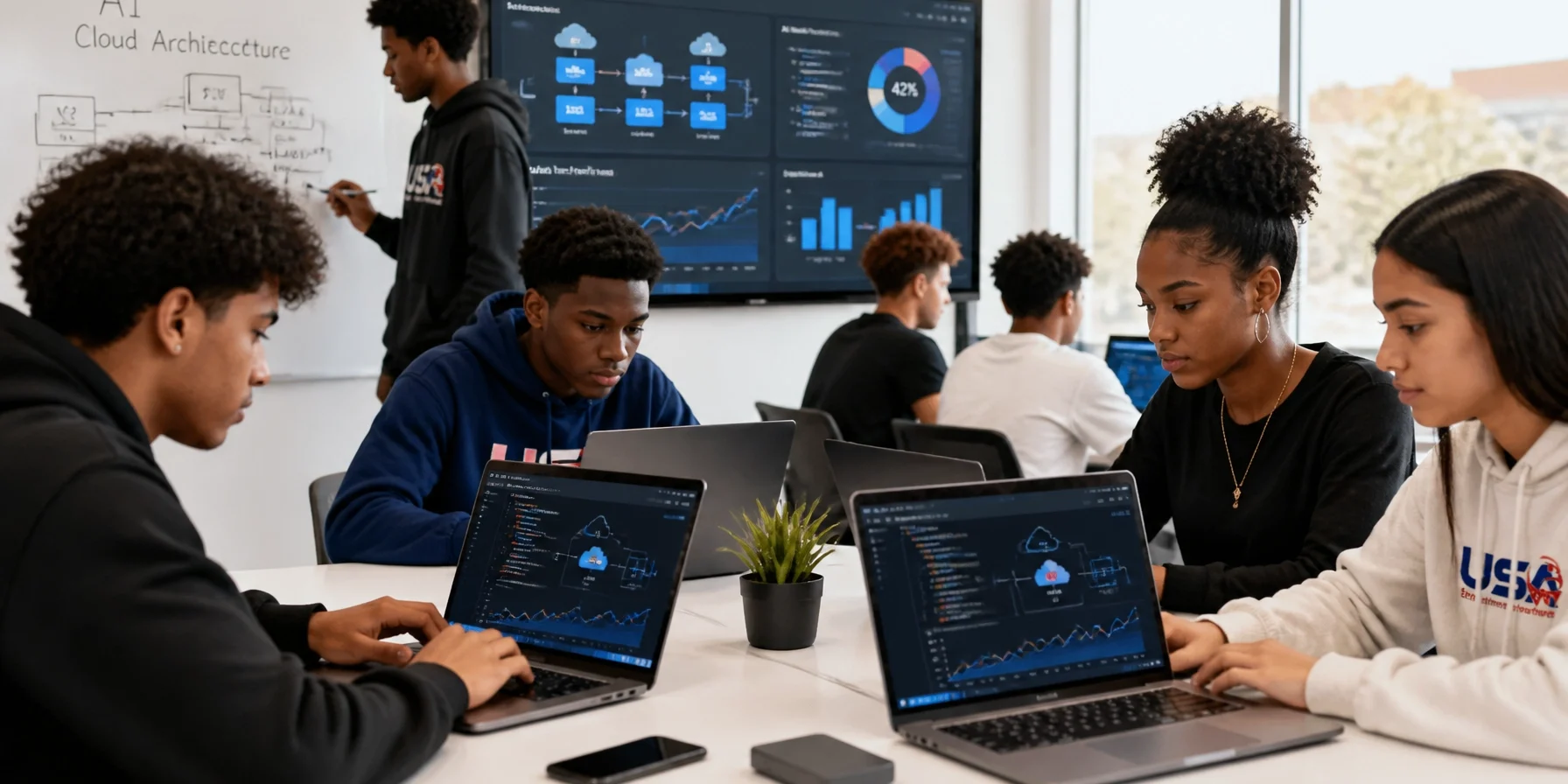
As we navigate the mid-point of 2026, the technology landscape has reached a critical inflection point. Organizations across the globe are no longer just "integrating" Cloud, AI, and Data Analytics; they are entirely dependent on them. However, a significant obstacle stands in the way of sustained innovation: a widening chasm between the demand for technical expertise and the available workforce. To secure the future of the digital economy, forward-thinking enterprises are shifting their gaze from the traditional university recruitment cycle to an earlier, more impactful stage: the high school talent funnel.
At USA Entertainment Ventures LLC, we recognize that managing growth requires a robust strategy for human capital. Whether through our work in business consulting or our focus on DOD Skill Bridge recruitment, the message remains clear: the competition for talent is won by those who engage the earliest.
The 2026 Tech Talent Landscape: A Statistical Reality Check
The urgency of early talent engagement is underscored by current market data. As of June 2026, the U.S. Bureau of Labor Statistics and various industry analysts have highlighted a stark reality for the tech sector.
According to reports from Grid Dynamics, the U.S. is facing a developer shortage of approximately 1.2 million professionals. This is not a localized issue; global estimates suggest that by 2030, the shortage of software engineers could reach 85.2 million, potentially resulting in $8.4 trillion in lost annual revenue.
The demand is particularly acute in three core areas:
- Artificial Intelligence: In January 2026 alone, there were nearly 275,000 active AI-skills job postings. Tech leaders report that 45% of their departments face critical shortages in AI and machine learning expertise.
- Cloud Architecture: As businesses migrate to serverless and containerized environments, 24% of leaders cite cloud operations as a top area of shortage.
- Data Analytics: Roles for data scientists and analysts are currently growing at 420% above the national average growth rate for all occupations.
Despite these figures, many companies continue to rely on a reactive hiring model. This approach: waiting for candidates to graduate from four-year institutions before engaging: is increasingly inefficient in a market where 93% of tech leaders report they lack the staff necessary to deliver on priority initiatives.

Shifting the Funnel: Why High School Engagement Works
The traditional "talent funnel" typically begins in the junior or senior year of college. However, by this point, many high-potential individuals have already been recruited by major tech giants or have chosen career paths influenced by earlier experiences. By engaging at the high school level, companies can create a "Next-Gen Talent Funnel" that offers several strategic advantages.
1. Building a Multi-Year Runway
Tech skills, particularly in complex fields like Cloud Architecture and Machine Learning, take years to master. High school students are at a developmental stage where they are highly adaptable and capable of rapid skill acquisition. By introducing these concepts through internships, dual-enrollment programs, or structured academies, companies allow students to build a foundational knowledge base long before they enter the professional workforce.
2. Reducing Recruitment Costs and Increasing Retention
The cost of hiring mid-career talent in 2026 is at an all-time high. With median tech salaries in the U.S. exceeding $112,000: more than double the national average: competing for existing talent is an expensive endeavor.
Investing in high school programs is a more cost-effective long-term strategy. Organizations that support students early through mentorship and project-based learning often become the "employer of choice" for those individuals. This early loyalty significantly improves retention rates, as employees who feel a sense of investment from a company are more likely to remain with that organization through the early stages of their careers.
3. Aligning Skills with Real-World Needs
One of the most frequent complaints from hiring managers is the "skills gap" found in recent university graduates. Traditional academic curricula often struggle to keep pace with the rapid evolution of cloud platforms and AI frameworks. By partnering with high schools, businesses can help co-design curricula that focus on Python for data analysis, SQL basics, and cloud fundamentals. This ensures that the next generation of workers enters the market with skills that are immediately applicable to current tech stacks.

The Core Pillars: Cloud, AI, and Data Analytics
To effectively engage high school talent, companies should focus on the three pillars that are currently driving the global economy. Each of these fields offers unique entry points for younger learners.
Cloud Computing: The Infrastructure of Tomorrow
High school students can be introduced to cloud concepts through virtualization and basic network architecture. Programs that lead to entry-level cloud certifications during or immediately after high school provide students with a clear, professional pathway. Companies can support this by offering "shadowing" days where students see how cloud engineers manage serverless environments in real-time.
Artificial Intelligence: Beyond the Hype
While AI is often discussed in abstract terms, high school engagement should focus on the practical and ethical. Foundational programming in Python, coupled with an introduction to data literacy and probability, prepares students for the rigors of machine learning. Encouraging students to work on project-based AI models: such as simple recommendation engines or automated data sorting: demystifies the technology and fosters a "builder" mindset.
Data Analytics: The Power of Storytelling
Data is the currency of the modern business world. High school students can quickly learn to use spreadsheet tools, basic SQL, and data visualization platforms to tell stories with data. By providing students with anonymized, real-world datasets from local communities or industries, companies can help them develop the analytical and critical thinking skills required for high-level data engineering.
Actionable Strategies for Implementation
Transitioning to an early-engagement model requires a structured approach. Companies should consider the following practical steps to begin building their high school talent pipeline:
- Establish Apprenticeships and Internships: Create structured summer programs that go beyond basic administrative tasks. Assign high school interns to real projects within your Cloud or Data teams, providing them with a sense of contribution and professional identity.
- Invest in Dual-Enrollment Partnerships: Work with local school districts to sponsor courses that provide both high school and college credit in technical subjects. This reduces the financial burden on students while ensuring a steady stream of trained talent.
- Leverage Existing Recruitment Frameworks: Look at successful models like the DOD Skill Bridge program. While Skill Bridge focuses on transitioning service members, the principles of structured, work-based learning and mentorship can be adapted for the high school environment.
- Provide Mentorship and Representation: Talent is equally distributed, but opportunity is not. High school outreach programs should prioritize diversity and inclusion, ensuring that students from all backgrounds see themselves represented in the tech industry.

Conclusion: A Responsible Path Forward
The tech talent gap of 2026 is not merely a recruitment challenge; it is a broader economic and social responsibility. As technology continues to evolve at an exponential rate, our methods for cultivating the next generation of innovators must evolve as well.
By moving the talent funnel into high schools, businesses do more than just fill vacancies. They provide young people with clear, high-value career paths, foster a more diverse and skilled workforce, and ensure that their own organizations are resilient in the face of future technological shifts.
At USA Entertainment Ventures LLC, we believe that the future of business management and recruitment lies in these early investments. The students in our classrooms today are the architects of the Cloud, AI, and Data systems of tomorrow. Engaging them now is not just a strategic advantage; it is the key to a sustainable and prosperous tech future.





