
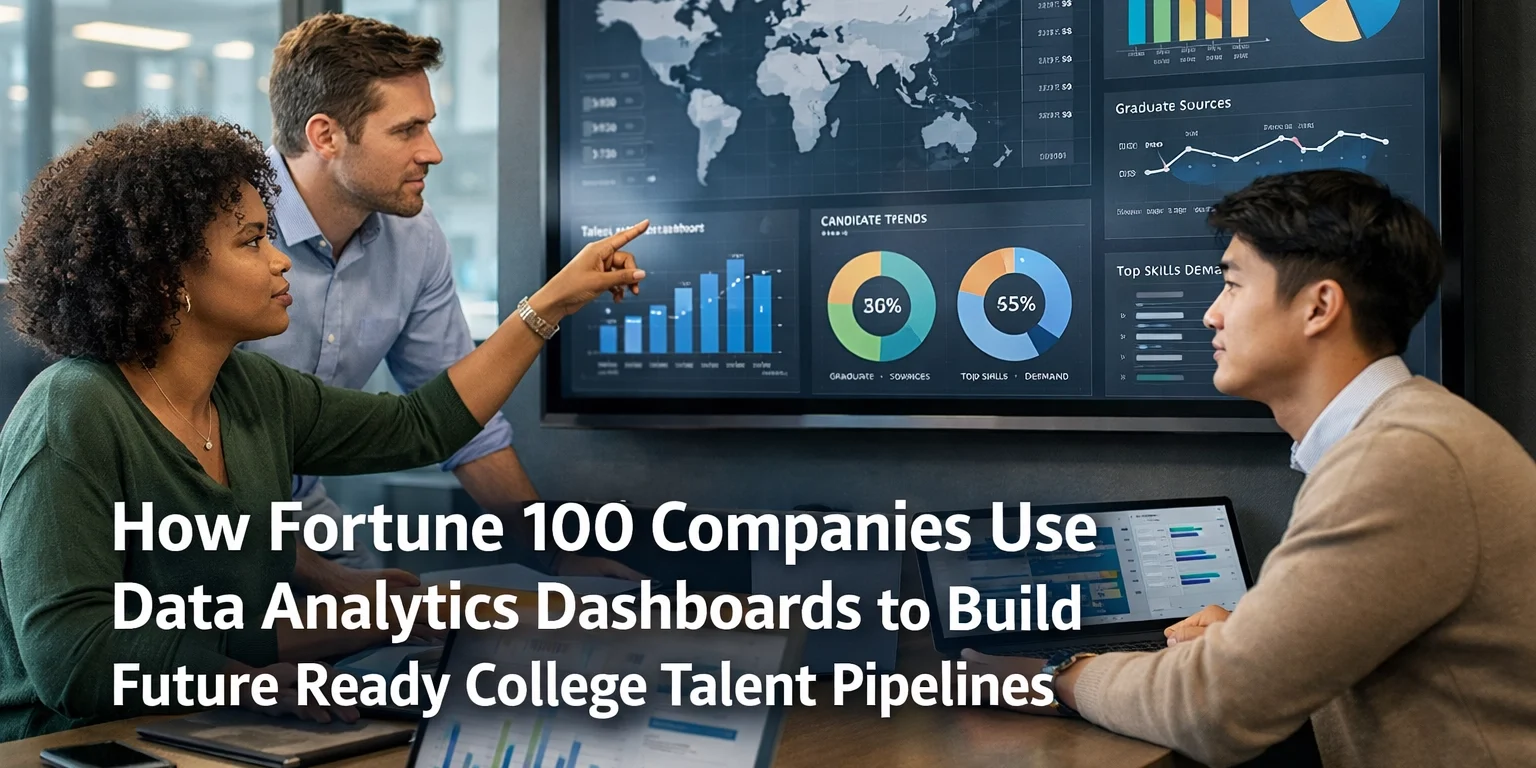
The talent acquisition landscape has fundamentally shifted. Fortune 100 companies no longer wait until graduation to identify promising candidates. Instead, they are building sophisticated talent pipelines that begin during the college years, leveraging data analytics dashboards to track, measure, and nurture future-ready talent long before traditional recruitment cycles begin.
This strategic approach represents a significant departure from conventional hiring practices. Rather than reactive recruitment, leading enterprises now invest in proactive talent development programs that integrate data analytics, media literacy education, and Name, Image, and Likeness (NIL) frameworks to prepare college students for the demands of modern business environments.
The Data-Driven Talent Development Framework
Fortune 100 companies have recognized that sustainable talent acquisition requires structured, measurable approaches. Data analytics dashboards serve as the central nervous system of these initiatives, providing real-time visibility into program effectiveness, student engagement, and skill development progression.

A Fortune 100 technology company's recent workforce development initiative exemplifies this approach. The organization implemented a comprehensive framework that employed data-driven analysis to map over 400 workforce roles, creating clearer career pathways and identifying critical skills gaps. Market trend evaluation informed hiring strategies, while skills taxonomy development established targeted training plans for continuous upskilling.
The measurable returns from these talent pipeline investments typically materialize within three to five years as pipeline participants move into productive technical roles. This timeline underscores the importance of early engagement and the value of tracking student progress through sophisticated analytics platforms.
Analytics Dashboards as Strategic Infrastructure
Data analytics dashboards transform abstract talent development goals into concrete, trackable metrics. These platforms enable corporate talent teams to monitor multiple dimensions simultaneously: student engagement levels, skill acquisition rates, program completion percentages, and post-graduation placement outcomes.
The dashboard infrastructure typically aggregates data from various touchpoints. Student participation in workshops, completion of certification programs, engagement with mentorship initiatives, and performance in project-based assessments all feed into centralized analytics systems. This consolidated view allows talent acquisition leaders to make informed decisions about resource allocation, program modifications, and partnership investments.
For example, dashboards might reveal that students completing media literacy modules demonstrate 40 percent higher engagement in subsequent brand collaboration projects. This insight allows companies to refine curriculum priorities and allocate additional resources to high-impact educational components.

NIL Education as Competitive Advantage
The emergence of NIL rights in collegiate athletics created an unexpected opportunity for corporate talent development. Forward-thinking Fortune 100 companies recognized that NIL education extends far beyond athletics, providing a practical framework for teaching college students essential business competencies: personal branding, contract negotiation, intellectual property management, and financial literacy.
Companies integrating NIL education into their talent pipeline programs use analytics dashboards to track student progression through these competency areas. Dashboard metrics might include the number of students who successfully develop personal brand strategies, complete contract analysis exercises, or demonstrate understanding of rights management principles.
This educational approach serves dual purposes. Students gain practical knowledge applicable across industries, while companies identify candidates who demonstrate business acumen, entrepreneurial thinking, and professional maturity. The analytics infrastructure ensures these observations are documented, measured, and incorporated into talent assessment frameworks.
Media Literacy as Foundation for Future-Ready Skills
Media literacy has emerged as a fundamental competency in data-driven business environments. Fortune 100 companies recognize that employees must navigate complex information ecosystems, distinguish credible sources from misinformation, and communicate effectively across digital platforms.

Talent pipeline programs that emphasize media literacy outcomes provide students with critical analytical skills. Analytics dashboards measure student progress through various media literacy competencies: information verification, source evaluation, digital communication effectiveness, and visual data interpretation.
These measured outcomes directly correlate with workplace readiness. Students who demonstrate strong media literacy skills show greater aptitude for data analysis, strategic communication, and critical thinking: all essential capabilities in modern enterprise environments. Companies use dashboard data to identify students who excel in these areas, creating targeted recruitment pathways for high-potential candidates.
The Future-Ready Schools Ecosystem
Fortune 100 companies increasingly partner with educational institutions that embrace comprehensive talent development frameworks. These "Future Ready" schools integrate data analytics infrastructure, NIL education, and media literacy curriculum into their existing programs, creating structured pathways from classroom to career.
The partnership model benefits all stakeholders. Educational institutions gain access to industry expertise, professional development resources, and placement opportunities for graduates. Companies secure early access to qualified talent while shaping curriculum to align with evolving industry needs. Students receive practical education that prepares them for immediate workplace contribution.
Analytics dashboards facilitate this ecosystem by providing transparency across all partnership dimensions. Universities track program enrollment and completion rates. Companies monitor candidate quality metrics and post-hire performance indicators. Students access personal dashboards showing their skill development trajectory and competitive positioning.
Measuring Return on Talent Investment
The financial justification for talent pipeline programs rests on measurable outcomes. Analytics dashboards quantify program effectiveness through multiple lenses: cost per qualified candidate, time to productivity for pipeline hires versus traditional recruits, retention rates, and long-term career progression metrics.

One Fortune 100 organization reported that candidates entering through structured talent pipeline programs reached full productivity 30 percent faster than traditionally recruited employees. The same cohort showed 25 percent higher retention rates after two years. These metrics, tracked through comprehensive analytics systems, demonstrate clear return on investment and justify continued program expansion.
The dashboard infrastructure also reveals opportunities for continuous improvement. If data shows that students from specific universities or programs consistently outperform others, companies can adjust partnership investments accordingly. If certain educational modules correlate with higher workplace success, curriculum emphasis can shift to prioritize those components.
Implementation Considerations
Organizations considering talent pipeline initiatives must address several foundational elements. Data analytics infrastructure requires significant upfront investment in platforms, integration capabilities, and analytical expertise. Educational partnerships demand ongoing relationship management, curriculum collaboration, and program administration.
The most successful implementations begin with clear objectives and measurable milestones. What specific competencies do pipeline candidates need? How will progress be measured? What engagement levels indicate program effectiveness? Answering these questions before deployment ensures that analytics dashboards capture relevant data and provide actionable insights.
Privacy considerations also require careful attention. Student data must be protected according to applicable regulations, and analytics systems must incorporate appropriate security measures and consent frameworks. Transparency about data collection, usage, and sharing builds trust with educational partners and student participants.
The Competitive Imperative
As talent competition intensifies, Fortune 100 companies that develop sophisticated pipeline programs gain significant advantages. Early identification of high-potential candidates, extended relationship development periods, and structured skill-building initiatives create stronger talent pools than traditional recruitment methods alone.
Data analytics dashboards transform these programs from abstract initiatives into strategic assets. The ability to measure, monitor, and optimize every aspect of talent development ensures continuous improvement and demonstrates clear business value. Companies that master this approach position themselves as employers of choice while building the workforce capabilities needed for long-term competitive success.
The integration of NIL education and media literacy outcomes adds additional dimensions to talent assessment. Students who complete these programs bring more than technical skills: they demonstrate business awareness, critical thinking abilities, and professional maturity that accelerate workplace contribution.
Organizations serving as anchors for Future Ready schools establish themselves as thought leaders in talent development while ensuring access to the next generation of qualified professionals. This strategic positioning creates sustainable competitive advantages that extend well beyond individual hiring cycles.
The evolution toward data-driven talent pipeline management represents more than operational efficiency. It reflects a fundamental recognition that workforce development requires long-term investment, structured measurement, and collaborative partnerships between education and industry. Fortune 100 companies leading this transformation are building the foundation for sustained organizational success in increasingly competitive talent markets.





